
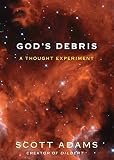
God's Debris
A Thought Experiment
by Scott Adams

Reading Profile
Should I read this?
God's Debris is Scott Adams' first nonhumor book and reads as a compact fictional conversation that hinges on a single provocative thought experiment: an allegedly all-knowing old man teaching a skeptic radical takes on God and purpose. what works best is quick cognitive dissonance—pithy aphorisms and contrarian reframes that seed debate. The main limitation is style: arguments arrive as bold assertions and repeated claims rather than careful premises, so readers wanting documentation, nuance, or character depth will find it thin.
Read this if...
- •Philosophy TA running an undergraduate seminar on free will and religion — needs a single short text to force students to state counterarguments before denser readings; the book’s 1–2 hour dialogue and stark claims make it easy to assign for one class and to ignite debate.
- •High-school debate coach prepping a team for a public-forum round on secularism or meaning — wants punchy claims students can quote and rebut in practice rounds; the book’s aphoristic lines give portable provocations to test argument strategies now.
- •Product manager organizing a company offsite on AI, agency, or ethics — needs a short provocation to surface team assumptions about intelligence and purpose within a 60–90 minute session; the book’s contrarian thought experiment jumpstarts conflict and clarifies hidden premises.
Skip this if...
- •You’ll likely put it down when the omniscient-man’s lectures slide into repeated aphorisms and circular assertions—if you expect systematic evidence or careful footnoted reasoning, this will feel unsatisfying.
- •Annoying if you prefer character-driven stories or emotional memoirs; plot and development are minimal because the narrative exists mainly to host the thought experiment.
- •Not for readers who want hands-on tools or exercises—no practical worksheets or step-by-step methods, and the rhetoric leans toward confident pronouncements rather than cautious argument.
God's Debris is the first nonhumor book by bestselling author Scott Adams. Adams describes God's Debris as a thought experiment wrapped in a story. It's designed to make your brain spin around inside your skull. Imagine that you meet a very old man who you eventually realize knows literally everything. Imagine that he explains for you the great m...
Before You Buy
Reading Specifications
Difficulty:hard
Audience Fit
- Philosophy TA running an undergraduate seminar on free will and religion — needs a single short text to force students to state counterarguments before denser readings; the book’s 1–2 hour dialogue and stark claims make it easy to assign for one class and to ignite debate.
- High-school debate coach prepping a team for a public-forum round on secularism or meaning — wants punchy claims students can quote and rebut in practice rounds; the book’s aphoristic lines give portable provocations to test argument strategies now.
- Product manager organizing a company offsite on AI, agency, or ethics — needs a short provocation to surface team assumptions about intelligence and purpose within a 60–90 minute session; the book’s contrarian thought experiment jumpstarts conflict and clarifies hidden premises.
- You’ll likely put it down when the omniscient-man’s lectures slide into repeated aphorisms and circular assertions—if you expect systematic evidence or careful footnoted reasoning, this will feel unsatisfying.
- Annoying if you prefer character-driven stories or emotional memoirs; plot and development are minimal because the narrative exists mainly to host the thought experiment.
- Not for readers who want hands-on tools or exercises—no practical worksheets or step-by-step methods, and the rhetoric leans toward confident pronouncements rather than cautious argument.
Check formats, pricing, and availability options for Kindle, physical print, or audiobooks directly.
View available editions on AmazonKey themes
Why recommended
Recommended by 2 sources and appears in Most Recommended Books, Spirituality, and Philosophy.
Recommended by notable people
People and public figures who have recommended this book.
Recommendation Signals
Recommendation proof is sourced from public posts, interviews, reading lists, and cited references.
Appears In
Not sure if this is the right fit?
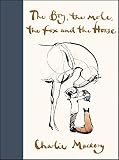
Consider The Boy, the Mole, the Fox and the Horse by Charlie Mackesy. Recommended by 8 sources.
“Soft-spoken, heavily illustrated fable built from short dialogues and watercolor sketches. Each spread pairs a spare line of text with a loose drawing, so the pleasure is visual and aphoristic rather than narrative; readers collect felt-true sentences more than plot. Most useful when you want quick consolations, a prompt for conversation with a child, or a pause during a rough day. Limiting if you want sustained argument, concrete advice, or tightly plotted storytelling: the repetition of gentleness can feel sentimental or thin after a while.”
Similar books
The Boy, the Mole, the Fox and the Horse
Charlie Mackesy
The World as It Is
Ben Rhodes
Out of Control
Kevin Kelly
The Bully Pulpit
Doris Kearns Goodwin
The Seven Spiritual Laws of Success
Deepak Chopra
Billions and Billions
Carl Sagan
Anger
Gary ChapmanFactfulness
Hans RoslingHow recommendation signals are reviewed
Each recommendation is collected from a public source — interviews, articles, or curated lists — and linked to its original URL. Books with many verifiable recommendations from respected people rank higher.