
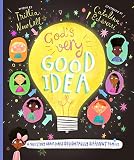
God's Very Good Idea
by Trillia Newbell
Reading Profile
Should I read this?
This picture book reads like a sermon-shaped story for preschoolers: bright illustrations carry a concise garden-to-throne narrative that frames human diversity as central to God's plan. Main value: simple, image-led affirmations that help young children see many kinds of people included in the Christian story and the book's gospel-centered message. Main limitation: theological nuance is minimal and the tone can feel didactic for readers wanting open-ended questions; adults seeking deeper theology or interactive activities may find it too brief.
Read this if...
- •a parent reading bedtime stories to a 3–6-year-old who asks about different kinds of people — gives a short, visual way to link diversity with a Christian message.
- •a preschool Sunday-school teacher planning a 10–15 minute lesson on 'everyone belongs' — supplies a clear garden-to-throne arc and simple read-aloud language.
- •a children's librarian creating a faith-based storytime display for families wanting inclusive Christian picture books — illustration-forward pages work well for group reading.
Skip this if...
- •you'll likely put it down when you expect theological nuance or open-ended questions — the narrative quickly settles into straightforward salvation language and doesn't pause for discussion.
- •annoying if you prefer secular or nonsectarian children's books; the overt Christian message can feel preachy to readers looking for neutral treatment of diversity.
- •annoying if you want interactive lessons or practical follow-ups — no hands-on exercises, discussion prompts, or study aids are provided.
God's very good idea is to have lots of different people enjoying loving him and loving each other. This stunningly illustrated journey from the garden of Eden to God's heavenly throne room shows how despite our sinfulness, everyone can be a part of God's very good idea through the saving work of Christ.This book will help children see how people f...
Before You Buy
Reading Specifications
Difficulty:hard
Audience Fit
- a parent reading bedtime stories to a 3–6-year-old who asks about different kinds of people — gives a short, visual way to link diversity with a Christian message.
- a preschool Sunday-school teacher planning a 10–15 minute lesson on 'everyone belongs' — supplies a clear garden-to-throne arc and simple read-aloud language.
- a children's librarian creating a faith-based storytime display for families wanting inclusive Christian picture books — illustration-forward pages work well for group reading.
- you'll likely put it down when you expect theological nuance or open-ended questions — the narrative quickly settles into straightforward salvation language and doesn't pause for discussion.
- annoying if you prefer secular or nonsectarian children's books; the overt Christian message can feel preachy to readers looking for neutral treatment of diversity.
- annoying if you want interactive lessons or practical follow-ups — no hands-on exercises, discussion prompts, or study aids are provided.
Check formats, pricing, and availability options for Kindle, physical print, or audiobooks directly.
View available editions on AmazonKey themes
Why recommended
appears in Christian and Fiction.
Recommendation Signals
Recommendation proof is sourced from public posts, interviews, reading lists, and cited references.
No verified recommendation proof available yet.
Appears In
Not sure if this is the right fit?
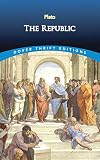
Consider The Republic by Plato. Recommended by 13 sources.
“Plato stages an extended Socratic conversation that moves from concrete questions about justice into broad proposals about an ideal city, the structure of the soul, and what counts as reality and knowledge. Reading alternates brisk question-and-answer snippets with long, cumulative demonstrations that reward careful attention and annotation. Main value: a wealth of thought experiments for testing political and ethical intuitions. Main limitation: repetitive refutations, long policy sketches and dense metaphysical passages can feel abstruse and slow; patience and some philosophical background help.”
Similar books
How recommendation signals are reviewed
Each recommendation is collected from a public source — interviews, articles, or curated lists — and linked to its original URL. Books with many verifiable recommendations from respected people rank higher.