
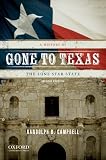
Gone to Texas
A History of the Lone Star State
by Randolph B. "Mike" Campbell
Reading Profile
Should I read this?
Gone to Texas reads as a long, chronological narrative that sweeps from more than 10,000 years ago to the opening of the twenty-first century. Its useful part is the inclusive emphasis on successive waves of immigrants and the way their clashes and collaborations shaped regional life. That people-centered arc helps readers connect cultural and demographic change across eras rather than only following political events. The main limitation is occasional cataloging of groups and episodes that can slow the book’s forward motion for readers who want brisk argument or tight thesis-driven history.
Read this if...
- •A high-school U.S. history teacher designing a Texas unit who needs a single, readable volume to pull timelines, anecdotes, and human stories into lesson plans.
- •Someone planning to move to Texas who wants chronological social and cultural background to understand who built communities, why regions differ, and how past conflicts still shape places today.
- •A public-library programming coordinator preparing a Texas-history month who needs a broad source of narratives and entry points for talks, panels, and recommended-reading lists.
Skip this if...
- •You’ll likely put it down when the narrative turns into catalog-like passages listing arrivals, settlements, and conflicts without a sharp argumentative throughline — that’s the common lose interest moment.
- •Annoying if you prefer argument-driven history or short essays: the book favors sweep and people-count over tightly framed, polemical claims.
- •Not a fit if you want a concise primer, policy analysis, or hands-on exercises — it’s a long narrative, not a quick-reference guide, and it lacks hands-on exercises.
Gone to Texas engagingly tells the story of the Lone Star State, from the arrival of humans in the Panhandle more than 10,000 years ago to the opening of the twenty-first century. Focusing on the state's successive waves of immigrants, the book offers an inclusive view of the vast array of Texans who, often in conflict with each other and always in...
Before You Buy
Reading Specifications
Difficulty:hard
Audience Fit
- A high-school U.S. history teacher designing a Texas unit who needs a single, readable volume to pull timelines, anecdotes, and human stories into lesson plans.
- Someone planning to move to Texas who wants chronological social and cultural background to understand who built communities, why regions differ, and how past conflicts still shape places today.
- A public-library programming coordinator preparing a Texas-history month who needs a broad source of narratives and entry points for talks, panels, and recommended-reading lists.
- You’ll likely put it down when the narrative turns into catalog-like passages listing arrivals, settlements, and conflicts without a sharp argumentative throughline — that’s the common lose interest moment.
- Annoying if you prefer argument-driven history or short essays: the book favors sweep and people-count over tightly framed, polemical claims.
- Not a fit if you want a concise primer, policy analysis, or hands-on exercises — it’s a long narrative, not a quick-reference guide, and it lacks hands-on exercises.
Check formats, pricing, and availability options for Kindle, physical print, or audiobooks directly.
View available editions on AmazonKey themes
Why recommended
appears in About Texas, History, and Nonfiction.
Recommendation Signals
Recommendation proof is sourced from public posts, interviews, reading lists, and cited references.
No verified recommendation proof available yet.
Appears In
Not sure if this is the right fit?
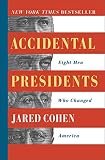
Consider Accidental Presidents by Jared Cohen. Recommended by 10 sources.
“Accidental Presidents offers eight narrative portraits of men who succeeded to the U.S. presidency without election, using anecdote-rich scenes and readable context to show how personality and circumstance interact with office power. It’s strongest as a set of self-contained stories that make succession stakes concrete for non-specialist readers; it does not prioritize dense archival argument or exhaustive methodology, so expect some interpretive generalizations and repeated themes across cases. Use it for fast historical orientation rather than scholarly deep-dives.”
Similar books
How recommendation signals are reviewed
Each recommendation is collected from a public source — interviews, articles, or curated lists — and linked to its original URL. Books with many verifiable recommendations from respected people rank higher.