
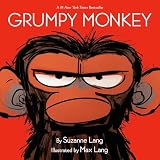
Grumpy Monkey
by Suzanne Lang
Reading Profile
Should I read this?
Bright, funny picture-book voice pairs a grumpy protagonist with friends who try to 'fix' his mood with cheerful suggestions; punchy text and bold art make moods laughable and relatable. Most useful as a short read-aloud that gives young children vocabulary for unexplained bad days and models patience from peers. Limitation: adults wanting nuanced emotional pedagogy may find the resolution tidy and the repetition didactic, and caregivers expecting activities will notice there are no guided exercises.
Read this if...
- •Parent of a 2–4-year-old during bedtime or morning routine who wants a short, repeatable story to normalize bad moods and start a quick conversation about feelings.
- •Preschool teacher preparing a circle-time emotions lesson who needs a humorous, low-stakes hook to prompt talk and simple role-play about how friends respond.
- •Daycare worker handling tense drop-offs who wants a two-minute read to validate a kid’s grumpy state and defuse escalation without lengthy explanations.
Skip this if...
- •You’ll likely put it down when you want deeper explanation of why moods happen—resolution is quick and the book keeps the message simple rather than unpacking causes or strategies.
- •Annoying if you dislike obvious didacticism or the same joke repeated for effect; the text leans on a few riffs that some adults find tiresome after multiple reads.
- •Not for caregivers wanting step-by-step activities or lesson plans — no exercises, checklists, or guided prompts are included.
A hilarious picture book about dealing with unexplained feelings?and the danger in suppressing them!Jim the chimpanzee is in a terrible mood for no good reason. His friends can?t understand it?how can he be in a bad mood when it?s SUCH a beautiful day They encourage him not to hunch, to smile, and to do things that make THEM happy. But Jim can?t t...
Before You Buy
Reading Specifications
Difficulty:easy
Audience Fit
- Parent of a 2–4-year-old during bedtime or morning routine who wants a short, repeatable story to normalize bad moods and start a quick conversation about feelings.
- Preschool teacher preparing a circle-time emotions lesson who needs a humorous, low-stakes hook to prompt talk and simple role-play about how friends respond.
- Daycare worker handling tense drop-offs who wants a two-minute read to validate a kid’s grumpy state and defuse escalation without lengthy explanations.
- You’ll likely put it down when you want deeper explanation of why moods happen—resolution is quick and the book keeps the message simple rather than unpacking causes or strategies.
- Annoying if you dislike obvious didacticism or the same joke repeated for effect; the text leans on a few riffs that some adults find tiresome after multiple reads.
- Not for caregivers wanting step-by-step activities or lesson plans — no exercises, checklists, or guided prompts are included.
Check formats, pricing, and availability options for Kindle, physical print, or audiobooks directly.
View available editions on AmazonKey themes
Why recommended
appears in For 4 Year Olds, For 3 Year Olds, and For 2 Year Olds.
Recommendation Signals
Recommendation proof is sourced from public posts, interviews, reading lists, and cited references.
No verified recommendation proof available yet.
Appears In
Not sure if this is the right fit?
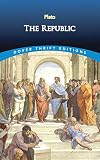
Consider The Republic by Plato. Recommended by 13 sources.
“Plato stages an extended Socratic conversation that moves from concrete questions about justice into broad proposals about an ideal city, the structure of the soul, and what counts as reality and knowledge. Reading alternates brisk question-and-answer snippets with long, cumulative demonstrations that reward careful attention and annotation. Main value: a wealth of thought experiments for testing political and ethical intuitions. Main limitation: repetitive refutations, long policy sketches and dense metaphysical passages can feel abstruse and slow; patience and some philosophical background help.”
Similar books

How recommendation signals are reviewed
Each recommendation is collected from a public source — interviews, articles, or curated lists — and linked to its original URL. Books with many verifiable recommendations from respected people rank higher.