
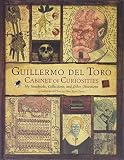
Guillermo del Toro Cabinet of Curiosities
My Notebooks, Collections, and Other Obsessions
by Guillermo del Toro
Reading Profile
Should I read this?
Feels like paging through an obsessive private collection of sketches, notes, and photographs; strongest when images and short anecdotes show where recurring motifs—monsters, fairy-tale darkness, handcrafted props—came from. Useful as a visual primer on del Toro's aesthetic and a catalog of inspirations that fuel production design and mood. Limiting when it leans toward repetition, curatorial detours, or spare captions instead of sustained storytelling; not a practical filmmaking manual and can feel indulgent if you expected tight chronology or technical step-by-step guidance.
Read this if...
- •production designer in preproduction who needs fresh visual vocabulary and unusual source material to build mood boards and pitch a look to directors.
- •film-studies student writing an essay on auteur imagery who wants primary examples, annotated visuals, and personal anecdotes rather than dense theory.
- •avid del Toro fan assembling a collection of posters and art who wants behind-the-scenes context for recurring symbols and prop designs.
Skip this if...
- •You prefer step-by-step craft guides or detailed technical breakdowns; this book lacks hands-on exercises and technical depth.
- •You'll likely put it down when the narrative dissolves into long image plates and caption lists with little connective storytelling — momentum slows in mid-sections.
- •Annoying if you want objective analysis over personal mythmaking; you'll lose interest if repetition of the same motifs and detours into curated ephemera feel self-indulgent.
Over the last two decades, writerdirector Guillermo del Toro has mapped out a territory in the popular imagination that is uniquely his own, astonishing audiences with Cronos, Hellboy, Pan's Labyrinth, and a host of other films and creative endeavors. Now, for the first time, del Toro reveals the inspirations behind his signature artistic motifs, ...
Before You Buy
Reading Specifications
Difficulty:hard
Audience Fit
- production designer in preproduction who needs fresh visual vocabulary and unusual source material to build mood boards and pitch a look to directors.
- film-studies student writing an essay on auteur imagery who wants primary examples, annotated visuals, and personal anecdotes rather than dense theory.
- avid del Toro fan assembling a collection of posters and art who wants behind-the-scenes context for recurring symbols and prop designs.
- You prefer step-by-step craft guides or detailed technical breakdowns; this book lacks hands-on exercises and technical depth.
- You'll likely put it down when the narrative dissolves into long image plates and caption lists with little connective storytelling — momentum slows in mid-sections.
- Annoying if you want objective analysis over personal mythmaking; you'll lose interest if repetition of the same motifs and detours into curated ephemera feel self-indulgent.
Check formats, pricing, and availability options for Kindle, physical print, or audiobooks directly.
View available editions on AmazonKey themes
Why recommended
appears in Filmmaking, Art, and Fiction.
Recommendation Signals
Recommendation proof is sourced from public posts, interviews, reading lists, and cited references.
No verified recommendation proof available yet.
Appears In
Not sure if this is the right fit?
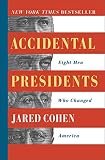
Consider Accidental Presidents by Jared Cohen. Recommended by 10 sources.
“Accidental Presidents offers eight narrative portraits of men who succeeded to the U.S. presidency without election, using anecdote-rich scenes and readable context to show how personality and circumstance interact with office power. It’s strongest as a set of self-contained stories that make succession stakes concrete for non-specialist readers; it does not prioritize dense archival argument or exhaustive methodology, so expect some interpretive generalizations and repeated themes across cases. Use it for fast historical orientation rather than scholarly deep-dives.”
Similar books

How recommendation signals are reviewed
Each recommendation is collected from a public source — interviews, articles, or curated lists — and linked to its original URL. Books with many verifiable recommendations from respected people rank higher.