
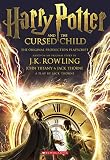
Harry Potter and the Cursed Child
Parts One and Two
by J. K. Rowling
Reading Profile
Should I read this?
This printed stage play presents a new Harry Potter story as scene-by-scene dialogue and stage directions rather than novel prose. It delivers brisk, stage-ready scenes, set-piece moments, and a focus on the original characters’ children that yields quick emotional jolts. That format compresses interior life, so motivations and quieter arcs can feel shorthand or engineered for spectacle. Best taken as an invitation to imagine staging and voices rather than as a substitute for novel-length character depth.
Read this if...
- •a parent reading aloud to an 11–14-year-old who loved the original series and wants a short, dramatic new adventure to discuss together — the script's dialogue and scenes are easy to read aloud and spark conversation
- •a theatergoer planning to see the stage production who wants the printed script beforehand to follow staging, lines, and scene changes during the performance
- •an adult revisiting the series who wants a quick continuation rather than re-reading seven novels — useful when you want immediate plot closure and theatrical moments in a few sittings
Skip this if...
- •you'll likely put it down when the script format's scene headings and stage directions repeatedly interrupt narrative flow — if you need prose and inner thought, this will frustrate you
- •annoying if you prefer carefully paced character development or subtle inner motivation, since much is shown through dialogue and shorthand rather than interior depth
- •skip if time-travel puzzles or sudden plot reversals bother you; the play leans on dramatic twists that some readers find hard to reconcile with the rest of the series' tone
Based on an original new story by J.K. Rowling, Jack Thorne and John Tiffany, a new play by Jack Thorne, Harry Potter and the Cursed Child is the eighth story in the Harry Potter series and the first official Harry Potter story to be presented on stage. The play will receive its world premiere in Londons West End on July 30, 2016.It was always diff...
Before You Buy
Reading Specifications
Difficulty:hard
Audience Fit
- a parent reading aloud to an 11–14-year-old who loved the original series and wants a short, dramatic new adventure to discuss together — the script's dialogue and scenes are easy to read aloud and spark conversation
- a theatergoer planning to see the stage production who wants the printed script beforehand to follow staging, lines, and scene changes during the performance
- an adult revisiting the series who wants a quick continuation rather than re-reading seven novels — useful when you want immediate plot closure and theatrical moments in a few sittings
- you'll likely put it down when the script format's scene headings and stage directions repeatedly interrupt narrative flow — if you need prose and inner thought, this will frustrate you
- annoying if you prefer carefully paced character development or subtle inner motivation, since much is shown through dialogue and shorthand rather than interior depth
- skip if time-travel puzzles or sudden plot reversals bother you; the play leans on dramatic twists that some readers find hard to reconcile with the rest of the series' tone
Check formats, pricing, and availability options for Kindle, physical print, or audiobooks directly.
View available editions on AmazonKey themes
Why recommended
Recommended by 1 source and appears in Fantasy and Fiction.
Recommended by notable people
People and public figures who have recommended this book.
Recommendation Signals
Recommendation proof is sourced from public posts, interviews, reading lists, and cited references.
Appears In
Not sure if this is the right fit?
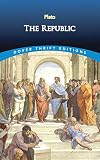
Consider The Republic by Plato. Recommended by 13 sources.
“Plato stages an extended Socratic conversation that moves from concrete questions about justice into broad proposals about an ideal city, the structure of the soul, and what counts as reality and knowledge. Reading alternates brisk question-and-answer snippets with long, cumulative demonstrations that reward careful attention and annotation. Main value: a wealth of thought experiments for testing political and ethical intuitions. Main limitation: repetitive refutations, long policy sketches and dense metaphysical passages can feel abstruse and slow; patience and some philosophical background help.”
Similar books
How recommendation signals are reviewed
Each recommendation is collected from a public source — interviews, articles, or curated lists — and linked to its original URL. Books with many verifiable recommendations from respected people rank higher.