
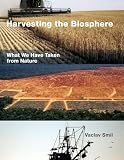
Harvesting the Biosphere
What We Have Taken from Nature
by Vaclav Smil

Reading Profile
Should I read this?
Harvesting the Biosphere reads like a rigorous inventory: page-after-page of quantities, flows, and historical comparisons that map human pressure on living matter from hunter-gatherers to industrial agriculture. Its useful part is the quantitative perspective — numbers that reframe scale and limitations more clearly than anecdote or polemic. Its limitation is style: dense data, frequent tables, and an unemotional tone can feel repetitive and dry, which makes the case but distances readers seeking narrative storytelling or prescriptive solutions.
Read this if...
- •environmental-policy analyst drafting a land-use or food-security brief who needs concrete magnitudes and historical baselines to ground recommendations; the book supplies long-run data and comparisons to justify scale arguments.
- •energy-systems or ecology undergraduate trying to understand material flows across sectors and eras; the book supplies quantitative backstops to classroom concepts and sharpens intuition about orders of magnitude.
- •science-literate naturalist preparing a public talk on human impact who wants striking numeric contrasts and historical benchmarks rather than emotive anecdotes.
Skip this if...
- •You’ll likely put it down when chapters turn into long runs of numbers, tables, and repeated conversions — readers who want narrative momentum often stop midway through the dense middle.
- •Annoying if you prefer character-driven storytelling, case studies, or prescriptive policy roadmaps; the book prioritizes measurement over human-scale stories and offers few actionable prescriptions.
- •Not suitable if you want hands-on exercises or a how-to guide — lacks practical exercises, step-by-step solutions, or interactive elements.
An interdisciplinary and quantitative account of human claims on the biosphere's stores of living matter, from prehistoric hunting to modern energy production.The biospherethe Earth's thin layer of lifedates from nearly four billion years ago, when the first simple organisms appeared. Many species have exerted enormous influence on the biospher...
Before You Buy
Reading Specifications
Difficulty:hard
Audience Fit
- environmental-policy analyst drafting a land-use or food-security brief who needs concrete magnitudes and historical baselines to ground recommendations; the book supplies long-run data and comparisons to justify scale arguments.
- energy-systems or ecology undergraduate trying to understand material flows across sectors and eras; the book supplies quantitative backstops to classroom concepts and sharpens intuition about orders of magnitude.
- science-literate naturalist preparing a public talk on human impact who wants striking numeric contrasts and historical benchmarks rather than emotive anecdotes.
- You’ll likely put it down when chapters turn into long runs of numbers, tables, and repeated conversions — readers who want narrative momentum often stop midway through the dense middle.
- Annoying if you prefer character-driven storytelling, case studies, or prescriptive policy roadmaps; the book prioritizes measurement over human-scale stories and offers few actionable prescriptions.
- Not suitable if you want hands-on exercises or a how-to guide — lacks practical exercises, step-by-step solutions, or interactive elements.
Check formats, pricing, and availability options for Kindle, physical print, or audiobooks directly.
View available editions on AmazonKey themes
Why recommended
Recommended by 2 sources and appears in Most Recommended Books, Science, and Nonfiction.
Recommended by notable people
People and public figures who have recommended this book.
Recommendation Signals
Recommendation proof is sourced from public posts, interviews, reading lists, and cited references.
Bill Gates
Co-founder of Microsoft; co-chair of the Gates Foundation
“Gives as clear and as numeric a picture as is possible of how humans have altered the biosphere.”
Appears In
Not sure if this is the right fit?
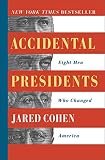
Consider Accidental Presidents by Jared Cohen. Recommended by 10 sources.
“Accidental Presidents offers eight narrative portraits of men who succeeded to the U.S. presidency without election, using anecdote-rich scenes and readable context to show how personality and circumstance interact with office power. It’s strongest as a set of self-contained stories that make succession stakes concrete for non-specialist readers; it does not prioritize dense archival argument or exhaustive methodology, so expect some interpretive generalizations and repeated themes across cases. Use it for fast historical orientation rather than scholarly deep-dives.”
Similar books

How recommendation signals are reviewed
Each recommendation is collected from a public source — interviews, articles, or curated lists — and linked to its original URL. Books with many verifiable recommendations from respected people rank higher.