
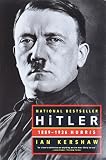
Hitler
18891936 Hubris
by Ian Kershaw
Reading Profile
Should I read this?
This is a thorough, chronological portrait that follows Adolf Hitler from obscure origins to his death in Berlin, written with a scholarly tone and attention to political context. What works best is its sustained focus on how personal biography and German institutions interacted across decades; expect deep background on parties, power struggles, and the wartime bureaucracy. The main limitation is pace: long stretches of administrative and political minutiae can feel repetitive and slow, which will frustrate readers seeking a brisk or anecdote-driven life story.
Read this if...
- •a graduate student preparing a seminar on 20th-century Germany who needs a densely argued narrative to anchor class discussions and citations
- •a high-school history teacher building a multi-week unit on the Weimar Republic and Nazi rise who wants a chronology-rich reference to map events and causes
- •a policy analyst trying to understand how leadership style and state institutions interact in crisis who needs a sober, detailed case study rather than polemic
Skip this if...
- •you’ll likely put it down when the narrative bogs into long runs of bureaucratic detail or chronological listings of political maneuvers; that’s a common drop-off point
- •annoying if you prefer short, story-first biographies or emotionally intimate portraiture rather than dense institutional context
- •not for readers who avoid sustained exposure to disturbing historical events and ideologies; the subject matter is heavy and handled with exhaustive attention
From his illegitimate birth in a small Austrian village to his fiery death in a bunker under the Reich chancellery in Berlin, Adolf Hitler left a murky trail, strewn with contradictory tales & overgrown with selfcreated myths. One truth prevails: the sheer scale of the evils that he unleashed on the world has made him a demonic figure without equa...
Before You Buy
Reading Specifications
Difficulty:hard
Audience Fit
- a graduate student preparing a seminar on 20th-century Germany who needs a densely argued narrative to anchor class discussions and citations
- a high-school history teacher building a multi-week unit on the Weimar Republic and Nazi rise who wants a chronology-rich reference to map events and causes
- a policy analyst trying to understand how leadership style and state institutions interact in crisis who needs a sober, detailed case study rather than polemic
- you’ll likely put it down when the narrative bogs into long runs of bureaucratic detail or chronological listings of political maneuvers; that’s a common drop-off point
- annoying if you prefer short, story-first biographies or emotionally intimate portraiture rather than dense institutional context
- not for readers who avoid sustained exposure to disturbing historical events and ideologies; the subject matter is heavy and handled with exhaustive attention
Check formats, pricing, and availability options for Kindle, physical print, or audiobooks directly.
View available editions on AmazonKey themes
Why recommended
Recommended by 3 sources and appears in Nazi Germany, World War Ii, and Ww2.
Recommended by notable people
People and public figures who have recommended this book.
Recommendation Signals
Recommendation proof is sourced from public posts, interviews, reading lists, and cited references.
Appears In
Not sure if this is the right fit?
Consider Accidental Presidents by Jared Cohen. Recommended by 10 sources.
“Accidental Presidents offers eight narrative portraits of men who succeeded to the U.S. presidency without election, using anecdote-rich scenes and readable context to show how personality and circumstance interact with office power. It’s strongest as a set of self-contained stories that make succession stakes concrete for non-specialist readers; it does not prioritize dense archival argument or exhaustive methodology, so expect some interpretive generalizations and repeated themes across cases. Use it for fast historical orientation rather than scholarly deep-dives.”
Similar books

How recommendation signals are reviewed
Each recommendation is collected from a public source — interviews, articles, or curated lists — and linked to its original URL. Books with many verifiable recommendations from respected people rank higher.