
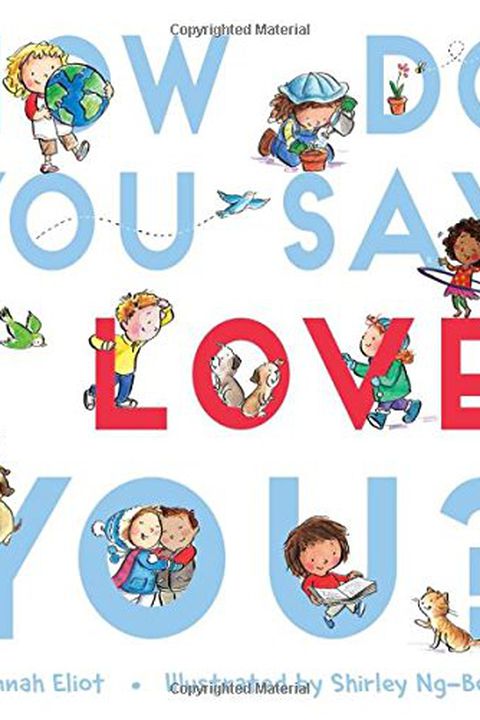
How Do You Say I Love You
by Hannah Eliot
Reading Profile
Should I read this?
Bright, spare and tactile, this board book is a short read-aloud that presents “I love you” in ten languages with bold type and simple art. Its value lies in being an accessible, repeatable moment for toddlers and caregivers: sturdy pages, clear phrasing, and visual cues invite shared reading. Its main limitation is depth — there’s no pronunciation guide, no cultural context, and almost no variation, so adults wanting a genuine language primer or richer cultural notes will find it thin.
Read this if...
- •a parent of a 1–3-year-old building a bedtime routine: wants a single, repeatable phrase to say nightly in multiple languages without a long lesson.
- •an early-childhood educator planning a short multicultural circle time: needs something quick to show, easy for toddlers to mimic, and durable for group handling.
- •a bilingual grandparent or caregiver introducing one loving phrase to a young child who doesn’t speak their language: offers a simple, memorable way to bridge that gap without teaching full vocabulary.
Skip this if...
- •you’ll likely put it down when you want proper pronunciation or any explanatory notes — the book gives translations but no phonetics or teaching cues.
- •annoying if you prefer books with narrative or interactive elements — it’s repetitive and minimal, so older children or adults seeking a story will lose interest.
- •not for someone seeking cultural depth or language instruction — the pages prioritize a sweet, universal sentiment over context or accuracy details.
Learn how to say ?I love you? in ten different languages with this heartwarming board book.?I love you? may sound different around the world, but the meaning is the same. From China, to France, to Russia, to Brazil, and beyond, this charming board book features ?I love you? in ten different languages....
Before You Buy
Reading Specifications
Difficulty:easy
Audience Fit
- a parent of a 1–3-year-old building a bedtime routine: wants a single, repeatable phrase to say nightly in multiple languages without a long lesson.
- an early-childhood educator planning a short multicultural circle time: needs something quick to show, easy for toddlers to mimic, and durable for group handling.
- a bilingual grandparent or caregiver introducing one loving phrase to a young child who doesn’t speak their language: offers a simple, memorable way to bridge that gap without teaching full vocabulary.
- you’ll likely put it down when you want proper pronunciation or any explanatory notes — the book gives translations but no phonetics or teaching cues.
- annoying if you prefer books with narrative or interactive elements — it’s repetitive and minimal, so older children or adults seeking a story will lose interest.
- not for someone seeking cultural depth or language instruction — the pages prioritize a sweet, universal sentiment over context or accuracy details.
Check formats, pricing, and availability options for Kindle, physical print, or audiobooks directly.
View available editions on AmazonKey themes
Why recommended
appears in For 2 Year Olds, Fiction, and Nonfiction.
Recommendation Signals
Recommendation proof is sourced from public posts, interviews, reading lists, and cited references.
No verified recommendation proof available yet.
Appears In
Not sure if this is the right fit?
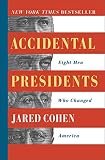
Consider Accidental Presidents by Jared Cohen. Recommended by 10 sources.
“Accidental Presidents offers eight narrative portraits of men who succeeded to the U.S. presidency without election, using anecdote-rich scenes and readable context to show how personality and circumstance interact with office power. It’s strongest as a set of self-contained stories that make succession stakes concrete for non-specialist readers; it does not prioritize dense archival argument or exhaustive methodology, so expect some interpretive generalizations and repeated themes across cases. Use it for fast historical orientation rather than scholarly deep-dives.”
Similar books

How recommendation signals are reviewed
Each recommendation is collected from a public source — interviews, articles, or curated lists — and linked to its original URL. Books with many verifiable recommendations from respected people rank higher.