
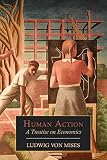
Human Action
A Treatise on Economics
by Ludwig von Mises
Reading Profile
Should I read this?
Reading Human Action feels like tackling a long, formal argument in economic theory: dense prose, step-by-step deductions, and frequent polemical asides. Its most useful material is a contiguous, theory-first account of market reasoning and individual choice that lays out praxeological logic at length. Its limits are an abstract tone, repeated restatements, and relatively few modern examples to break up the logic. Expect to reread sections rather than skim. No hands-on exercises are provided.
Read this if...
- •a graduate student in economic thought preparing a seminar paper: useful because it sets out Austrian-school praxeological reasoning you can trace, cite, and critique in depth.
- •a policy analyst in a government office revisiting market-versus-intervention arguments before drafting recommendations: useful because long-form counterarguments to intervention help map opposing assumptions.
- •an intellectual historian assembling a syllabus on 20th-century economic debates: useful because it records one sustained, internally consistent statement of mid-century Austrian economic theory.
Skip this if...
- •you'll likely put it down when the prose shifts into long, abstract deductions with few concrete examples — those middle sections are a common slowdown.
- •annoying if you prefer short chapters, contemporary case studies, or practical step-by-step applications — the book prioritizes theoretical argument over quick takeaways or exercises.
- •frustrating if you dislike polemical tone or ideological certainty; repetitive restatement and a combative voice can feel dogmatic.
2012 Reprint of 1949 Edition. Exact facsimile of the original edition, not reproduced with Optical Recognition Software. "Human Action: A Treatise on Economics" is the first comprehensive treatise on economics written by a leading member of the modern Austrian school of economics. Von Mises contribution was very simple, yet at the same time extreme...
Before You Buy
Reading Specifications
Difficulty:hard
Audience Fit
- a graduate student in economic thought preparing a seminar paper: useful because it sets out Austrian-school praxeological reasoning you can trace, cite, and critique in depth.
- a policy analyst in a government office revisiting market-versus-intervention arguments before drafting recommendations: useful because long-form counterarguments to intervention help map opposing assumptions.
- an intellectual historian assembling a syllabus on 20th-century economic debates: useful because it records one sustained, internally consistent statement of mid-century Austrian economic theory.
- you'll likely put it down when the prose shifts into long, abstract deductions with few concrete examples — those middle sections are a common slowdown.
- annoying if you prefer short chapters, contemporary case studies, or practical step-by-step applications — the book prioritizes theoretical argument over quick takeaways or exercises.
- frustrating if you dislike polemical tone or ideological certainty; repetitive restatement and a combative voice can feel dogmatic.
Check formats, pricing, and availability options for Kindle, physical print, or audiobooks directly.
View available editions on AmazonKey themes
Why recommended
Recommended by 3 sources and appears in Economics, Most Recommended Books, and Finance.
Recommended by notable people
People and public figures who have recommended this book.
Recommendation Signals
Recommendation proof is sourced from public posts, interviews, reading lists, and cited references.
Charles Koch
“People only act if the action will satisfy 3 requirements. This book shows them.”
Appears In
Not sure if this is the right fit?
Consider The Boy, the Mole, the Fox and the Horse by Charlie Mackesy. Recommended by 8 sources.
“Soft-spoken, heavily illustrated fable built from short dialogues and watercolor sketches. Each spread pairs a spare line of text with a loose drawing, so the pleasure is visual and aphoristic rather than narrative; readers collect felt-true sentences more than plot. Most useful when you want quick consolations, a prompt for conversation with a child, or a pause during a rough day. Limiting if you want sustained argument, concrete advice, or tightly plotted storytelling: the repetition of gentleness can feel sentimental or thin after a while.”
Similar books
The Boy, the Mole, the Fox and the Horse
Charlie Mackesy
The World as It Is
Ben Rhodes
Out of Control
Kevin Kelly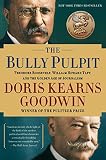
The Bully Pulpit
Doris Kearns Goodwin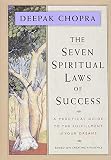
The Seven Spiritual Laws of Success
Deepak Chopra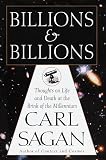
Billions and Billions
Carl Sagan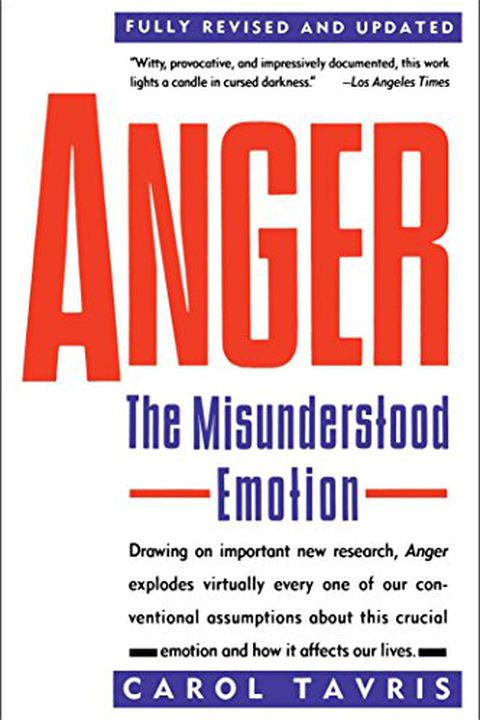
Anger
Gary ChapmanFactfulness
Hans RoslingHow recommendation signals are reviewed
Each recommendation is collected from a public source — interviews, articles, or curated lists — and linked to its original URL. Books with many verifiable recommendations from respected people rank higher.