
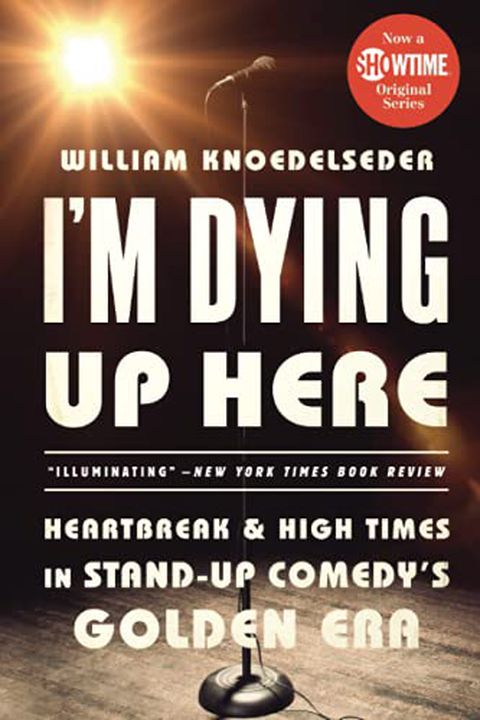
I'm Dying Up Here
Heartbreak and High Times in StandUp Comedy's Golden Era
by William Knoedelseder
Reading Profile
Should I read this?
A vivid, anecdote-rich account of a mid-1970s Los Angeles late-night comedy scene, told through club stories and personal dramas. You'll get backstage color, night-to-morning timelines, and the small humiliations and fleeting triumphs that pushed some performers toward bigger stages. What works best is the oral-history texture: it reads like conversations overheard at the bar, full of routine beats, bad nights, and lucky breaks. The chief limitation is an episodic, name-heavy structure that repeats anecdotes and often skirts broader social context or industry analysis. Best read as lively cultural storytelling rather than a tightly argued history.
Read this if...
- •an entertainment journalist working on a two-week magazine feature about 1970s Los Angeles nightlife who needs vivid scene-setting and quotable backstage anecdotes now — the book supplies immediate, usable color and brief timelines to enliven ledes and pull quotes
- •a stand-up comedian who performs in small clubs and is trying to understand how repeated bad nights, routine tweaks, and local networking shape careers — useful now if you're revising material or deciding how much time to commit to the club circuit, because the book delivers concrete, grind-focused scenes
- •a graduate student or cultural-history researcher preparing a seminar paper or a chapter on urban subcultures who needs atmospheric, first-person–style anecdotes to illustrate micro-level social dynamics — good now when you want texture and illustrative episodes to pair with more analytical sources
Skip this if...
- •you'll lose patience if you prefer tightly argued history or social analysis — the book favors storytelling over structural explanation
- •annoying if you dislike repeated name-checks and episodic profiles: you'll likely put it down when chapters become a parade of short, similar anecdotes with little synthesis
- •not a match if you want exercises, lessons, or a how-to — there are no hands-on takeaways and the narrative can feel indulgent and gossipy
In the mid1970s, Jay Leno, David Letterman, Andy Kaufman, Richard Lewis, Robin Williams, Elayne Boosler, Tom Dreesen, and several hundred other shameless showoffs and incorrigible cutups from all across the country migrated en masse to Los Angeles, the new home of Johnny Carson's Tonight Show. There, in a latenight world of sex, drugs, dreams and...
Before You Buy
Reading Specifications
Difficulty:hard
Audience Fit
- an entertainment journalist working on a two-week magazine feature about 1970s Los Angeles nightlife who needs vivid scene-setting and quotable backstage anecdotes now — the book supplies immediate, usable color and brief timelines to enliven ledes and pull quotes
- a stand-up comedian who performs in small clubs and is trying to understand how repeated bad nights, routine tweaks, and local networking shape careers — useful now if you're revising material or deciding how much time to commit to the club circuit, because the book delivers concrete, grind-focused scenes
- a graduate student or cultural-history researcher preparing a seminar paper or a chapter on urban subcultures who needs atmospheric, first-person–style anecdotes to illustrate micro-level social dynamics — good now when you want texture and illustrative episodes to pair with more analytical sources
- you'll lose patience if you prefer tightly argued history or social analysis — the book favors storytelling over structural explanation
- annoying if you dislike repeated name-checks and episodic profiles: you'll likely put it down when chapters become a parade of short, similar anecdotes with little synthesis
- not a match if you want exercises, lessons, or a how-to — there are no hands-on takeaways and the narrative can feel indulgent and gossipy
Check formats, pricing, and availability options for Kindle, physical print, or audiobooks directly.
View available editions on AmazonKey themes
Why recommended
appears in Comedy, History, and Fiction.
Recommendation Signals
Recommendation proof is sourced from public posts, interviews, reading lists, and cited references.
No verified recommendation proof available yet.
Appears In
Not sure if this is the right fit?
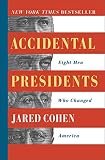
Consider Accidental Presidents by Jared Cohen. Recommended by 10 sources.
“Accidental Presidents offers eight narrative portraits of men who succeeded to the U.S. presidency without election, using anecdote-rich scenes and readable context to show how personality and circumstance interact with office power. It’s strongest as a set of self-contained stories that make succession stakes concrete for non-specialist readers; it does not prioritize dense archival argument or exhaustive methodology, so expect some interpretive generalizations and repeated themes across cases. Use it for fast historical orientation rather than scholarly deep-dives.”
Similar books

How recommendation signals are reviewed
Each recommendation is collected from a public source — interviews, articles, or curated lists — and linked to its original URL. Books with many verifiable recommendations from respected people rank higher.