
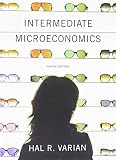
Intermediate Microeconomics
A Modern Approach
by Hal R. Varian
Recommended by Tim O’Reilly and Tim O_x0092_Reilly
Check price on AmazonProof-backed recommendation
Amazon availability
Reading Profile
Should I read this?
Varian's Intermediate Microeconomics reads like a tightly focused course: clear, math-forward chapters that show how to set up and solve optimization problems used in exams and follow-on classes. What works best is practical technique — graphs, calculus, comparative statics — presented with concise explanations aimed at working economists and students. The main limitation is tone and density: compact derivations and frequent algebraic steps leave little hand-holding, so readers seeking big-picture narrative or gentle intuition may find it terse and sometimes dry.
Read this if...
- •undergraduate economics major preparing for intermediate micro exams who needs concise derivations and worked methods to practice problem-solving.
- •teaching assistant building recitation problems and lecture notes who wants a compact source of solved examples and standard comparative-statics techniques.
- •policy analyst or grad student refreshing calculus-based micro tools before modeling a policy question, when you need a quick technical refresher rather than broad literature review.
Skip this if...
- •you'll likely put it down when a page becomes dense with equations and the prose stops translating steps back into intuition — readers who need conversational hand-holding often stop here.
- •annoying if you prefer narrative case studies, real-world anecdotes, or qualitative motivations rather than compact formal derivations and algebra.
- •not for casual readers or multidisciplinary managers seeking broad economic stories and implications rather than calculation-ready tools and problem technique.
This bestselling text is still the most modern presentation of the subject. The Varian approach gives students tools they can use on exams, in the rest of their classes, and in their careers after graduation....
Before You Buy
Reading Specifications
Difficulty:hard
Audience Fit
- undergraduate economics major preparing for intermediate micro exams who needs concise derivations and worked methods to practice problem-solving.
- teaching assistant building recitation problems and lecture notes who wants a compact source of solved examples and standard comparative-statics techniques.
- policy analyst or grad student refreshing calculus-based micro tools before modeling a policy question, when you need a quick technical refresher rather than broad literature review.
- you'll likely put it down when a page becomes dense with equations and the prose stops translating steps back into intuition — readers who need conversational hand-holding often stop here.
- annoying if you prefer narrative case studies, real-world anecdotes, or qualitative motivations rather than compact formal derivations and algebra.
- not for casual readers or multidisciplinary managers seeking broad economic stories and implications rather than calculation-ready tools and problem technique.
Check formats, pricing, and availability options for Kindle, physical print, or audiobooks directly.
View available editions on AmazonKey themes
Why recommended
Recommended by 3 sources and appears in Most Recommended Books, Finance, and Nonfiction.
Recommended by notable people
People and public figures who have recommended this book.
Recommendation Signals
Recommendation proof is sourced from public posts, interviews, reading lists, and cited references.
Tim O_x0092_Reilly
“Almost every economist learned from Intermediate Microeconomics.”
Appears In
Not sure if this is the right fit?
Consider The Undoing Project by Michael Lewis. Recommended by 18 sources.
“Michael Lewis chronicles the friendship and intellectual partnership of Daniel Kahneman and Amos Tversky, who championed the idea that cognitive biases shape our choices. The narrative reads like a buddy story, weaving their discoveries into personal anecdotes and the drama of their collaboration. You'll grasp key ideas—loss aversion, framing—through their story, but the book focuses on biography, not application. Helpful for understanding behavioral economics' origins; less useful if you want actionable advice. The emotional arc of their relationship can overshadow the science.”
Similar books
The Undoing Project
Michael Lewis
The Little Book of Common Sense Investing
John C. Bogle
Financial Shenanigans
Howard Schilit
Scale
Geoffrey West
Poor Numbers
Morten Jerven
The Great Illusion
Norman Angell
One Billion Americans
Matthew Yglesias
Accounting Principles Standalone book
Jerry J. WeygandtHow recommendation signals are reviewed
Each recommendation is collected from a public source — interviews, articles, or curated lists — and linked to its original URL. Books with many verifiable recommendations from respected people rank higher.