
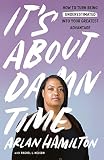
It's About Damn Time
How to Turn Being Underestimated into Your Greatest Advantage
by Arlan Hamilton
Reading Profile
Should I read this?
Arlan Hamilton mixes memoir, startup dispatches, and blunt career pep-talk to argue that doors open when people insist on being invited. The voice is direct and energetic: personal anecdotes fuel practical takeaways about pitching, persistence, and claiming space in investor rooms. The useful part is the lived-account energy that models confidence and networking tactics; the limitation is uneven structure and repeated motivational riffs that sometimes substitute for step-by-step guidance, so readers wanting granular playbooks may feel shorted.
Read this if...
- •an early-stage founder trying to raise a first institutional check who needs concrete confidence-building examples and pitching language to get into investor conversations now
- •a mid-level product manager at a startup angling for leadership who wants frank, experience-based advice on claiming visibility and negotiating room at the table
- •a diversity-and-inclusion program manager assembling motivational reading for candidates or internal cohorts who wants first-person narratives that model persistence and boundary-pushing
Skip this if...
- •you’ll likely put it down when chapters drift into repeated motivational anecdotes with few concrete steps — readers wanting a linear, tactical playbook will grow impatient
- •annoying if you prefer dispassionate industry analysis or fine-grained, data-driven guidance rather than candid personal story and exhortation
- •skip if you need hands-on exercises or templates — the book lacks step-by-step worksheets and is not a practical workbook
“A hero's tale of what’s possible when we unlock our potential, continue the search for knowledge, and draw on our lived experiences to guide us through the darkest moments.”—Stacey AbramsFrom a black, gay woman who broke into the boys' club of Silicon Valley comes an empowering guide to finding your voice, working your way into any room you want t...
Before You Buy
Reading Specifications
Difficulty:easy
Audience Fit
- an early-stage founder trying to raise a first institutional check who needs concrete confidence-building examples and pitching language to get into investor conversations now
- a mid-level product manager at a startup angling for leadership who wants frank, experience-based advice on claiming visibility and negotiating room at the table
- a diversity-and-inclusion program manager assembling motivational reading for candidates or internal cohorts who wants first-person narratives that model persistence and boundary-pushing
- you’ll likely put it down when chapters drift into repeated motivational anecdotes with few concrete steps — readers wanting a linear, tactical playbook will grow impatient
- annoying if you prefer dispassionate industry analysis or fine-grained, data-driven guidance rather than candid personal story and exhortation
- skip if you need hands-on exercises or templates — the book lacks step-by-step worksheets and is not a practical workbook
Check formats, pricing, and availability options for Kindle, physical print, or audiobooks directly.
View available editions on AmazonKey themes
Why recommended
Recommended by 5 sources and appears in Most Recommended Books, Business, and Nonfiction.
Recommended by notable people
People and public figures who have recommended this book.
Recommendation Signals
Recommendation proof is sourced from public posts, interviews, reading lists, and cited references.
Appears In

Not sure if this is the right fit?
Consider Accidental Presidents by Jared Cohen. Recommended by 10 sources.
“Accidental Presidents offers eight narrative portraits of men who succeeded to the U.S. presidency without election, using anecdote-rich scenes and readable context to show how personality and circumstance interact with office power. It’s strongest as a set of self-contained stories that make succession stakes concrete for non-specialist readers; it does not prioritize dense archival argument or exhaustive methodology, so expect some interpretive generalizations and repeated themes across cases. Use it for fast historical orientation rather than scholarly deep-dives.”
Similar books


How recommendation signals are reviewed
Each recommendation is collected from a public source — interviews, articles, or curated lists — and linked to its original URL. Books with many verifiable recommendations from respected people rank higher.