
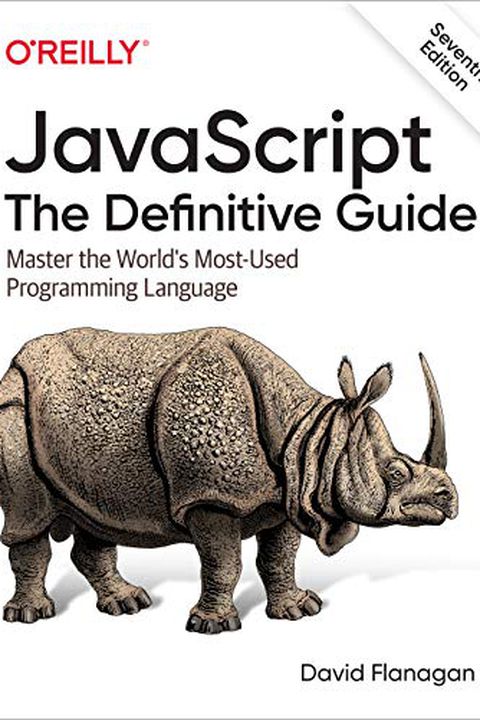
JavaScript
The Good Parts
by Douglas Crockford
Reading Profile
Should I read this?
This is a tight, opinionated manual that selects a conservative subset of JavaScript and defends why those parts are safer. Crockford writes crisply, with short examples, firm pronouncements about language pitfalls, and a teaching-by-omission strategy: remove bad features rather than catalog every feature. The main usefulness is in giving concrete rules you can apply to make code more predictable in legacy or mixed-quality codebases. The main limitation is its prescriptive stance and focus on older JavaScript idioms; readers seeking broad ES6+ coverage or tutorial-style hand-holding will be frustrated.
Read this if...
- •A mid‑level front‑end engineer joining a legacy codebase who needs quick, enforceable rules to reduce surprising behavior and make reviews faster.
- •A tech lead drafting a short style checklist for a team that mixes newcomers and experienced JS authors and wants to cut out hazardous language features.
- •A developer preparing to audit or refactor small utility modules who wants compact explanations of which language constructs tend to cause bugs.
Skip this if...
- •If you came for an up-to-date ES6+ tutorial or a broad modern-syntax tour — the book feels dated and narrowly prescriptive, and you'll likely put it down in the first half when newer idioms are repeatedly dismissed rather than explained.
- •Younger developers who need step‑by‑step examples and scaffolding — the prose is dense and assumes prior familiarity, so newcomers will struggle and lose patience in the opening chapters where basic concepts are asserted rather than taught.
- •Readers wanting a rounded debate or multiple viewpoints — the tone is preachy and sometimes moralizing, with the author's single-voice certainties repeated through the middle of the book; that one-note stance will annoy anyone who prefers evidence and counterarguments.
Most Programming, languages contain good and bad parts, but JavaScript has more than its share of the bad, having been developed and released in a hurry before it could be refined. This authoritative book scrapes away these bad features to reveal a subset of JavaScript that's more reliable, readable, and maintainable than the language as a wholea ...
Before You Buy
Reading Specifications
Difficulty:hard
Audience Fit
- A mid‑level front‑end engineer joining a legacy codebase who needs quick, enforceable rules to reduce surprising behavior and make reviews faster.
- A tech lead drafting a short style checklist for a team that mixes newcomers and experienced JS authors and wants to cut out hazardous language features.
- A developer preparing to audit or refactor small utility modules who wants compact explanations of which language constructs tend to cause bugs.
- If you came for an up-to-date ES6+ tutorial or a broad modern-syntax tour — the book feels dated and narrowly prescriptive, and you'll likely put it down in the first half when newer idioms are repeatedly dismissed rather than explained.
- Younger developers who need step‑by‑step examples and scaffolding — the prose is dense and assumes prior familiarity, so newcomers will struggle and lose patience in the opening chapters where basic concepts are asserted rather than taught.
- Readers wanting a rounded debate or multiple viewpoints — the tone is preachy and sometimes moralizing, with the author's single-voice certainties repeated through the middle of the book; that one-note stance will annoy anyone who prefers evidence and counterarguments.
Check formats, pricing, and availability options for Kindle, physical print, or audiobooks directly.
View available editions on AmazonKey themes
Why recommended
appears in Front End Development, Javascript, and Programming.
Recommendation Signals
Recommendation proof is sourced from public posts, interviews, reading lists, and cited references.
No verified recommendation proof available yet.
Appears In
Not sure if this is the right fit?
Consider Accidental Presidents by Jared Cohen. Recommended by 10 sources.
“Accidental Presidents offers eight narrative portraits of men who succeeded to the U.S. presidency without election, using anecdote-rich scenes and readable context to show how personality and circumstance interact with office power. It’s strongest as a set of self-contained stories that make succession stakes concrete for non-specialist readers; it does not prioritize dense archival argument or exhaustive methodology, so expect some interpretive generalizations and repeated themes across cases. Use it for fast historical orientation rather than scholarly deep-dives.”
Similar books

How recommendation signals are reviewed
Each recommendation is collected from a public source — interviews, articles, or curated lists — and linked to its original URL. Books with many verifiable recommendations from respected people rank higher.