
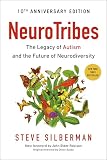
NeuroTribes
The Legacy of Autism and the Future of Neurodiversity
by Steve Silberman
Recommended by Bethany S. Mandel and Uta Frith
Check price on AmazonProof-backed recommendation
Amazon availability
Reading Profile
Should I read this?
Silberman traces autism’s history from early research through modern debates, mixing archival reporting, interviews, and cultural history. What works best is a wide-angle timeline that links diagnostic changes, institutional practices, and grassroots advocacy, helping you see how public attitudes shifted. The main limitation is length and repetition: chapters sometimes restate points and tilt toward advocacy, so readers seeking neutral, concise summaries may feel the tone persuasive. Helpful for context and storytelling, but not a practical manual or checklist.
Read this if...
- •an early-career clinician trying to understand why diagnostic categories and care systems look the way they do before starting work with autistic adults — provides historical context to inform conversations with colleagues and families
- •a parent or partner newly learning an autism diagnosis who wants background on how society’s responses developed and why advocacy matters — supplies narrative context and personal stories rather than step-by-step advice
- •a teacher or school-policy advocate building a case for inclusive practices in a district — offers historical examples and human stories to frame arguments for change
Skip this if...
- •you’ll likely put it down when long archival chapters pile up and the same themes are reiterated — readers wanting a brisk, condensed summary often lose patience in the middle
- •annoying if you prefer bullet-point guidance or practical checklists; the book lacks hands-on exercises and doesn’t function as an implementation guide
- •not a good fit if you want a detached, purely clinical survey — the narrative leans toward an advocacy perspective and sometimes privileges personal storytelling over neutral balance
Going back to the earliest days of autism research and chronicling the brave and lonely journey of autistic people and their families through the decades, Silberman provides longsought solutions to the autism puzzle, while mapping out a path for our society toward a more humane world in which people with learning differences and those who love the...
Before You Buy
Reading Specifications
Difficulty:hard
Audience Fit
- an early-career clinician trying to understand why diagnostic categories and care systems look the way they do before starting work with autistic adults — provides historical context to inform conversations with colleagues and families
- a parent or partner newly learning an autism diagnosis who wants background on how society’s responses developed and why advocacy matters — supplies narrative context and personal stories rather than step-by-step advice
- a teacher or school-policy advocate building a case for inclusive practices in a district — offers historical examples and human stories to frame arguments for change
- you’ll likely put it down when long archival chapters pile up and the same themes are reiterated — readers wanting a brisk, condensed summary often lose patience in the middle
- annoying if you prefer bullet-point guidance or practical checklists; the book lacks hands-on exercises and doesn’t function as an implementation guide
- not a good fit if you want a detached, purely clinical survey — the narrative leans toward an advocacy perspective and sometimes privileges personal storytelling over neutral balance
Check formats, pricing, and availability options for Kindle, physical print, or audiobooks directly.
View available editions on AmazonKey themes
Why recommended
Recommended by 2 sources and appears in Autism, Psychology, and Science.
Recommended by notable people
People and public figures who have recommended this book.
Recommendation Signals
Recommendation proof is sourced from public posts, interviews, reading lists, and cited references.
Uta Frith
“Definitely. You'll get a completely different outlook on history of #autism from @stevesilberman's book. | If you read one book about autism (and you shouldn?t just read one), make it @stevesilberman ?s NeuroTribes. It was the best book I read last year hands down and I think about it nearly every day. | If you read one book about autism (and you shouldn’t just read one), make it @stevesilberman ‘s NeuroTribes. It was the best book I read last year hands down and I think about it nearly every day.”
View sources (2) ▾80%
Appears In
Not sure if this is the right fit?
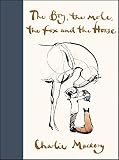
Consider The Boy, the Mole, the Fox and the Horse by Charlie Mackesy. Recommended by 8 sources.
“Soft-spoken, heavily illustrated fable built from short dialogues and watercolor sketches. Each spread pairs a spare line of text with a loose drawing, so the pleasure is visual and aphoristic rather than narrative; readers collect felt-true sentences more than plot. Most useful when you want quick consolations, a prompt for conversation with a child, or a pause during a rough day. Limiting if you want sustained argument, concrete advice, or tightly plotted storytelling: the repetition of gentleness can feel sentimental or thin after a while.”
Similar books
The Boy, the Mole, the Fox and the Horse
Charlie Mackesy
The World as It Is
Ben Rhodes
Out of Control
Kevin Kelly
The Bully Pulpit
Doris Kearns Goodwin
The Seven Spiritual Laws of Success
Deepak Chopra
Billions and Billions
Carl Sagan
Anger
Gary ChapmanFactfulness
Hans RoslingHow recommendation signals are reviewed
Each recommendation is collected from a public source — interviews, articles, or curated lists — and linked to its original URL. Books with many verifiable recommendations from respected people rank higher.