
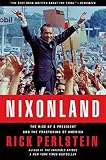
Nixonland
The Rise of a President and the Fracturing of America
by Rick Perlstein

Reading Profile
Should I read this?
Rick Perlstein plunges readers into late-1960s and early-1970s America with scene-by-scene reporting that ties urban unrest, campaign theater, and media spectacle to Nixon’s political resurgence. The book’s strength is its accumulation of small incidents—local riots, campaign stops, leaked memos—that create a textured sense of how national mood shifted. Its limits are repetition and long narrative detours: similar episodes recur and portraits of minor figures can slow momentum for readers seeking brisk synthesis. Expect immersive detail, uneven pacing, and clear point of view.
Read this if...
- •a graduate student preparing a seminar on political realignment who needs vivid anecdotes and scene details to illustrate how local unrest translated into national politics right before a seminar deadline
- •a high-school civics or history teacher designing a multi-class unit on Nixon-era politics who wants dramatic passages to read aloud and concrete incidents to prompt classroom debates
- •a state-level campaign communications director studying historical uses of 'law-and-order' messaging and grassroots backlash to inform modern messaging strategy and opposition research
Skip this if...
- •you'll likely put it down when the narrative repeatedly cycles through similar riots, campaign spins, and reaction scenes without quickly moving to big-picture synthesis
- •annoying if you prefer short, schematic histories or a breezy, neutral tone—this is long, detail-heavy, and sometimes polemical
- •not for readers who want practical takeaways or hands-on exercises—lacks concise summaries and contains few explicit lessons to apply
Politically insightful, Nixonland recaptures the turbulent 60s & early 70s, revealing how Dick Nixon rose from the political grave to seize & hold the presidency. Perlstein's account begins with the '65 Watts riots, nine months after Johnson's landslide victory over Goldwater appeared to herald a permanent liberal consensus. Yet the next year, scor...
Before You Buy
Reading Specifications
Difficulty:hard
Audience Fit
- a graduate student preparing a seminar on political realignment who needs vivid anecdotes and scene details to illustrate how local unrest translated into national politics right before a seminar deadline
- a high-school civics or history teacher designing a multi-class unit on Nixon-era politics who wants dramatic passages to read aloud and concrete incidents to prompt classroom debates
- a state-level campaign communications director studying historical uses of 'law-and-order' messaging and grassroots backlash to inform modern messaging strategy and opposition research
- you'll likely put it down when the narrative repeatedly cycles through similar riots, campaign spins, and reaction scenes without quickly moving to big-picture synthesis
- annoying if you prefer short, schematic histories or a breezy, neutral tone—this is long, detail-heavy, and sometimes polemical
- not for readers who want practical takeaways or hands-on exercises—lacks concise summaries and contains few explicit lessons to apply
Check formats, pricing, and availability options for Kindle, physical print, or audiobooks directly.
View available editions on AmazonKey themes
Why recommended
Recommended by 2 sources and appears in Political, Most Recommended Books, and Politics.
Recommended by notable people
People and public figures who have recommended this book.
Recommendation Signals
Recommendation proof is sourced from public posts, interviews, reading lists, and cited references.
Appears In
Not sure if this is the right fit?
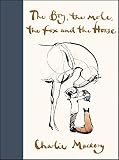
Consider The Boy, the Mole, the Fox and the Horse by Charlie Mackesy. Recommended by 8 sources.
“Soft-spoken, heavily illustrated fable built from short dialogues and watercolor sketches. Each spread pairs a spare line of text with a loose drawing, so the pleasure is visual and aphoristic rather than narrative; readers collect felt-true sentences more than plot. Most useful when you want quick consolations, a prompt for conversation with a child, or a pause during a rough day. Limiting if you want sustained argument, concrete advice, or tightly plotted storytelling: the repetition of gentleness can feel sentimental or thin after a while.”
Similar books
The Boy, the Mole, the Fox and the Horse
Charlie Mackesy
The World as It Is
Ben Rhodes
Out of Control
Kevin Kelly
The Bully Pulpit
Doris Kearns Goodwin
The Seven Spiritual Laws of Success
Deepak Chopra
Billions and Billions
Carl Sagan
Anger
Gary ChapmanFactfulness
Hans RoslingHow recommendation signals are reviewed
Each recommendation is collected from a public source — interviews, articles, or curated lists — and linked to its original URL. Books with many verifiable recommendations from respected people rank higher.