
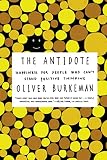
The Antidote
Happiness for People Who Can't Stand Positive Thinking
by Oliver Burkeman

2 more
More Recommenders
“@luvo_makasi Yeah, awesome book. | Fabulous book. Totally fun. It’s happiness for people who can’t stand positive thinking. | Surprisingly deep and philosophical. The first book I've read in years that makes me want to read it twice. The title and cover make it seem like light pop, but it's a wonderfullycynical British journalist diving into Stoicism, meditation, death, etc.”
Source →“@luvo_makasi Yeah, awesome book. | Fabulous book. Totally fun. It’s happiness for people who can’t stand positive thinking. | Surprisingly deep and philosophical. The first book I've read in years that makes me want to read it twice. The title and cover make it seem like light pop, but it's a wonderfullycynical British journalist diving into Stoicism, meditation, death, etc.”
Source →Recommended by 4 notable people, including Derek Sivers and Mark Manson
Check price on AmazonProof-backed recommendation
Amazon availability
Reading Profile
Should I read this?
Begins by upending upbeat self-help promises and proceeds through anecdote-rich thought experiments, philosophical references, and plainspoken reframes that encourage tolerating failure and uncertainty. The most useful part is its steady permission to stop optimizing every outcome and to treat worry as information rather than an enemy. Its main limitation is structural: the author returns to the same counterintuitive claims via multiple detours, so the book can feel repetitive and impressionistic rather than tightly procedural.
Read this if...
- •a mid-career manager at a high-pressure company trying to ease a relentless performance treadmill — useful now because it offers attitudes and language that help reduce self-imposed escalation without quitting your role
- •a graduate student or early-career professional stuck in perfectionism and decision paralysis — useful now because it supplies reframes that make uncertainty and small failures less catastrophic during high-stakes choices
- •a creative freelancer juggling irregular income and constant self-promotion — useful now because its perspective helps you tolerate setbacks and reinterpret failures as informative rather than career-ending
Skip this if...
- •you'll likely put it down when the same counterintuitive slogan is restated through many anecdotes and philosophical detours — impatient readers will find the repetition tiresome
- •annoying if you prefer precise, actionable checklists and step-by-step how-tos — this reads more like essays and reflections than a manual
- •avoid if you want a tightly data-driven, blow-by-blow argument — the tone is impressionistic and anecdote-heavy, not a systematic, evidence-focused treatise
Success through failure, calm through embracing anxiety?a totally original approach to selfhelpSelfhelp books don't seem to work. Few of the many advantages of modern life seem capable of lifting our collective mood. Wealth?even if you can get it?doesn't necessarily lead to happiness. Romance, family life, and work often bring as much stress as j...
Before You Buy
Reading Specifications
Difficulty:hard
Audience Fit
- a mid-career manager at a high-pressure company trying to ease a relentless performance treadmill — useful now because it offers attitudes and language that help reduce self-imposed escalation without quitting your role
- a graduate student or early-career professional stuck in perfectionism and decision paralysis — useful now because it supplies reframes that make uncertainty and small failures less catastrophic during high-stakes choices
- a creative freelancer juggling irregular income and constant self-promotion — useful now because its perspective helps you tolerate setbacks and reinterpret failures as informative rather than career-ending
- you'll likely put it down when the same counterintuitive slogan is restated through many anecdotes and philosophical detours — impatient readers will find the repetition tiresome
- annoying if you prefer precise, actionable checklists and step-by-step how-tos — this reads more like essays and reflections than a manual
- avoid if you want a tightly data-driven, blow-by-blow argument — the tone is impressionistic and anecdote-heavy, not a systematic, evidence-focused treatise
Check formats, pricing, and availability options for Kindle, physical print, or audiobooks directly.
View available editions on AmazonKey themes
Why recommended
Recommended by 6 sources and appears in Depression, Personal Development, and Most Recommended Books.
Recommended by notable people
People and public figures who have recommended this book.
Recommendation Signals
Recommendation proof is sourced from public posts, interviews, reading lists, and cited references.
Paul Jarvis
“@luvo_makasi Yeah, awesome book. | Fabulous book. Totally fun. It’s happiness for people who can’t stand positive thinking. | Surprisingly deep and philosophical. The first book I've read in years that makes me want to read it twice. The title and cover make it seem like light pop, but it's a wonderfullycynical British journalist diving into Stoicism, meditation, death, etc.”
View sources (3) ▾80%
Appears In
Not sure if this is the right fit?
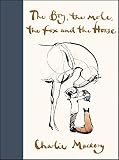
Consider The Boy, the Mole, the Fox and the Horse by Charlie Mackesy. Recommended by 8 sources.
“Soft-spoken, heavily illustrated fable built from short dialogues and watercolor sketches. Each spread pairs a spare line of text with a loose drawing, so the pleasure is visual and aphoristic rather than narrative; readers collect felt-true sentences more than plot. Most useful when you want quick consolations, a prompt for conversation with a child, or a pause during a rough day. Limiting if you want sustained argument, concrete advice, or tightly plotted storytelling: the repetition of gentleness can feel sentimental or thin after a while.”
Similar books
The Boy, the Mole, the Fox and the Horse
Charlie Mackesy
The World as It Is
Ben Rhodes
Out of Control
Kevin Kelly
The Bully Pulpit
Doris Kearns Goodwin
The Seven Spiritual Laws of Success
Deepak Chopra
Billions and Billions
Carl Sagan
Anger
Gary ChapmanFactfulness
Hans RoslingHow recommendation signals are reviewed
Each recommendation is collected from a public source — interviews, articles, or curated lists — and linked to its original URL. Books with many verifiable recommendations from respected people rank higher.