

The Autobiography of Benjamin Franklin
by Benjamin Franklin
8 more
More Recommenders

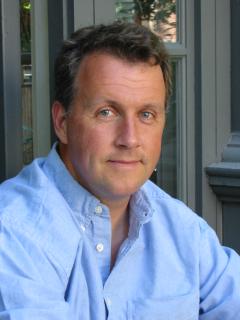
Co-founder of PayPal, Tesla, SpaceX, and Neuralink
“Cast as a letter to his son. It’s not some deep ruminations and things. It’s about how you make your way through this world. | Q: What should I read to learn more about history PG: The way to do it is piecemeal. You could just sit down and try reading Roberts's History of the World cover to cover, but you'd probably lose interest. I think it's a better plan to read books about specific topics, even if you don't understand everything the first time through. Here are the most exciting ones I can think of: | The author didn’t mean to write his autobiography. He wanted to write a note to his family about what he’d learned in his experiments. | This is I think the most compelling of books.”
Source →“Cast as a letter to his son. It’s not some deep ruminations and things. It’s about how you make your way through this world. | Q: What should I read to learn more about history PG: The way to do it is piecemeal. You could just sit down and try reading Roberts's History of the World cover to cover, but you'd probably lose interest. I think it's a better plan to read books about specific topics, even if you don't understand everything the first time through. Here are the most exciting ones I can think of: | The author didn’t mean to write his autobiography. He wanted to write a note to his family about what he’d learned in his experiments. | This is I think the most compelling of books.”
Source →“Cast as a letter to his son. It’s not some deep ruminations and things. It’s about how you make your way through this world. | Q: What should I read to learn more about history PG: The way to do it is piecemeal. You could just sit down and try reading Roberts's History of the World cover to cover, but you'd probably lose interest. I think it's a better plan to read books about specific topics, even if you don't understand everything the first time through. Here are the most exciting ones I can think of: | The author didn’t mean to write his autobiography. He wanted to write a note to his family about what he’d learned in his experiments. | This is I think the most compelling of books.”
Source →“Cast as a letter to his son. It’s not some deep ruminations and things. It’s about how you make your way through this world. | Q: What should I read to learn more about history PG: The way to do it is piecemeal. You could just sit down and try reading Roberts's History of the World cover to cover, but you'd probably lose interest. I think it's a better plan to read books about specific topics, even if you don't understand everything the first time through. Here are the most exciting ones I can think of: | The author didn’t mean to write his autobiography. He wanted to write a note to his family about what he’d learned in his experiments. | This is I think the most compelling of books.”
Source →“Cast as a letter to his son. It’s not some deep ruminations and things. It’s about how you make your way through this world. | Q: What should I read to learn more about history PG: The way to do it is piecemeal. You could just sit down and try reading Roberts's History of the World cover to cover, but you'd probably lose interest. I think it's a better plan to read books about specific topics, even if you don't understand everything the first time through. Here are the most exciting ones I can think of: | The author didn’t mean to write his autobiography. He wanted to write a note to his family about what he’d learned in his experiments. | This is I think the most compelling of books.”
Source →“Cast as a letter to his son. It’s not some deep ruminations and things. It’s about how you make your way through this world. | Q: What should I read to learn more about history PG: The way to do it is piecemeal. You could just sit down and try reading Roberts's History of the World cover to cover, but you'd probably lose interest. I think it's a better plan to read books about specific topics, even if you don't understand everything the first time through. Here are the most exciting ones I can think of: | The author didn’t mean to write his autobiography. He wanted to write a note to his family about what he’d learned in his experiments. | This is I think the most compelling of books.”
Source →“Cast as a letter to his son. It’s not some deep ruminations and things. It’s about how you make your way through this world. | Q: What should I read to learn more about history PG: The way to do it is piecemeal. You could just sit down and try reading Roberts's History of the World cover to cover, but you'd probably lose interest. I think it's a better plan to read books about specific topics, even if you don't understand everything the first time through. Here are the most exciting ones I can think of: | The author didn’t mean to write his autobiography. He wanted to write a note to his family about what he’d learned in his experiments. | This is I think the most compelling of books.”
Source →“Cast as a letter to his son. It’s not some deep ruminations and things. It’s about how you make your way through this world. | Q: What should I read to learn more about history PG: The way to do it is piecemeal. You could just sit down and try reading Roberts's History of the World cover to cover, but you'd probably lose interest. I think it's a better plan to read books about specific topics, even if you don't understand everything the first time through. Here are the most exciting ones I can think of: | The author didn’t mean to write his autobiography. He wanted to write a note to his family about what he’d learned in his experiments. | This is I think the most compelling of books.”
Source →Recommended by 10 notable people, including Paul Graham and Frank Chimero
Check price on AmazonProof-backed recommendation
Amazon availability
Reading Profile
Should I read this?
Franklin writes as if chatting with a clever, didactic friend, dispensing advice on industry and frugality. The most useful sections delve into his methodical pursuit of virtue and revealing anecdotes about his rise. However, the narrative breaks off long before his major achievements, leaving a gaping hole. His tone—equal parts pragmatic and self-congratulatory—can grate. Readers seeking a full biography or emotional intimacy will feel shortchanged.
Read this if...
- •A startup founder seeking an early example of methodical self-improvement, intrigued by Franklin’s systematic approach to virtue but preferring a narrative account over a modern productivity guide.
- •A student of early American history needing primary-source insight into the colonial mindset, commerce, and civic virtue, but preferring character-driven narrative over dry analysis.
- •A curious self-improvement reader fascinated by Enlightenment ideals, looking for a real-life experiment in moral engineering, warts and all.
Skip this if...
- •You’ll likely put it down during the middle chapters when Franklin’s 13-step virtue program turns into a dull, repetitive slog that stalls all narrative momentum.
- •Skip if you’re allergic to moralizing—Franklin’s detailed list of virtues and his preachy tone can feel like a tedious sermon.
- •Not for those seeking emotional depth or psychological exploration; Franklin’s self-portrait is largely a curated performance of the industrious, rational public man.
The Autobiography of Benjamin Franklin is the traditional name for the unfinished record of his own life written by Benjamin Franklin from 1771 to 1790; however, Franklin himself appears to have called the work his Memoirs. Although it had a tortuous publication history after Franklin's death, this work has become one of the most famous and influen...
Before You Buy
Reading Specifications
Difficulty:medium
Audience Fit
- A startup founder seeking an early example of methodical self-improvement, intrigued by Franklin’s systematic approach to virtue but preferring a narrative account over a modern productivity guide.
- A student of early American history needing primary-source insight into the colonial mindset, commerce, and civic virtue, but preferring character-driven narrative over dry analysis.
- A curious self-improvement reader fascinated by Enlightenment ideals, looking for a real-life experiment in moral engineering, warts and all.
- You’ll likely put it down during the middle chapters when Franklin’s 13-step virtue program turns into a dull, repetitive slog that stalls all narrative momentum.
- Skip if you’re allergic to moralizing—Franklin’s detailed list of virtues and his preachy tone can feel like a tedious sermon.
- Not for those seeking emotional depth or psychological exploration; Franklin’s self-portrait is largely a curated performance of the industrious, rational public man.
Check formats, pricing, and availability options for Kindle, physical print, or audiobooks directly.
View available editions on AmazonKey themes
Why recommended
Recommended by 17 sources and appears in Autobiography, Time Management, and Books Recommended by Paul Graham.
Recommended by notable people
People and public figures who have recommended this book.
Recommendation Signals
Recommendation proof is sourced from public posts, interviews, reading lists, and cited references.
Scott Young
“Cast as a letter to his son. It’s not some deep ruminations and things. It’s about how you make your way through this world. | Q: What should I read to learn more about history PG: The way to do it is piecemeal. You could just sit down and try reading Roberts's History of the World cover to cover, but you'd probably lose interest. I think it's a better plan to read books about specific topics, even if you don't understand everything the first time through. Here are the most exciting ones I can think of: | The author didn’t mean to write his autobiography. He wanted to write a note to his family about what he’d learned in his experiments. | This is I think the most compelling of books.”
View sources (5) ▾80%
Appears In
Not sure if this is the right fit?
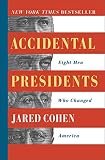
Consider Accidental Presidents by Jared Cohen. Recommended by 10 sources.
“Accidental Presidents offers eight narrative portraits of men who succeeded to the U.S. presidency without election, using anecdote-rich scenes and readable context to show how personality and circumstance interact with office power. It’s strongest as a set of self-contained stories that make succession stakes concrete for non-specialist readers; it does not prioritize dense archival argument or exhaustive methodology, so expect some interpretive generalizations and repeated themes across cases. Use it for fast historical orientation rather than scholarly deep-dives.”
Similar books

How recommendation signals are reviewed
Each recommendation is collected from a public source — interviews, articles, or curated lists — and linked to its original URL. Books with many verifiable recommendations from respected people rank higher.