
The Beginning of Infinity
Explanations That Transform the World
by David Deutsch

10 more
More Recommenders

Co-founder and CEO of Stripe
“@chrismanfrank This aligns deeply w/ my views which are heavily informed by "The Beginning of Infinity" Could be a great book to build up to, which can serve as a powerful frame for: theory of knowledge a phil./code of problemsolving perspective on world beauty | A remarkable argument for the power of knowledge—as not just a human capability but as a force that shapes the universe. | Greatly expanded my sense of the potential power of human knowledge. | I flagged a few books that I thought were particularly great in green. | I love @DavidDeutschOxf and his great optimism. His book The Beginning of Infinity changed my worldview. | Not the easiest read, but it made me smarter. | This 21stcentury statement of the ideals of the Enlightenment offers fresh insight on a vast number of topics, including the workings of human cognition, the ways of science, and the drivers of progress.”
Source →
CEO of OpenAI
“@chrismanfrank This aligns deeply w/ my views which are heavily informed by "The Beginning of Infinity" Could be a great book to build up to, which can serve as a powerful frame for: theory of knowledge a phil./code of problemsolving perspective on world beauty | A remarkable argument for the power of knowledge—as not just a human capability but as a force that shapes the universe. | Greatly expanded my sense of the potential power of human knowledge. | I flagged a few books that I thought were particularly great in green. | I love @DavidDeutschOxf and his great optimism. His book The Beginning of Infinity changed my worldview. | Not the easiest read, but it made me smarter. | This 21stcentury statement of the ideals of the Enlightenment offers fresh insight on a vast number of topics, including the workings of human cognition, the ways of science, and the drivers of progress.”
Source →
Co-founder, Chairman, and CEO of Meta Platforms
“@chrismanfrank This aligns deeply w/ my views which are heavily informed by "The Beginning of Infinity" Could be a great book to build up to, which can serve as a powerful frame for: theory of knowledge a phil./code of problemsolving perspective on world beauty | A remarkable argument for the power of knowledge—as not just a human capability but as a force that shapes the universe. | Greatly expanded my sense of the potential power of human knowledge. | I flagged a few books that I thought were particularly great in green. | I love @DavidDeutschOxf and his great optimism. His book The Beginning of Infinity changed my worldview. | Not the easiest read, but it made me smarter. | This 21stcentury statement of the ideals of the Enlightenment offers fresh insight on a vast number of topics, including the workings of human cognition, the ways of science, and the drivers of progress.”
Source →“@chrismanfrank This aligns deeply w/ my views which are heavily informed by "The Beginning of Infinity" Could be a great book to build up to, which can serve as a powerful frame for: theory of knowledge a phil./code of problemsolving perspective on world beauty | A remarkable argument for the power of knowledge—as not just a human capability but as a force that shapes the universe. | Greatly expanded my sense of the potential power of human knowledge. | I flagged a few books that I thought were particularly great in green. | I love @DavidDeutschOxf and his great optimism. His book The Beginning of Infinity changed my worldview. | Not the easiest read, but it made me smarter. | This 21stcentury statement of the ideals of the Enlightenment offers fresh insight on a vast number of topics, including the workings of human cognition, the ways of science, and the drivers of progress.”
Source →“@chrismanfrank This aligns deeply w/ my views which are heavily informed by "The Beginning of Infinity" Could be a great book to build up to, which can serve as a powerful frame for: theory of knowledge a phil./code of problemsolving perspective on world beauty | A remarkable argument for the power of knowledge—as not just a human capability but as a force that shapes the universe. | Greatly expanded my sense of the potential power of human knowledge. | I flagged a few books that I thought were particularly great in green. | I love @DavidDeutschOxf and his great optimism. His book The Beginning of Infinity changed my worldview. | Not the easiest read, but it made me smarter. | This 21stcentury statement of the ideals of the Enlightenment offers fresh insight on a vast number of topics, including the workings of human cognition, the ways of science, and the drivers of progress.”
Source →“@chrismanfrank This aligns deeply w/ my views which are heavily informed by "The Beginning of Infinity" Could be a great book to build up to, which can serve as a powerful frame for: theory of knowledge a phil./code of problemsolving perspective on world beauty | A remarkable argument for the power of knowledge—as not just a human capability but as a force that shapes the universe. | Greatly expanded my sense of the potential power of human knowledge. | I flagged a few books that I thought were particularly great in green. | I love @DavidDeutschOxf and his great optimism. His book The Beginning of Infinity changed my worldview. | Not the easiest read, but it made me smarter. | This 21stcentury statement of the ideals of the Enlightenment offers fresh insight on a vast number of topics, including the workings of human cognition, the ways of science, and the drivers of progress.”
Source →“@chrismanfrank This aligns deeply w/ my views which are heavily informed by "The Beginning of Infinity" Could be a great book to build up to, which can serve as a powerful frame for: theory of knowledge a phil./code of problemsolving perspective on world beauty | A remarkable argument for the power of knowledge—as not just a human capability but as a force that shapes the universe. | Greatly expanded my sense of the potential power of human knowledge. | I flagged a few books that I thought were particularly great in green. | I love @DavidDeutschOxf and his great optimism. His book The Beginning of Infinity changed my worldview. | Not the easiest read, but it made me smarter. | This 21stcentury statement of the ideals of the Enlightenment offers fresh insight on a vast number of topics, including the workings of human cognition, the ways of science, and the drivers of progress.”
Source →“@chrismanfrank This aligns deeply w/ my views which are heavily informed by "The Beginning of Infinity" Could be a great book to build up to, which can serve as a powerful frame for: theory of knowledge a phil./code of problemsolving perspective on world beauty | A remarkable argument for the power of knowledge—as not just a human capability but as a force that shapes the universe. | Greatly expanded my sense of the potential power of human knowledge. | I flagged a few books that I thought were particularly great in green. | I love @DavidDeutschOxf and his great optimism. His book The Beginning of Infinity changed my worldview. | Not the easiest read, but it made me smarter. | This 21stcentury statement of the ideals of the Enlightenment offers fresh insight on a vast number of topics, including the workings of human cognition, the ways of science, and the drivers of progress.”
Source →“@chrismanfrank This aligns deeply w/ my views which are heavily informed by "The Beginning of Infinity" Could be a great book to build up to, which can serve as a powerful frame for: theory of knowledge a phil./code of problemsolving perspective on world beauty | A remarkable argument for the power of knowledge—as not just a human capability but as a force that shapes the universe. | Greatly expanded my sense of the potential power of human knowledge. | I flagged a few books that I thought were particularly great in green. | I love @DavidDeutschOxf and his great optimism. His book The Beginning of Infinity changed my worldview. | Not the easiest read, but it made me smarter. | This 21stcentury statement of the ideals of the Enlightenment offers fresh insight on a vast number of topics, including the workings of human cognition, the ways of science, and the drivers of progress.”
Source →“@chrismanfrank This aligns deeply w/ my views which are heavily informed by "The Beginning of Infinity" Could be a great book to build up to, which can serve as a powerful frame for: theory of knowledge a phil./code of problemsolving perspective on world beauty | A remarkable argument for the power of knowledge—as not just a human capability but as a force that shapes the universe. | Greatly expanded my sense of the potential power of human knowledge. | I flagged a few books that I thought were particularly great in green. | I love @DavidDeutschOxf and his great optimism. His book The Beginning of Infinity changed my worldview. | Not the easiest read, but it made me smarter. | This 21stcentury statement of the ideals of the Enlightenment offers fresh insight on a vast number of topics, including the workings of human cognition, the ways of science, and the drivers of progress.”
Source →Recommended by 12 notable people, including Naval Ravikant and Nat Eliason
Check price on AmazonProof-backed recommendation
Amazon availability
Reading Profile
Should I read this?
Deutsch builds a case that all progress—scientific, moral, political—stems from creating good explanations. The book reads like a series of interconnected arguments defending this idea with clarity and intellectual optimism, covering physics, biology, computing, and politics. Its useful part is a coherent, ambitious framework that challenges prevailing pessimism. The limitation is that the arguments can become repetitive, applying the same principles across many domains without much empirical grounding, and the confident tone may irritate readers who prefer more tentative philosophy.
Read this if...
- •An engineer or scientist who feels their day-to-day work lacks a philosophical dimension and wants a grand, principled argument for why their problem-solving contributes to human progress.
- •A philosophy student frustrated with postmodern skepticism, seeking a clear defense of Enlightenment values and rational optimism.
- •A technology entrepreneur looking for an intellectual underpinning for the idea that all problems are solvable, to fuel a mindset of continuous innovation.
Skip this if...
- •You'll likely put it down when the first few chapters layer thought experiment after thought experiment without empirical grounding, if you need concrete examples to stay engaged.
- •Annoying if you dislike an author who speaks with unwavering certainty; Deutsch’s tone can feel like a sermon on the power of reason, which may grate if you prefer more nuance.
- •Frustrating if you want a quick, accessible pop-science read—the book demands sustained concentration and a willingness to wrestle with abstract arguments.
'Science has never had an advocate quite like David Deutsch ... A computational physicist on a par with his touchstones Alan Turing and Richard Feynman, and a philosopher in the line of his greatest hero, Karl Popper. His arguments are so clear that to read him is to experience the thrill of the highest level of discourse available on this planet and to understand it' Peter Forbes, Independent In our search for truth, how far have we advanced? This uniquely human quest for good explanations has driven amazing improvements in everything from scientific understanding and technology to politics, moral values and human welfare. But will progress end, either in catastrophe or completion - or…
Before You Buy
Reading Specifications
Difficulty:hard
Length:571 pages (Long)
Audience Fit
- An engineer or scientist who feels their day-to-day work lacks a philosophical dimension and wants a grand, principled argument for why their problem-solving contributes to human progress.
- A philosophy student frustrated with postmodern skepticism, seeking a clear defense of Enlightenment values and rational optimism.
- A technology entrepreneur looking for an intellectual underpinning for the idea that all problems are solvable, to fuel a mindset of continuous innovation.
- You'll likely put it down when the first few chapters layer thought experiment after thought experiment without empirical grounding, if you need concrete examples to stay engaged.
- Annoying if you dislike an author who speaks with unwavering certainty; Deutsch’s tone can feel like a sermon on the power of reason, which may grate if you prefer more nuance.
- Frustrating if you want a quick, accessible pop-science read—the book demands sustained concentration and a willingness to wrestle with abstract arguments.
Check formats, pricing, and availability options for Kindle, physical print, or audiobooks directly.
View available editions on AmazonKey themes
Why recommended
Recommended by 20 sources and appears in Books Recommended by CEOs, Books Recommended by Naval Ravikant, and Books Recommended by Investors.
Recommended by notable people
People and public figures who have recommended this book.
Recommendation Signals
Recommendation proof is sourced from public posts, interviews, reading lists, and cited references.
Nat Eliason
Author and entrepreneur
“@chrismanfrank This aligns deeply w/ my views which are heavily informed by "The Beginning of Infinity" Could be a great book to build up to, which can serve as a powerful frame for: theory of knowledge a phil./code of problemsolving perspective on world beauty | A remarkable argument for the power of knowledge—as not just a human capability but as a force that shapes the universe. | Greatly expanded my sense of the potential power of human knowledge. | I flagged a few books that I thought were particularly great in green. | I love @DavidDeutschOxf and his great optimism. His book The Beginning of Infinity changed my worldview. | Not the easiest read, but it made me smarter. | This 21stcentury statement of the ideals of the Enlightenment offers fresh insight on a vast number of topics, including the workings of human cognition, the ways of science, and the drivers of progress.”
Appears In
Most Recommended Books
Curated5676 books
Books Recommended by CEOs
Category75 books
Books Recommended by Naval Ravikant
Category75 books
Books Recommended by Investors
Category75 books
Books Recommended by Writers
Category75 books
Books Recommended by Founders
Category75 books
Books Recommended by Billionaires
Category75 books
Philosophy
Category730 books

Not sure if this is the right fit?
Consider The Boy, the Mole, the Fox and the Horse by Charlie Mackesy. Recommended by 8 sources.
“Soft-spoken, heavily illustrated fable built from short dialogues and watercolor sketches. Each spread pairs a spare line of text with a loose drawing, so the pleasure is visual and aphoristic rather than narrative; readers collect felt-true sentences more than plot. Most useful when you want quick consolations, a prompt for conversation with a child, or a pause during a rough day. Limiting if you want sustained argument, concrete advice, or tightly plotted storytelling: the repetition of gentleness can feel sentimental or thin after a while.”
Similar books
The Boy, the Mole, the Fox and the Horse
Charlie Mackesy
The World as It Is
Ben Rhodes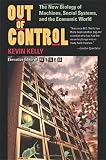
Out of Control
Kevin Kelly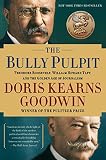
The Bully Pulpit
Doris Kearns Goodwin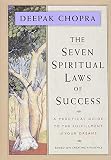
The Seven Spiritual Laws of Success
Deepak Chopra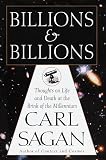
Billions and Billions
Carl Sagan
Anger
Gary ChapmanFactfulness
Hans RoslingHow recommendation signals are reviewed
Each recommendation is collected from a public source — interviews, articles, or curated lists — and linked to its original URL. Books with many verifiable recommendations from respected people rank higher.