
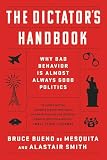
The Dictator's Handbook
Why Bad Behavior is Almost Always Good Politics
by Bruce Bueno de Mesquita
Reading Profile
Should I read this?
Starts from a single, stark claim — leaders do whatever keeps them in power — and unfolds that claim with a mix of concise argument and numerous real-world examples. The useful part is a compact, policy-minded lens for translating incentives into likely actions across regimes. The annoying part is repetition: the central logic is restated and reapplied often, which can feel cyclical and undercuts attention to culture, ideology, or individual motive.
Read this if...
- •a policy analyst writing a briefing on regime durability who needs a short, incentive-focused explanation to help non-specialist decision-makers understand leader behavior
- •a political-science student preparing for a debate or paper who wants a clear, useable shorthand for converting institutional rules into expected policies
- •a foreign correspondent covering authoritarian or fragile states who wants mental shortcuts to interpret why leaders reward some groups and neglect others
Skip this if...
- •you'll likely put it down when chapters turn into repeated case studies that reapply the same rule—if repetition frustrates you, the middle section drags
- •annoying if you prefer moralizing or human-interest narrative: the tone is instrumental and often treats people as incentive-driven actors rather than emotional subjects
- •not for readers expecting hands-on solutions or practical reforms—this is explanatory and diagnostic, and it lacks step-by-step policy how-tos
For eighteen years, Bruce Bueno de Mesquita and Alastair Smith have been part of a team revolutionizing the study of politics by turning conventional wisdom on its head. They start from a single assertion: Leaders do whatever keeps them in power. They don’t care about the “national interest”—or even their subjects—unless they have to. This clever a...
Before You Buy
Reading Specifications
Difficulty:easy
Audience Fit
- a policy analyst writing a briefing on regime durability who needs a short, incentive-focused explanation to help non-specialist decision-makers understand leader behavior
- a political-science student preparing for a debate or paper who wants a clear, useable shorthand for converting institutional rules into expected policies
- a foreign correspondent covering authoritarian or fragile states who wants mental shortcuts to interpret why leaders reward some groups and neglect others
- you'll likely put it down when chapters turn into repeated case studies that reapply the same rule—if repetition frustrates you, the middle section drags
- annoying if you prefer moralizing or human-interest narrative: the tone is instrumental and often treats people as incentive-driven actors rather than emotional subjects
- not for readers expecting hands-on solutions or practical reforms—this is explanatory and diagnostic, and it lacks step-by-step policy how-tos
Check formats, pricing, and availability options for Kindle, physical print, or audiobooks directly.
View available editions on AmazonKey themes
Why recommended
Recommended by 2 sources and appears in Most Recommended Books, Politics, and Philosophy.
Recommended by notable people
People and public figures who have recommended this book.
Recommendation Signals
Recommendation proof is sourced from public posts, interviews, reading lists, and cited references.
Andreas Klinger
“FYI: what i read this year (following @vcstarterkit's rule) Bold the ones i would highly recommend. I switched to mainly listening to audiobooks and only "read" for entertainment. Hence mostly space scifi.”
Appears In
Not sure if this is the right fit?
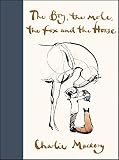
Consider The Boy, the Mole, the Fox and the Horse by Charlie Mackesy. Recommended by 8 sources.
“Soft-spoken, heavily illustrated fable built from short dialogues and watercolor sketches. Each spread pairs a spare line of text with a loose drawing, so the pleasure is visual and aphoristic rather than narrative; readers collect felt-true sentences more than plot. Most useful when you want quick consolations, a prompt for conversation with a child, or a pause during a rough day. Limiting if you want sustained argument, concrete advice, or tightly plotted storytelling: the repetition of gentleness can feel sentimental or thin after a while.”
Similar books
The Boy, the Mole, the Fox and the Horse
Charlie Mackesy
The World as It Is
Ben Rhodes
Out of Control
Kevin Kelly
The Bully Pulpit
Doris Kearns Goodwin
The Seven Spiritual Laws of Success
Deepak Chopra
Billions and Billions
Carl Sagan
Anger
Gary ChapmanFactfulness
Hans RoslingHow recommendation signals are reviewed
Each recommendation is collected from a public source — interviews, articles, or curated lists — and linked to its original URL. Books with many verifiable recommendations from respected people rank higher.