
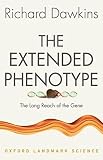
The Extended Phenotype
The Long Reach of the Gene
by Richard Dawkins
Recommended by Geoffrey Miller and Steve StewartWilliams
Check price on AmazonProof-backed recommendation
Amazon availability
Reading Profile
Should I read this?
Sharp, idea-dense and argumentative, The Extended Phenotype tracks how genes' effects can reach beyond an organism's body and refines the gene-as-unit perspective. Early chapters hand you clear examples and striking thought experiments; the book's useful part is conceptual precision and tight distinctions that change labeling of adaptation and selection. Its main limitation is repetition and stretches of abstract, technical argumentation that can feel polemical or abstruse if you expected lively field anecdotes or a breezier overview.
Read this if...
- •a graduate student in evolutionary biology prepping a seminar paper on units of selection — because the book supplies concentrated definitions and counterarguments you'll want to cite and respond to now
- •an undergraduate philosophy-of-biology student writing a term essay on adaptation versus drift — because it gives concrete vocabulary and thought experiments that clarify causal claims
- •a science educator designing a lecture comparing gene-centered and organism-focused accounts — because it offers clear examples and argumentative structure you can unpack for students
Skip this if...
- •you'll likely put it down when long chains of abstract argument and repeated defense of the central thesis pile up; the midbook stretches are where readers commonly stop
- •annoying if you prefer narrative natural history or vivid species stories — the emphasis is conceptual analysis rather than field anecdote
- •not for readers seeking hands-on exercises or an up-to-the-minute empirical survey — no exercises provided, and some empirical discussion reads like a focused conceptual polemic rather than a modern synthesis
In The Selfish Gene, Richard Dawkins crystallized the gene's eye view of evolution developed by W.D. Hamilton and others. The book provoked widespread and heated debate. Written in part as a response, The Extended Phenotype gave a deeper clarification of the central concept of the gene as the unit of selection; but it did much more besides. In it, ...
Before You Buy
Reading Specifications
Difficulty:hard
Audience Fit
- a graduate student in evolutionary biology prepping a seminar paper on units of selection — because the book supplies concentrated definitions and counterarguments you'll want to cite and respond to now
- an undergraduate philosophy-of-biology student writing a term essay on adaptation versus drift — because it gives concrete vocabulary and thought experiments that clarify causal claims
- a science educator designing a lecture comparing gene-centered and organism-focused accounts — because it offers clear examples and argumentative structure you can unpack for students
- you'll likely put it down when long chains of abstract argument and repeated defense of the central thesis pile up; the midbook stretches are where readers commonly stop
- annoying if you prefer narrative natural history or vivid species stories — the emphasis is conceptual analysis rather than field anecdote
- not for readers seeking hands-on exercises or an up-to-the-minute empirical survey — no exercises provided, and some empirical discussion reads like a focused conceptual polemic rather than a modern synthesis
Check formats, pricing, and availability options for Kindle, physical print, or audiobooks directly.
View available editions on AmazonKey themes
Why recommended
Recommended by 3 sources and appears in Most Recommended Books, Science, and Nonfiction.
Recommended by notable people
People and public figures who have recommended this book.
Recommendation Signals
Recommendation proof is sourced from public posts, interviews, reading lists, and cited references.
Geoffrey Miller
“@EricRWeinstein The Extended Phenotype by @RichardDawkins. Baffling title (to most folks), but utterly brilliant & mindblowing book. | Many disease symptoms are adaptations of the viruses that produce them. Excerpt from @RichardDawkins' great book The Extended Phenotype”
View sources (2) ▾80%
Appears In
Not sure if this is the right fit?
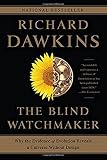
Consider The Blind Watchmaker by Richard Dawkins. Recommended by 12 sources.
“Reading feels brisk and combative: clear metaphors and thought experiments carry much of the book, making abstract evolutionary mechanics concrete for a general reader. The most useful material offers step-by-step dismantling of purposive explanations and replaces them with probabilistic accounts of variation and selection. Main limitation is tone and repetition—several chapters restate the same counterarguments at length—and occasional technical detours into probability and genetics that slow readers who prefer story over demonstration. No hands-on exercises.”
Similar books
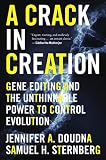
A Crack In Creation
Jennifer A. DoudnaThe Blind Watchmaker
Richard Dawkins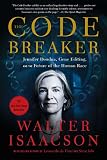
The Code Breaker
Walter Isaacson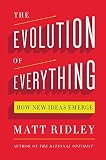
The Evolution of Everything
Matt Ridley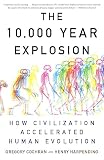
The 10,000 Year Explosion
Gregory Cochran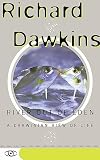
River Out of Eden
Richard Dawkins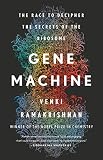
Gene Machine
Venki Ramakrishnan
Scale
Geoffrey WestHow recommendation signals are reviewed
Each recommendation is collected from a public source — interviews, articles, or curated lists — and linked to its original URL. Books with many verifiable recommendations from respected people rank higher.