
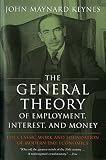
The General Theory of Employment, Interest, and Money
by John Maynard Keynes


Recommended by Eric Weinstein and Warren Buffett
Check price on AmazonProof-backed recommendation
Amazon availability
Reading Profile
Should I read this?
Reading feels like following a sustained intellectual argument: Keynes advances an extended critique of laissez-faire, builds a case for policy intervention, and returns repeatedly to core concepts. What works best is seeing the original reasoning and rhetorical moves behind mid-20th-century macroeconomic policy debates. The main limitations are dense, sometimes archaic prose, repetitive passages, and relatively few contemporary examples; it also lacks hands-on exercises or quick summaries, so expect slow, attentive reading rather than a quick how-to.
Read this if...
- •a graduate student in macroeconomics prepping for a seminar on fiscal policy who needs to read the original formulation of arguments against laissez-faire and engage with primary-source reasoning
- •a policy analyst at a finance ministry or central bank wrestling with unemployment and demand-management options who wants to see the historical policy argumentation that shaped fiscal ideas
- •a historian of economic thought writing about 20th-century theory shifts who needs direct exposure to the prose, rhetorical choices, and conceptual framing used in primary sources
Skip this if...
- •you'll likely put it down when long stretches of abstract argument and repeated clarifications pile up — the middle sections can feel slow and circular
- •annoying if you prefer concise, modern prose or empirical demonstrations rather than discursive, theory-led argumentation
- •not useful if you want a practical, hands-on guide to contemporary macro policy or quick summaries — it lacks exercises and modern applied examples
Distinguished British economist John Maynard Keynes set off a series of movements that dramatically altered the ways in which economists view the world. In his most important work, The General Theory of Employment, Interest, and Money, Keynes critiqued the laissez faire policies of the day, particularly the proposition that a normally functioning m...
Before You Buy
Reading Specifications
Difficulty:hard
Audience Fit
- a graduate student in macroeconomics prepping for a seminar on fiscal policy who needs to read the original formulation of arguments against laissez-faire and engage with primary-source reasoning
- a policy analyst at a finance ministry or central bank wrestling with unemployment and demand-management options who wants to see the historical policy argumentation that shaped fiscal ideas
- a historian of economic thought writing about 20th-century theory shifts who needs direct exposure to the prose, rhetorical choices, and conceptual framing used in primary sources
- you'll likely put it down when long stretches of abstract argument and repeated clarifications pile up — the middle sections can feel slow and circular
- annoying if you prefer concise, modern prose or empirical demonstrations rather than discursive, theory-led argumentation
- not useful if you want a practical, hands-on guide to contemporary macro policy or quick summaries — it lacks exercises and modern applied examples
Check formats, pricing, and availability options for Kindle, physical print, or audiobooks directly.
View available editions on AmazonKey themes
Why recommended
Recommended by 4 sources and appears in Economics, Books Recommended by Warren Buffett, and Most Recommended Books.
Recommended by notable people
People and public figures who have recommended this book.
Recommendation Signals
Recommendation proof is sourced from public posts, interviews, reading lists, and cited references.
Appears In
Not sure if this is the right fit?
Consider The Intelligent Investor by Benjamin Graham. Recommended by 23 sources.
“This is a slow, meticulous read that builds value investing principles through exhaustive stock comparisons and portfolio theory. The core useful insight is Graham’s emphasis on a margin of safety and treating market fluctuations as your servant, not your guide. The limitation: many examples hail from the 1940s-1970s, making the data feel irrelevant, and the prose can be pedantic, stretching patience. You'll get the timeless philosophy but must wade through antiquated case studies.”
Similar books
The Little Book of Common Sense Investing
John C. Bogle
Stress Test
Timothy F. GeithnerThe Intelligent Investor
Benjamin GrahamThe Undoing Project
Michael Lewis
Economics in One Lesson
Henry Hazlitt
The Rise and Fall of American Growth
Robert J. Gordon
Capital
Karl Marx
Scale
Geoffrey WestHow recommendation signals are reviewed
Each recommendation is collected from a public source — interviews, articles, or curated lists — and linked to its original URL. Books with many verifiable recommendations from respected people rank higher.