
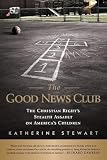
The Good News Club
The Christian Right's Stealth Assault on America's Children
by Katherine Stewart
Reading Profile
Should I read this?
Katherine Stewart combines first-person parenting narrative with on-site reporting to trace how the Good News Club set up inside her children's public elementary school and the conflicts that followed. The book's useful parts are scene-level reporting: recruitment conversations, PTA sparks, and concrete moments that show how religious outreach plays out in shared school spaces. It takes a clearly critical, advocacy-leaning stance rather than offering dispassionate legal theory, so readers seeking evenhanded perspectives may find the approach selective. Repetition of similar anecdotes can feel wearing by midbook.
Read this if...
- •a PTA member at a diverse public elementary school deciding whether to allow outside religious afterschool groups — provides scene-level examples and concrete questions to raise at meetings.
- •a school-board candidate or policy aide drafting facility-use and afterschool rules — offers local examples of friction points and consequences to anticipate when writing policy.
- •a local reporter or law student covering church–state tensions who needs vivid, ground-level case studies of how disputes unfold in classrooms and playgrounds.
Skip this if...
- •you'll likely put it down when repeated anecdotes and a sustained accusatory tone replace new evidence — readers who want a tightly argued legal primer tend to stop here.
- •annoying if you prefer rigorously neutral, footnoted analysis instead of evocative journalistic scenes and advocacy.
- •not for readers who expect the Club’s perspective given equal weight; the narrative foregrounds critical reporting over balanced interviewing.
In 2009, the Good News Club came to the public elementary school where journalist Katherine Stewart sent her children. The Club, which is sponsored by the Child Evangelism Fellowship, bills itself as an afterschool program of "Bible study." But Stewart soon discovered that the Club's real mission is to convert children to fundamentalist Christiani...
Before You Buy
Reading Specifications
Difficulty:hard
Audience Fit
- a PTA member at a diverse public elementary school deciding whether to allow outside religious afterschool groups — provides scene-level examples and concrete questions to raise at meetings.
- a school-board candidate or policy aide drafting facility-use and afterschool rules — offers local examples of friction points and consequences to anticipate when writing policy.
- a local reporter or law student covering church–state tensions who needs vivid, ground-level case studies of how disputes unfold in classrooms and playgrounds.
- you'll likely put it down when repeated anecdotes and a sustained accusatory tone replace new evidence — readers who want a tightly argued legal primer tend to stop here.
- annoying if you prefer rigorously neutral, footnoted analysis instead of evocative journalistic scenes and advocacy.
- not for readers who expect the Club’s perspective given equal weight; the narrative foregrounds critical reporting over balanced interviewing.
Check formats, pricing, and availability options for Kindle, physical print, or audiobooks directly.
View available editions on AmazonKey themes
Why recommended
Recommended by 2 sources and appears in Most Recommended Books, Spirituality, and Politics.
Recommended by notable people
People and public figures who have recommended this book.
Recommendation Signals
Recommendation proof is sourced from public posts, interviews, reading lists, and cited references.
Richard Dawkins
“Read Katherine Stewart's eyeopening book on The Good News Club and be horrified by what Supreme Court allowed.”
Appears In
Not sure if this is the right fit?
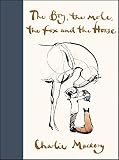
Consider The Boy, the Mole, the Fox and the Horse by Charlie Mackesy. Recommended by 8 sources.
“Soft-spoken, heavily illustrated fable built from short dialogues and watercolor sketches. Each spread pairs a spare line of text with a loose drawing, so the pleasure is visual and aphoristic rather than narrative; readers collect felt-true sentences more than plot. Most useful when you want quick consolations, a prompt for conversation with a child, or a pause during a rough day. Limiting if you want sustained argument, concrete advice, or tightly plotted storytelling: the repetition of gentleness can feel sentimental or thin after a while.”
Similar books
The Boy, the Mole, the Fox and the Horse
Charlie Mackesy
The World as It Is
Ben Rhodes
Out of Control
Kevin Kelly
The Bully Pulpit
Doris Kearns Goodwin
The Seven Spiritual Laws of Success
Deepak Chopra
Billions and Billions
Carl Sagan
Anger
Gary ChapmanFactfulness
Hans RoslingHow recommendation signals are reviewed
Each recommendation is collected from a public source — interviews, articles, or curated lists — and linked to its original URL. Books with many verifiable recommendations from respected people rank higher.