
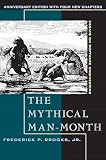
The Mythical Man-Month
Essays on Software Engineering, Anniversary Edition (2nd Edition)
by Frederick P. Brooks Jr.

8 more
More Recommenders
“6/ Mythical Man Month. Fred Brooks turns common management assumptions on their head in the world of software development. His approach has applications across all creative and knowledge work. | @cwodtke Mythical ManMonthFred Brooks. The Innovator's DilemmaClay Christensen, SystemanticsJ. Gall. Wait, those aren't UX books. | @mutazsoliman I am not the best source for recommendations, because I'm so old that most books about Programming, have been written since I learned how, but I found SICP and The Mythical Man Month useful. | An early look and experience with timeless truths (and gotchas) from systems building with teams. | An influential computer scientist makes the counterintuitive argument that small groups of engineers are more effective than larger ones at handling complex software projects. The book lays out the theory behind Amazon’s two pizza teams. | Arguably the only classic book in our field. If you haven't read it, shame on you". "Reading this classic work will certainly be a better use of your time than poring over the latest thousand page technical tome du jour. | Had a huge impact on me. | Larry had given this book to every software executive whom he met within the company.”
Source →“6/ Mythical Man Month. Fred Brooks turns common management assumptions on their head in the world of software development. His approach has applications across all creative and knowledge work. | @cwodtke Mythical ManMonthFred Brooks. The Innovator's DilemmaClay Christensen, SystemanticsJ. Gall. Wait, those aren't UX books. | @mutazsoliman I am not the best source for recommendations, because I'm so old that most books about Programming, have been written since I learned how, but I found SICP and The Mythical Man Month useful. | An early look and experience with timeless truths (and gotchas) from systems building with teams. | An influential computer scientist makes the counterintuitive argument that small groups of engineers are more effective than larger ones at handling complex software projects. The book lays out the theory behind Amazon’s two pizza teams. | Arguably the only classic book in our field. If you haven't read it, shame on you". "Reading this classic work will certainly be a better use of your time than poring over the latest thousand page technical tome du jour. | Had a huge impact on me. | Larry had given this book to every software executive whom he met within the company.”
Source →“6/ Mythical Man Month. Fred Brooks turns common management assumptions on their head in the world of software development. His approach has applications across all creative and knowledge work. | @cwodtke Mythical ManMonthFred Brooks. The Innovator's DilemmaClay Christensen, SystemanticsJ. Gall. Wait, those aren't UX books. | @mutazsoliman I am not the best source for recommendations, because I'm so old that most books about Programming, have been written since I learned how, but I found SICP and The Mythical Man Month useful. | An early look and experience with timeless truths (and gotchas) from systems building with teams. | An influential computer scientist makes the counterintuitive argument that small groups of engineers are more effective than larger ones at handling complex software projects. The book lays out the theory behind Amazon’s two pizza teams. | Arguably the only classic book in our field. If you haven't read it, shame on you". "Reading this classic work will certainly be a better use of your time than poring over the latest thousand page technical tome du jour. | Had a huge impact on me. | Larry had given this book to every software executive whom he met within the company.”
Source →“6/ Mythical Man Month. Fred Brooks turns common management assumptions on their head in the world of software development. His approach has applications across all creative and knowledge work. | @cwodtke Mythical ManMonthFred Brooks. The Innovator's DilemmaClay Christensen, SystemanticsJ. Gall. Wait, those aren't UX books. | @mutazsoliman I am not the best source for recommendations, because I'm so old that most books about Programming, have been written since I learned how, but I found SICP and The Mythical Man Month useful. | An early look and experience with timeless truths (and gotchas) from systems building with teams. | An influential computer scientist makes the counterintuitive argument that small groups of engineers are more effective than larger ones at handling complex software projects. The book lays out the theory behind Amazon’s two pizza teams. | Arguably the only classic book in our field. If you haven't read it, shame on you". "Reading this classic work will certainly be a better use of your time than poring over the latest thousand page technical tome du jour. | Had a huge impact on me. | Larry had given this book to every software executive whom he met within the company.”
Source →“6/ Mythical Man Month. Fred Brooks turns common management assumptions on their head in the world of software development. His approach has applications across all creative and knowledge work. | @cwodtke Mythical ManMonthFred Brooks. The Innovator's DilemmaClay Christensen, SystemanticsJ. Gall. Wait, those aren't UX books. | @mutazsoliman I am not the best source for recommendations, because I'm so old that most books about Programming, have been written since I learned how, but I found SICP and The Mythical Man Month useful. | An early look and experience with timeless truths (and gotchas) from systems building with teams. | An influential computer scientist makes the counterintuitive argument that small groups of engineers are more effective than larger ones at handling complex software projects. The book lays out the theory behind Amazon’s two pizza teams. | Arguably the only classic book in our field. If you haven't read it, shame on you". "Reading this classic work will certainly be a better use of your time than poring over the latest thousand page technical tome du jour. | Had a huge impact on me. | Larry had given this book to every software executive whom he met within the company.”
Source →“6/ Mythical Man Month. Fred Brooks turns common management assumptions on their head in the world of software development. His approach has applications across all creative and knowledge work. | @cwodtke Mythical ManMonthFred Brooks. The Innovator's DilemmaClay Christensen, SystemanticsJ. Gall. Wait, those aren't UX books. | @mutazsoliman I am not the best source for recommendations, because I'm so old that most books about Programming, have been written since I learned how, but I found SICP and The Mythical Man Month useful. | An early look and experience with timeless truths (and gotchas) from systems building with teams. | An influential computer scientist makes the counterintuitive argument that small groups of engineers are more effective than larger ones at handling complex software projects. The book lays out the theory behind Amazon’s two pizza teams. | Arguably the only classic book in our field. If you haven't read it, shame on you". "Reading this classic work will certainly be a better use of your time than poring over the latest thousand page technical tome du jour. | Had a huge impact on me. | Larry had given this book to every software executive whom he met within the company.”
Source →“6/ Mythical Man Month. Fred Brooks turns common management assumptions on their head in the world of software development. His approach has applications across all creative and knowledge work. | @cwodtke Mythical ManMonthFred Brooks. The Innovator's DilemmaClay Christensen, SystemanticsJ. Gall. Wait, those aren't UX books. | @mutazsoliman I am not the best source for recommendations, because I'm so old that most books about Programming, have been written since I learned how, but I found SICP and The Mythical Man Month useful. | An early look and experience with timeless truths (and gotchas) from systems building with teams. | An influential computer scientist makes the counterintuitive argument that small groups of engineers are more effective than larger ones at handling complex software projects. The book lays out the theory behind Amazon’s two pizza teams. | Arguably the only classic book in our field. If you haven't read it, shame on you". "Reading this classic work will certainly be a better use of your time than poring over the latest thousand page technical tome du jour. | Had a huge impact on me. | Larry had given this book to every software executive whom he met within the company.”
Source →“6/ Mythical Man Month. Fred Brooks turns common management assumptions on their head in the world of software development. His approach has applications across all creative and knowledge work. | @cwodtke Mythical ManMonthFred Brooks. The Innovator's DilemmaClay Christensen, SystemanticsJ. Gall. Wait, those aren't UX books. | @mutazsoliman I am not the best source for recommendations, because I'm so old that most books about Programming, have been written since I learned how, but I found SICP and The Mythical Man Month useful. | An early look and experience with timeless truths (and gotchas) from systems building with teams. | An influential computer scientist makes the counterintuitive argument that small groups of engineers are more effective than larger ones at handling complex software projects. The book lays out the theory behind Amazon’s two pizza teams. | Arguably the only classic book in our field. If you haven't read it, shame on you". "Reading this classic work will certainly be a better use of your time than poring over the latest thousand page technical tome du jour. | Had a huge impact on me. | Larry had given this book to every software executive whom he met within the company.”
Source →Recommended by 10 notable people, including Paul Graham and Andrew Chen
Check price on AmazonProof-backed recommendation
Amazon availability
Reading Profile
Should I read this?
Reading it feels like listening to Frederick P. Brooks Jr. deliver a set of terse, experience-packed essays drawn from his time managing the IBM System/360 project. The most useful material: concise maxims about staffing, scheduling, documentation, and interface boundaries that give language for hard organizational limitations. Limits include dated technical examples, a single-author, prescriptive voice, and repeated restatements; readers looking for modern case studies or practical templates will find no hands-on exercises. Best read slowly to mine specific heuristics rather than as a how-to playbook.
Read this if...
- •engineering manager at a mature product company trying to persuade leadership that adding headcount won't speed a late project — provides short, quotable wording and historical examples to frame the argument.
- •program manager coordinating a multi-team hardware-plus-software delivery who needs concise ways to talk about interfaces, documentation, and coordination costs across teams.
- •startup CTO moving from one team to several squads who wants quick, debate-starting essays on staffing strategy, documentation trade-offs, and preserving conceptual integrity during early scaling.
Skip this if...
- •You want a modern Agile playbook with contemporary case studies, templates, or step-by-step practices — the book lacks hands-on exercises and up-to-date examples.
- •You prefer multiple perspectives or a balance of voices; the text is a single-author collection and can read as prescriptive and one-sided.
- •You'll likely put it down when the same claims are restated with increasingly dated anecdotes and technical references — that mid-to-late section is where repetition and the author's certainty tend to lose readers.
Few books on software project management have been as influential and timeless as The Mythical Man-Month. With a blend of software engineering facts and thoughtprovoking opinions, Fred Brooks offers insight for anyone managing complex projects. These essays draw from his experience as project manager for the IBM System/360 computer family and then...
Before You Buy
Reading Specifications
Difficulty:hard
Audience Fit
- engineering manager at a mature product company trying to persuade leadership that adding headcount won't speed a late project — provides short, quotable wording and historical examples to frame the argument.
- program manager coordinating a multi-team hardware-plus-software delivery who needs concise ways to talk about interfaces, documentation, and coordination costs across teams.
- startup CTO moving from one team to several squads who wants quick, debate-starting essays on staffing strategy, documentation trade-offs, and preserving conceptual integrity during early scaling.
- You want a modern Agile playbook with contemporary case studies, templates, or step-by-step practices — the book lacks hands-on exercises and up-to-date examples.
- You prefer multiple perspectives or a balance of voices; the text is a single-author collection and can read as prescriptive and one-sided.
- You'll likely put it down when the same claims are restated with increasingly dated anecdotes and technical references — that mid-to-late section is where repetition and the author's certainty tend to lose readers.
Check formats, pricing, and availability options for Kindle, physical print, or audiobooks directly.
View available editions on AmazonKey themes
Why recommended
Recommended by 15 sources and appears in Software Engineering, Software Development, and Software.
Recommended by notable people
People and public figures who have recommended this book.
Recommendation Signals
Recommendation proof is sourced from public posts, interviews, reading lists, and cited references.
Jeff Bezos
“6/ Mythical Man Month. Fred Brooks turns common management assumptions on their head in the world of software development. His approach has applications across all creative and knowledge work. | @cwodtke Mythical ManMonthFred Brooks. The Innovator's DilemmaClay Christensen, SystemanticsJ. Gall. Wait, those aren't UX books. | @mutazsoliman I am not the best source for recommendations, because I'm so old that most books about Programming, have been written since I learned how, but I found SICP and The Mythical Man Month useful. | An early look and experience with timeless truths (and gotchas) from systems building with teams. | An influential computer scientist makes the counterintuitive argument that small groups of engineers are more effective than larger ones at handling complex software projects. The book lays out the theory behind Amazon’s two pizza teams. | Arguably the only classic book in our field. If you haven't read it, shame on you". "Reading this classic work will certainly be a better use of your time than poring over the latest thousand page technical tome du jour. | Had a huge impact on me. | Larry had given this book to every software executive whom he met within the company.”
Appears In
Not sure if this is the right fit?
Consider A Guide to the Project Management Body of Knowledge by Project Management Institute.
“Reading feels like working through a dense standards manual: chapters mix precise definitions, process maps, outputs and checklists rather than narrative or case-driven storytelling. Main value is a tidy, cross-referenced reference for process names, inputs/outputs, and where agile practices are acknowledged alongside predictive methods. Main limitation is a formal, prescriptive tone that can feel repetitive and dry; practical examples are thin and the language assumes familiarity with project jargon, so beginners may need supplementary, example-rich sources.”
Similar books
A Guide to the Project Management Body of Knowledge
Project Management Institute
Patterns of Enterprise Application Architecture,
Martin Fowler
Working Effectively with Legacy Code
Michael Feathers
The Five Dysfunctions of a Team
Patrick Lencioni
The 4 Disciplines of Execution
Chris McChesney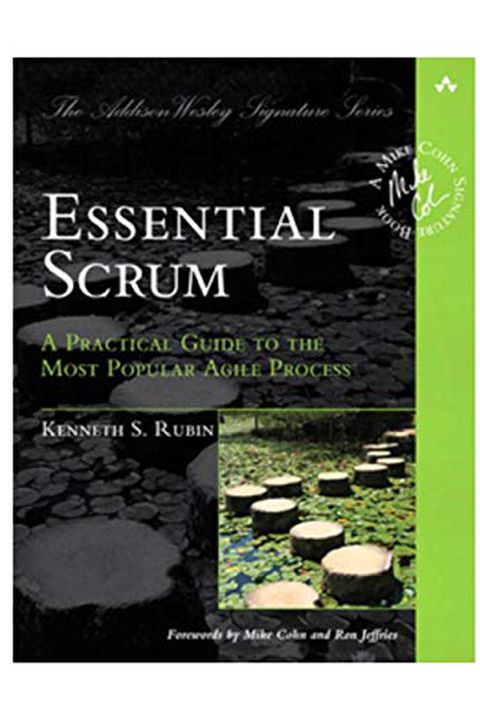
Essential Scrum
Kenneth S. Rubin
The Art of R Programming,
Norman Matloff
Game Engine Architecture,
Jason GregoryHow recommendation signals are reviewed
Each recommendation is collected from a public source — interviews, articles, or curated lists — and linked to its original URL. Books with many verifiable recommendations from respected people rank higher.