
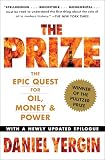
The Prize
The Epic Quest for Oil, Money & Power
by Daniel Yergin

5 more
More Recommenders
“5 books to build big, worldwide perspective 1. Lessons of History (Durant) 2. Factfulness (Rosling) 3. Ten Global Trends (Bailey & Tupy) 4. How the World Really Works (Smil) 5. Against the Gods (Bernstein) Bonus. The Prize (Yergin) What else | Good books on the history of specific industries: a useful thread of suggestions, sparked by @TrungTPhan | One of my favorite books. Yergin rocks!”
Source →“5 books to build big, worldwide perspective 1. Lessons of History (Durant) 2. Factfulness (Rosling) 3. Ten Global Trends (Bailey & Tupy) 4. How the World Really Works (Smil) 5. Against the Gods (Bernstein) Bonus. The Prize (Yergin) What else | Good books on the history of specific industries: a useful thread of suggestions, sparked by @TrungTPhan | One of my favorite books. Yergin rocks!”
Source →“5 books to build big, worldwide perspective 1. Lessons of History (Durant) 2. Factfulness (Rosling) 3. Ten Global Trends (Bailey & Tupy) 4. How the World Really Works (Smil) 5. Against the Gods (Bernstein) Bonus. The Prize (Yergin) What else | Good books on the history of specific industries: a useful thread of suggestions, sparked by @TrungTPhan | One of my favorite books. Yergin rocks!”
Source →“5 books to build big, worldwide perspective 1. Lessons of History (Durant) 2. Factfulness (Rosling) 3. Ten Global Trends (Bailey & Tupy) 4. How the World Really Works (Smil) 5. Against the Gods (Bernstein) Bonus. The Prize (Yergin) What else | Good books on the history of specific industries: a useful thread of suggestions, sparked by @TrungTPhan | One of my favorite books. Yergin rocks!”
Source →“5 books to build big, worldwide perspective 1. Lessons of History (Durant) 2. Factfulness (Rosling) 3. Ten Global Trends (Bailey & Tupy) 4. How the World Really Works (Smil) 5. Against the Gods (Bernstein) Bonus. The Prize (Yergin) What else | Good books on the history of specific industries: a useful thread of suggestions, sparked by @TrungTPhan | One of my favorite books. Yergin rocks!”
Source →Recommended by 7 notable people, including Bill Gates and Patrick O'Shaughnessy
Check price on AmazonProof-backed recommendation
Amazon availability
Reading Profile
Should I read this?
Starts with a wide-angle chronicle of oil’s discovery and spread, moving through corporate maneuvers, statecraft, and technological shifts up to recent energy pressures. Useful as a deep contextual map for how oil shaped modern finance, geopolitics, and industry decisions; updated sections link historical patterns to today's energy challenges. Limitation: the narrative’s length and catalogue of deals and personalities can feel exhaustive, and readers seeking concise argumentation or practical prescriptions will find it repetitive and slow-going.
Read this if...
- •policy analyst at a government energy office preparing background briefs before international negotiations — because the book supplies decades of case studies tying supply shocks to policy responses.
- •financial analyst covering commodities or energy companies building sector reports — because it traces market dynamics, major corporate strategies, and geopolitical risk across time.
- •graduate student writing a term paper on 20th-century geopolitics or energy economics who needs a long-form narrative and timeline to scaffold archival or secondary-source research.
Skip this if...
- •You’ll likely put it down when the narrative plunges into long chapters cataloguing deals, companies, and personalities; the slog of names and dates is the common drop-off point.
- •Annoying if you prefer brief, argumentative reads or practical guidance — this is descriptive history rather than a prescriptive manual.
- •Lose interest if you want technical, engineering-level explanations of extraction methods; technology is discussed at a strategic, not a step-by-step, level.
Deemed "the best history of oil ever written" by Business Week and with more than 300,000 copies in print, Daniel Yergin’s Pulitzer Prize–winning account of the global pursuit of oil, money, and power has been extensively updated to address the current energy crisis....
Before You Buy
Reading Specifications
Difficulty:hard
Audience Fit
- policy analyst at a government energy office preparing background briefs before international negotiations — because the book supplies decades of case studies tying supply shocks to policy responses.
- financial analyst covering commodities or energy companies building sector reports — because it traces market dynamics, major corporate strategies, and geopolitical risk across time.
- graduate student writing a term paper on 20th-century geopolitics or energy economics who needs a long-form narrative and timeline to scaffold archival or secondary-source research.
- You’ll likely put it down when the narrative plunges into long chapters cataloguing deals, companies, and personalities; the slog of names and dates is the common drop-off point.
- Annoying if you prefer brief, argumentative reads or practical guidance — this is descriptive history rather than a prescriptive manual.
- Lose interest if you want technical, engineering-level explanations of extraction methods; technology is discussed at a strategic, not a step-by-step, level.
Check formats, pricing, and availability options for Kindle, physical print, or audiobooks directly.
View available editions on AmazonKey themes
Why recommended
Recommended by 11 sources and appears in Energy, Books Recommended by Bill Gates, and Most Recommended Books.
Recommended by notable people
People and public figures who have recommended this book.
Recommendation Signals
Recommendation proof is sourced from public posts, interviews, reading lists, and cited references.
Mohnish Pabrai
“5 books to build big, worldwide perspective 1. Lessons of History (Durant) 2. Factfulness (Rosling) 3. Ten Global Trends (Bailey & Tupy) 4. How the World Really Works (Smil) 5. Against the Gods (Bernstein) Bonus. The Prize (Yergin) What else | Good books on the history of specific industries: a useful thread of suggestions, sparked by @TrungTPhan | One of my favorite books. Yergin rocks!”
View sources (3) ▾80%
Appears In
Not sure if this is the right fit?
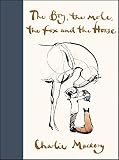
Consider The Boy, the Mole, the Fox and the Horse by Charlie Mackesy. Recommended by 8 sources.
“Soft-spoken, heavily illustrated fable built from short dialogues and watercolor sketches. Each spread pairs a spare line of text with a loose drawing, so the pleasure is visual and aphoristic rather than narrative; readers collect felt-true sentences more than plot. Most useful when you want quick consolations, a prompt for conversation with a child, or a pause during a rough day. Limiting if you want sustained argument, concrete advice, or tightly plotted storytelling: the repetition of gentleness can feel sentimental or thin after a while.”
Similar books
The Boy, the Mole, the Fox and the Horse
Charlie Mackesy
The World as It Is
Ben Rhodes
Out of Control
Kevin Kelly
The Bully Pulpit
Doris Kearns Goodwin
The Seven Spiritual Laws of Success
Deepak Chopra
Billions and Billions
Carl Sagan
Anger
Gary ChapmanFactfulness
Hans RoslingHow recommendation signals are reviewed
Each recommendation is collected from a public source — interviews, articles, or curated lists — and linked to its original URL. Books with many verifiable recommendations from respected people rank higher.