
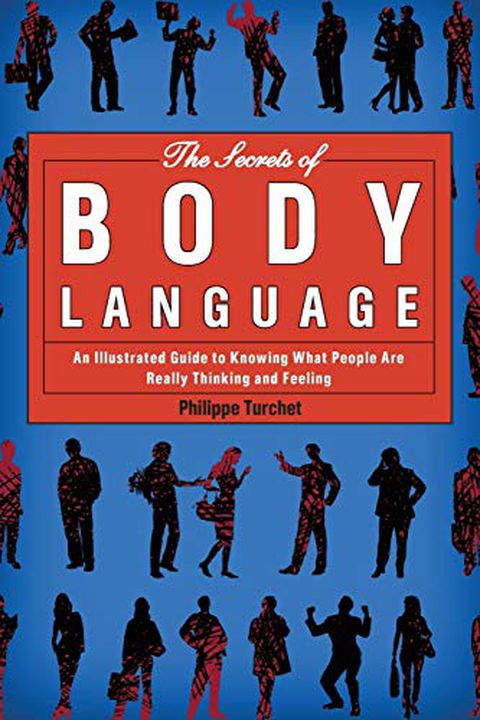
The Secrets of Body Language
An Illustrated Guide to Knowing What People Are Really Thinking and Feeling
by Philippe Turchet
Reading Profile
Should I read this?
The Secrets of Body Language reads like a hands-on guide to noticing habitual movement—posture, gestures, and facial/behavioral cues—and connecting them to possible “negative, positive, neutral, or mixed” messages. The useful part is the motivation: pay attention to what people are doing without thinking, especially when words and body language don’t match. The limiting part is how aggressively it pushes interpretation, including “know when someone is lying,” which can feel overconfident and may lead to overreading.
Read this if...
- •A customer-facing retail manager coaching a new cashier who keeps misreading customers—this helps them build awareness of nonverbal signals during quick interactions.
- •A team lead preparing for tense one-on-ones who wants a simple way to notice when agreement doesn’t match behavior—useful for catching “mixed messages” early.
- •A job seeker practicing interview presence who wants to monitor their own habitual gestures and how they might be read by others—good if you prefer behavior-focused guidance over personality theory.
Skip this if...
- •If you’re the type who hates certainty without nuance, you’ll likely put it down when the book leans into “lying” detection rather than offering careful limits on interpretation.
- •You’ll lose interest if you want deep psychology or rigorous methodology; this is geared more toward pattern-spotting than careful evidence standards.
- •You might lose interest when you realize your goal is better served by social practice than “gesture decoding”—the book can feel repetitive if you already know the basic cues and want actionable next steps.
Discover the ways you have been inadvertently communicating negative, positive, neutral, or mixed messages with the simple body movements you habitually make without even thinking about it. Know when someone is lying to you!Do you ever feel that someone's gestures are telling you something different than the words they are saying Has a cashier ask...
Before You Buy
Reading Specifications
Difficulty:hard
Audience Fit
- A customer-facing retail manager coaching a new cashier who keeps misreading customers—this helps them build awareness of nonverbal signals during quick interactions.
- A team lead preparing for tense one-on-ones who wants a simple way to notice when agreement doesn’t match behavior—useful for catching “mixed messages” early.
- A job seeker practicing interview presence who wants to monitor their own habitual gestures and how they might be read by others—good if you prefer behavior-focused guidance over personality theory.
- If you’re the type who hates certainty without nuance, you’ll likely put it down when the book leans into “lying” detection rather than offering careful limits on interpretation.
- You’ll lose interest if you want deep psychology or rigorous methodology; this is geared more toward pattern-spotting than careful evidence standards.
- You might lose interest when you realize your goal is better served by social practice than “gesture decoding”—the book can feel repetitive if you already know the basic cues and want actionable next steps.
Check formats, pricing, and availability options for Kindle, physical print, or audiobooks directly.
View available editions on AmazonKey themes
Why recommended
appears in Body Language.
Recommendation Signals
Recommendation proof is sourced from public posts, interviews, reading lists, and cited references.
No verified recommendation proof available yet.
Appears In
Not sure if this is the right fit?
Consider Body Language by Allan Pease.
“Body Language reads like a brisk how-to handbook: short chapters, lots of concrete gestures to watch for, and anecdotal examples aimed at everyday, face-to-face interactions. The most useful part is the quick heuristics—what to notice in meetings, interviews, or social situations—presented in plain, nontechnical prose. The main limitation is repetition and pop-psych tone: claims are often broad, context glossed over, and empirical sourcing is minimal, so take specific diagnostic rules as prompts for attention rather than airtight conclusions.”
Similar books

How recommendation signals are reviewed
Each recommendation is collected from a public source — interviews, articles, or curated lists — and linked to its original URL. Books with many verifiable recommendations from respected people rank higher.