
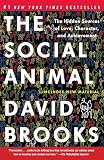
The Social Animal
The Hidden Sources of Love, Character, and Achievement
by David Brooks
Should I read this?
Recommended by 1 source and appears in Neuroscience, Most Recommended Books, and Psychology.
#1 NEW YORK TIMES BESTSELLERWith unequaled insight and brio, New York Times columnist David Brooks has long explored and explained the way we live. Now Brooks turns to the building blocks of human flourishing in a multilayered, profoundly illuminating work grounded in everyday life. This is the story of how success happens, told through the lives o...
Looking for Kindle, hardcover, paperback, or audiobook editions?
Check formats, pricing, and current availability directly.
Why recommended
Recommended by 1 source and appears in Neuroscience, Most Recommended Books, and Psychology.
Recommendation Signals
Recommendation proof is sourced from public posts, interviews, reading lists, and cited references.
No verified recommendation proof available yet.
Appears In
Not sure if this is the right fit?
Consider Outliers by Malcolm Gladwell. Recommended by 31 sources.
“Outliers reads like a series of captivating magazine profiles, each unpacking a hidden factor behind extraordinary success. Gladwell’s storytelling makes complex social science accessible, but the book relies on memorable anecdotes rather than offering systematic analysis. The book explores the idea that individual brilliance rarely stands alone; success often hinges on birth dates, cultural legacies, and the 10,000-hour rule. While the narratives are strong, the book overgeneralizes from handpicked examples, leaving skeptical readers questioning the conclusions. It’s most useful as a conversation starter about luck and timing—annoying if you want a rigorous academic treatise or a how-to guide for your own life.”
Similar books





How recommendation signals are reviewed
Each recommendation is collected from a public source — interviews, articles, or curated lists — and linked to its original URL. Books with many verifiable recommendations from respected people rank higher.