
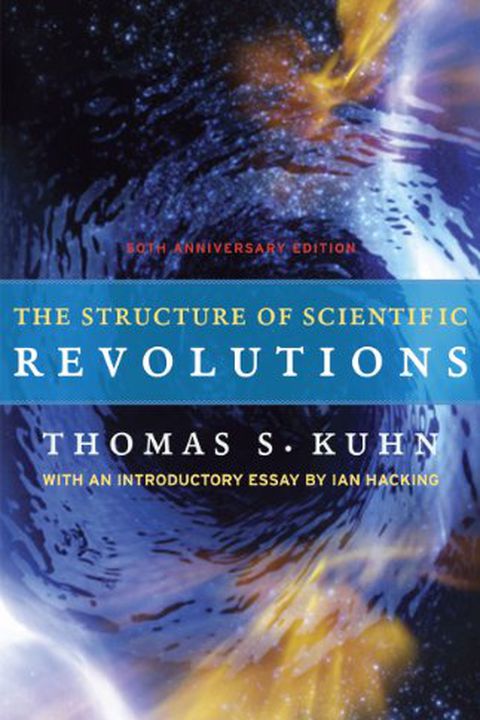
The Structure of Scientific Revolutions
50th Anniversary Edition
by Thomas S. Kuhn

7 more
More Recommenders
“@DanielleMorrill Incredible book | In his brilliant book, The Structure of Scientific Revolutions, author Thomas S. Kuhn explained how scientific discoveries take place: scientific paradigm shifts always begin with disruption ? and it?s never an easy process. | In his brilliant book, The Structure of Scientific Revolutions, author Thomas S. Kuhn explained how scientific discoveries take place: scientific paradigm shifts always begin with disruption – and it’s never an easy process. | Kuhn introduced the term "paradigm shift" to describe the changeover from Ptolemaic to Copernican astronomy. But the book is far more than a classic in the history of science. It's also a book that emphasizes how what we already believe shapes what we see, what we allow ourselves to think. I've always tried to separate seeing itself from the stories I tell myself about what I see. Pattern recognition is impeded if you are trying to overlay an existing pattern on the facts rather than letting the facts sit quietly until they tell their own story. That's General Semantics again. | The first time I sat down with Steve Jobs, he immediately asked me if I had read The Structure of Scientific Revolutions. I think he was assimilating into this personality, this notion that he found in The Structure of Scientific Revolutions.”
Source →“@DanielleMorrill Incredible book | In his brilliant book, The Structure of Scientific Revolutions, author Thomas S. Kuhn explained how scientific discoveries take place: scientific paradigm shifts always begin with disruption ? and it?s never an easy process. | In his brilliant book, The Structure of Scientific Revolutions, author Thomas S. Kuhn explained how scientific discoveries take place: scientific paradigm shifts always begin with disruption – and it’s never an easy process. | Kuhn introduced the term "paradigm shift" to describe the changeover from Ptolemaic to Copernican astronomy. But the book is far more than a classic in the history of science. It's also a book that emphasizes how what we already believe shapes what we see, what we allow ourselves to think. I've always tried to separate seeing itself from the stories I tell myself about what I see. Pattern recognition is impeded if you are trying to overlay an existing pattern on the facts rather than letting the facts sit quietly until they tell their own story. That's General Semantics again. | The first time I sat down with Steve Jobs, he immediately asked me if I had read The Structure of Scientific Revolutions. I think he was assimilating into this personality, this notion that he found in The Structure of Scientific Revolutions.”
Source →“@DanielleMorrill Incredible book | In his brilliant book, The Structure of Scientific Revolutions, author Thomas S. Kuhn explained how scientific discoveries take place: scientific paradigm shifts always begin with disruption ? and it?s never an easy process. | In his brilliant book, The Structure of Scientific Revolutions, author Thomas S. Kuhn explained how scientific discoveries take place: scientific paradigm shifts always begin with disruption – and it’s never an easy process. | Kuhn introduced the term "paradigm shift" to describe the changeover from Ptolemaic to Copernican astronomy. But the book is far more than a classic in the history of science. It's also a book that emphasizes how what we already believe shapes what we see, what we allow ourselves to think. I've always tried to separate seeing itself from the stories I tell myself about what I see. Pattern recognition is impeded if you are trying to overlay an existing pattern on the facts rather than letting the facts sit quietly until they tell their own story. That's General Semantics again. | The first time I sat down with Steve Jobs, he immediately asked me if I had read The Structure of Scientific Revolutions. I think he was assimilating into this personality, this notion that he found in The Structure of Scientific Revolutions.”
Source →“@DanielleMorrill Incredible book | In his brilliant book, The Structure of Scientific Revolutions, author Thomas S. Kuhn explained how scientific discoveries take place: scientific paradigm shifts always begin with disruption ? and it?s never an easy process. | In his brilliant book, The Structure of Scientific Revolutions, author Thomas S. Kuhn explained how scientific discoveries take place: scientific paradigm shifts always begin with disruption – and it’s never an easy process. | Kuhn introduced the term "paradigm shift" to describe the changeover from Ptolemaic to Copernican astronomy. But the book is far more than a classic in the history of science. It's also a book that emphasizes how what we already believe shapes what we see, what we allow ourselves to think. I've always tried to separate seeing itself from the stories I tell myself about what I see. Pattern recognition is impeded if you are trying to overlay an existing pattern on the facts rather than letting the facts sit quietly until they tell their own story. That's General Semantics again. | The first time I sat down with Steve Jobs, he immediately asked me if I had read The Structure of Scientific Revolutions. I think he was assimilating into this personality, this notion that he found in The Structure of Scientific Revolutions.”
Source →“@DanielleMorrill Incredible book | In his brilliant book, The Structure of Scientific Revolutions, author Thomas S. Kuhn explained how scientific discoveries take place: scientific paradigm shifts always begin with disruption ? and it?s never an easy process. | In his brilliant book, The Structure of Scientific Revolutions, author Thomas S. Kuhn explained how scientific discoveries take place: scientific paradigm shifts always begin with disruption – and it’s never an easy process. | Kuhn introduced the term "paradigm shift" to describe the changeover from Ptolemaic to Copernican astronomy. But the book is far more than a classic in the history of science. It's also a book that emphasizes how what we already believe shapes what we see, what we allow ourselves to think. I've always tried to separate seeing itself from the stories I tell myself about what I see. Pattern recognition is impeded if you are trying to overlay an existing pattern on the facts rather than letting the facts sit quietly until they tell their own story. That's General Semantics again. | The first time I sat down with Steve Jobs, he immediately asked me if I had read The Structure of Scientific Revolutions. I think he was assimilating into this personality, this notion that he found in The Structure of Scientific Revolutions.”
Source →“@DanielleMorrill Incredible book | In his brilliant book, The Structure of Scientific Revolutions, author Thomas S. Kuhn explained how scientific discoveries take place: scientific paradigm shifts always begin with disruption ? and it?s never an easy process. | In his brilliant book, The Structure of Scientific Revolutions, author Thomas S. Kuhn explained how scientific discoveries take place: scientific paradigm shifts always begin with disruption – and it’s never an easy process. | Kuhn introduced the term "paradigm shift" to describe the changeover from Ptolemaic to Copernican astronomy. But the book is far more than a classic in the history of science. It's also a book that emphasizes how what we already believe shapes what we see, what we allow ourselves to think. I've always tried to separate seeing itself from the stories I tell myself about what I see. Pattern recognition is impeded if you are trying to overlay an existing pattern on the facts rather than letting the facts sit quietly until they tell their own story. That's General Semantics again. | The first time I sat down with Steve Jobs, he immediately asked me if I had read The Structure of Scientific Revolutions. I think he was assimilating into this personality, this notion that he found in The Structure of Scientific Revolutions.”
Source →“@DanielleMorrill Incredible book | In his brilliant book, The Structure of Scientific Revolutions, author Thomas S. Kuhn explained how scientific discoveries take place: scientific paradigm shifts always begin with disruption ? and it?s never an easy process. | In his brilliant book, The Structure of Scientific Revolutions, author Thomas S. Kuhn explained how scientific discoveries take place: scientific paradigm shifts always begin with disruption – and it’s never an easy process. | Kuhn introduced the term "paradigm shift" to describe the changeover from Ptolemaic to Copernican astronomy. But the book is far more than a classic in the history of science. It's also a book that emphasizes how what we already believe shapes what we see, what we allow ourselves to think. I've always tried to separate seeing itself from the stories I tell myself about what I see. Pattern recognition is impeded if you are trying to overlay an existing pattern on the facts rather than letting the facts sit quietly until they tell their own story. That's General Semantics again. | The first time I sat down with Steve Jobs, he immediately asked me if I had read The Structure of Scientific Revolutions. I think he was assimilating into this personality, this notion that he found in The Structure of Scientific Revolutions.”
Source →Recommended by 9 notable people, including Paul Graham and Mark Zuckerberg
Check price on AmazonProof-backed recommendation
Amazon availability
Should I read this?
Recommended by 14 sources and appears in Sociology, Books Recommended by Paul Graham, and Books Recommended by CEOs.
A good book may have the power to change the way we see the world, but a great book actually becomes part of our daily consciousness, pervading our thinking to the point that we take it for granted, and we forget how provocative and challenging its ideas once were?and still are. The Structure of Scientific Revolutions is that kind of book. When it ...
Looking for Kindle, hardcover, paperback, or audiobook editions?
Check formats, pricing, and current availability directly.
Why recommended
Recommended by 14 sources and appears in Sociology, Books Recommended by Paul Graham, and Books Recommended by CEOs.
Recommended by notable people
People and public figures who have recommended this book.
Recommendation Signals
Recommendation proof is sourced from public posts, interviews, reading lists, and cited references.
Tim O’Reilly
“@DanielleMorrill Incredible book | In his brilliant book, The Structure of Scientific Revolutions, author Thomas S. Kuhn explained how scientific discoveries take place: scientific paradigm shifts always begin with disruption ? and it?s never an easy process. | In his brilliant book, The Structure of Scientific Revolutions, author Thomas S. Kuhn explained how scientific discoveries take place: scientific paradigm shifts always begin with disruption – and it’s never an easy process. | Kuhn introduced the term "paradigm shift" to describe the changeover from Ptolemaic to Copernican astronomy. But the book is far more than a classic in the history of science. It's also a book that emphasizes how what we already believe shapes what we see, what we allow ourselves to think. I've always tried to separate seeing itself from the stories I tell myself about what I see. Pattern recognition is impeded if you are trying to overlay an existing pattern on the facts rather than letting the facts sit quietly until they tell their own story. That's General Semantics again. | The first time I sat down with Steve Jobs, he immediately asked me if I had read The Structure of Scientific Revolutions. I think he was assimilating into this personality, this notion that he found in The Structure of Scientific Revolutions.”
View sources (4) ▾80%
Appears In
Not sure if this is the right fit?
Consider The Boy, the Mole, the Fox and the Horse by Charlie Mackesy. Recommended by 8 sources.
“Soft-spoken, heavily illustrated fable built from short dialogues and watercolor sketches. Each spread pairs a spare line of text with a loose drawing, so the pleasure is visual and aphoristic rather than narrative; readers collect felt-true sentences more than plot. Most useful when you want quick consolations, a prompt for conversation with a child, or a pause during a rough day. Limiting if you want sustained argument, concrete advice, or tightly plotted storytelling: the repetition of gentleness can feel sentimental or thin after a while.”
Similar books
The Boy, the Mole, the Fox and the Horse
Charlie Mackesy
The World as It Is
Ben Rhodes
Out of Control
Kevin Kelly
The Bully Pulpit
Doris Kearns Goodwin
The Seven Spiritual Laws of Success
Deepak Chopra
Billions and Billions
Carl Sagan
Anger
Gary ChapmanFactfulness
Hans RoslingHow recommendation signals are reviewed
Each recommendation is collected from a public source — interviews, articles, or curated lists — and linked to its original URL. Books with many verifiable recommendations from respected people rank higher.