
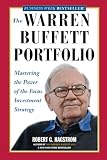
The Warren Buffett Portfolio
Mastering the Power of the Focus Investment Strategy
by Robert G. Hagstrom
Reading Profile
Should I read this?
Robert G. Hagstrom lays out Buffett-style, value-focused stock-selection criteria and practical guidance on how to size and concentrate positions, then illustrates those rules with extended historical company case studies. The book’s useful material is the checklist-like screening rules and margin-of-safety thinking; the limitation is volume: many chapters reapply the same principles in lengthy narrative examples. Most readers will find clear, applied decision rules here, but the book offers limited modern-market context and few quick, one-page summaries.
Read this if...
- •A retail investor with 2–5 years of hands-on investing experience who is moving from index funds to picking a handful of stocks and wants concrete selection rules and portfolio-sizing guidance now.
- •A junior equity analyst at a value-oriented shop who needs checklist-style criteria and historical examples to justify concentrated-stock recommendations to senior managers.
- •A finance student preparing for interviews or casework who wants discussion-ready examples of valuation-based decisions and margin-of-safety reasoning to reference in assignments and conversations.
Skip this if...
- •You'll likely put it down when the middle sections turn into long, repetitive case studies that keep restating the same screening rules and historical outcomes.
- •Annoying if you prefer quantitative models, algorithmic strategies, or short, data-heavy summaries—the book leans on qualitative judgment and narrative examples rather than heavy math or rapid takeaways.
- •Avoid if you need a quick, current-market playbook or concise one-page templates for immediate implementation; this is richer in examples than it is in short cheat-sheets or minute-by-minute market commentary.
The Warren Buffett Way provided the first look into the strategies that the master uses to pick stocks. A New York Times bestseller, it is a valuable and practical primer on the principles behind the remarkable investment run of the famed oracle of Omaha. In this muchawaited companion to that book, author Robert Hagstrom takes the next logical ste...
Before You Buy
Reading Specifications
Difficulty:hard
Audience Fit
- A retail investor with 2–5 years of hands-on investing experience who is moving from index funds to picking a handful of stocks and wants concrete selection rules and portfolio-sizing guidance now.
- A junior equity analyst at a value-oriented shop who needs checklist-style criteria and historical examples to justify concentrated-stock recommendations to senior managers.
- A finance student preparing for interviews or casework who wants discussion-ready examples of valuation-based decisions and margin-of-safety reasoning to reference in assignments and conversations.
- You'll likely put it down when the middle sections turn into long, repetitive case studies that keep restating the same screening rules and historical outcomes.
- Annoying if you prefer quantitative models, algorithmic strategies, or short, data-heavy summaries—the book leans on qualitative judgment and narrative examples rather than heavy math or rapid takeaways.
- Avoid if you need a quick, current-market playbook or concise one-page templates for immediate implementation; this is richer in examples than it is in short cheat-sheets or minute-by-minute market commentary.
Check formats, pricing, and availability options for Kindle, physical print, or audiobooks directly.
View available editions on AmazonKey themes
Why recommended
Recommended by 2 sources and appears in Most Recommended Books, Finance, and Business.
Recommended by notable people
People and public figures who have recommended this book.
Recommendation Signals
Recommendation proof is sourced from public posts, interviews, reading lists, and cited references.
Charlie Munger
“Reddy sent me the second book a full version and I read it and I was flabbergasted to find it not only very well written but a considerable contribution to the synthesis of human thought on the investment process and I would recommend that all of you buy a copy of Hagstrom second buffet book.”
Appears In
Not sure if this is the right fit?
Consider The Undoing Project by Michael Lewis. Recommended by 18 sources.
“Michael Lewis chronicles the friendship and intellectual partnership of Daniel Kahneman and Amos Tversky, who championed the idea that cognitive biases shape our choices. The narrative reads like a buddy story, weaving their discoveries into personal anecdotes and the drama of their collaboration. You'll grasp key ideas—loss aversion, framing—through their story, but the book focuses on biography, not application. Helpful for understanding behavioral economics' origins; less useful if you want actionable advice. The emotional arc of their relationship can overshadow the science.”
Similar books
The Undoing Project
Michael Lewis
The Little Book of Common Sense Investing
John C. Bogle
Financial Shenanigans
Howard Schilit
Scale
Geoffrey West
Poor Numbers
Morten Jerven
The Great Illusion
Norman Angell
One Billion Americans
Matthew Yglesias
Accounting Principles Standalone book
Jerry J. WeygandtHow recommendation signals are reviewed
Each recommendation is collected from a public source — interviews, articles, or curated lists — and linked to its original URL. Books with many verifiable recommendations from respected people rank higher.