
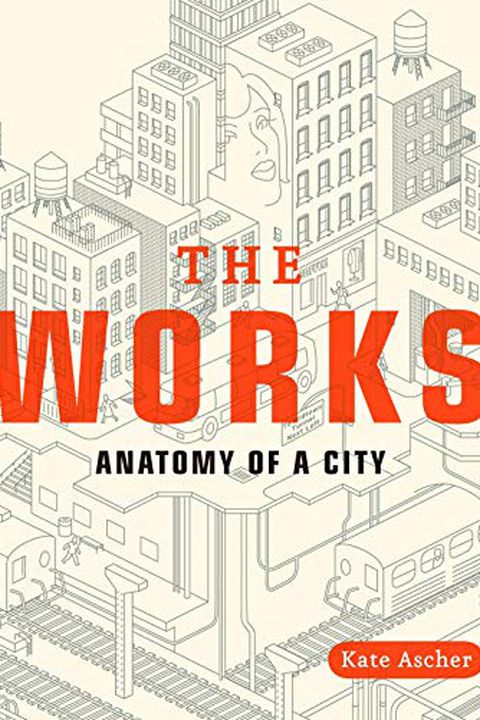
The Works
Anatomy of a City
by Kate Ascher
Reading Profile
Should I read this?
The Works: Anatomy of a City by Kate Ascher reads like a high-curiosity tour through the invisible infrastructure that keeps New York running. Its useful part is tracing cause-and-effect from daily actions (lights, toilets, trash) to large, interlocking systems, making the city feel legible. The limitation is that the book can drift into dense, specialized detail with more explanation than story momentum. If you prefer fast, character-driven chapters, you may find sections slow or repetitive in how they return to the same “systems in, systems out” pattern.
Read this if...
- •A materials-and-mechanical engineer who likes troubleshooting and wants a readable, practical overview of how building and city-scale systems interact—this fits because it maps everyday moments to infrastructure pathways.
- •An architecture student working on a studio project about urban design who needs to understand utilities and waste flows beyond surface form—this fits because it connects physical space to what actually moves through it.
- •A public transit planner or ops analyst in a commuter-heavy job who’s tired of slogans and wants causal explanations for how urban services support each other—this fits because it emphasizes downstream consequences of upstream decisions.
Skip this if...
- •You’ll likely put it down when the explanations get too granular for your attention span and you realize there isn’t a steady “chapter story” arc—more systems, fewer dramatic payoffs.
- •Avoid if you want purely human-centered city writing; the book can feel more like infrastructure detective work than lived experience, with fewer emotions or character moments to anchor you.
- •You may lose patience if you prefer ideology or arguments over descriptive detail; it can come across as technical and observational rather than persuasive or moralizing, which can feel flat if you’re looking for heat.
How much do you really know about the systems that keep a city alive The Works: Anatomy of a City contains everything you ever wanted to know about what makes New York City run. When you flick on your light switch the light goes onhow When you put out your garbage, where does it go When you flush your toilet, what happens to the waste How doe...
Before You Buy
Reading Specifications
Difficulty:hard
Audience Fit
- A materials-and-mechanical engineer who likes troubleshooting and wants a readable, practical overview of how building and city-scale systems interact—this fits because it maps everyday moments to infrastructure pathways.
- An architecture student working on a studio project about urban design who needs to understand utilities and waste flows beyond surface form—this fits because it connects physical space to what actually moves through it.
- A public transit planner or ops analyst in a commuter-heavy job who’s tired of slogans and wants causal explanations for how urban services support each other—this fits because it emphasizes downstream consequences of upstream decisions.
- You’ll likely put it down when the explanations get too granular for your attention span and you realize there isn’t a steady “chapter story” arc—more systems, fewer dramatic payoffs.
- Avoid if you want purely human-centered city writing; the book can feel more like infrastructure detective work than lived experience, with fewer emotions or character moments to anchor you.
- You may lose patience if you prefer ideology or arguments over descriptive detail; it can come across as technical and observational rather than persuasive or moralizing, which can feel flat if you’re looking for heat.
Check formats, pricing, and availability options for Kindle, physical print, or audiobooks directly.
View available editions on AmazonKey themes
Why recommended
Recommended by 1 source and appears in Urban Planning, Architecture, and Art.
Recommended by notable people
People and public figures who have recommended this book.
Recommendation Signals
Recommendation proof is sourced from public posts, interviews, reading lists, and cited references.
Appears In
Not sure if this is the right fit?
Consider Accidental Presidents by Jared Cohen. Recommended by 10 sources.
“Accidental Presidents offers eight narrative portraits of men who succeeded to the U.S. presidency without election, using anecdote-rich scenes and readable context to show how personality and circumstance interact with office power. It’s strongest as a set of self-contained stories that make succession stakes concrete for non-specialist readers; it does not prioritize dense archival argument or exhaustive methodology, so expect some interpretive generalizations and repeated themes across cases. Use it for fast historical orientation rather than scholarly deep-dives.”
Similar books


How recommendation signals are reviewed
Each recommendation is collected from a public source — interviews, articles, or curated lists — and linked to its original URL. Books with many verifiable recommendations from respected people rank higher.