

Thoughts on Design
by Paul Rand
Reading Profile
Should I read this?
A slim facsimile of Paul Rand's 1947 essays that feels like a concentrated set of design pronouncements: brisk, image‑led, and unapologetically prescriptive about clarity and utility in visual work. Its useful part is sparking clear, languageable arguments about form vs function and about removing clutter; its main limitation is the lack of modern case studies or hands‑on guidance, plus occasional dated references that need contextual smoothing for today's practice.
Read this if...
- •junior graphic designer preparing a portfolio critique who wants short, quotable statements to frame why simplicity matters in layout and identity work
- •art-director assembling a teaching slide deck who needs an authentic mid‑century voice on the priorities behind corporate identity and editorial design
- •design student drafting an essay on modernist graphic principles who wants primary‑source phrasing about form/function to cite and discuss
Skip this if...
- •you'll likely put it down when the prose becomes aphoristic and repeats the same injunctions without modern examples or practical follow‑through — that moment is where readers commonly stop
- •annoying if you prefer contemporary, screen‑first examples and step‑by‑step how‑tos — the book lacks hands‑on exercises and up‑to‑date case studies
- •lose interest if you want narrative history or memoir — the tone is didactic and declarative rather than story‑driven, so it can feel repetitive
One of the seminal texts of graphic design, Paul Rand's Thoughts on Design is now back in print for the first time since the 1970s. Writing at the height of his career, Rand articulated in his slender volume the pioneering vision that all design should seamlessly integrate form and function. This facsimile edition preserves Rand's original 1947 ess...
Before You Buy
Reading Specifications
Difficulty:hard
Audience Fit
- junior graphic designer preparing a portfolio critique who wants short, quotable statements to frame why simplicity matters in layout and identity work
- art-director assembling a teaching slide deck who needs an authentic mid‑century voice on the priorities behind corporate identity and editorial design
- design student drafting an essay on modernist graphic principles who wants primary‑source phrasing about form/function to cite and discuss
- you'll likely put it down when the prose becomes aphoristic and repeats the same injunctions without modern examples or practical follow‑through — that moment is where readers commonly stop
- annoying if you prefer contemporary, screen‑first examples and step‑by‑step how‑tos — the book lacks hands‑on exercises and up‑to‑date case studies
- lose interest if you want narrative history or memoir — the tone is didactic and declarative rather than story‑driven, so it can feel repetitive
Check formats, pricing, and availability options for Kindle, physical print, or audiobooks directly.
View available editions on AmazonKey themes
Why recommended
Recommended by 1 source and appears in Design, Design, and Art.
Recommended by notable people
People and public figures who have recommended this book.
Recommendation Signals
Recommendation proof is sourced from public posts, interviews, reading lists, and cited references.
Appears In
Not sure if this is the right fit?
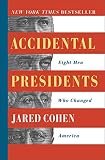
Consider Accidental Presidents by Jared Cohen. Recommended by 10 sources.
“Accidental Presidents offers eight narrative portraits of men who succeeded to the U.S. presidency without election, using anecdote-rich scenes and readable context to show how personality and circumstance interact with office power. It’s strongest as a set of self-contained stories that make succession stakes concrete for non-specialist readers; it does not prioritize dense archival argument or exhaustive methodology, so expect some interpretive generalizations and repeated themes across cases. Use it for fast historical orientation rather than scholarly deep-dives.”
Similar books


How recommendation signals are reviewed
Each recommendation is collected from a public source — interviews, articles, or curated lists — and linked to its original URL. Books with many verifiable recommendations from respected people rank higher.