
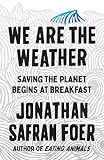
We Are the Weather
Saving the Planet Begins at Breakfast
by Jonathan Safran Foer
6 more
More Recommenders
“A brilliant book. Advocates a world war scale emergency response to climate change. And reminds us how much human behaviour can change for the better when the chips are down and we understand and FEEL like the stakes are high.”
Source →“A brilliant book. Advocates a world war scale emergency response to climate change. And reminds us how much human behaviour can change for the better when the chips are down and we understand and FEEL like the stakes are high.”
Source →“A brilliant book. Advocates a world war scale emergency response to climate change. And reminds us how much human behaviour can change for the better when the chips are down and we understand and FEEL like the stakes are high.”
Source →“A brilliant book. Advocates a world war scale emergency response to climate change. And reminds us how much human behaviour can change for the better when the chips are down and we understand and FEEL like the stakes are high.”
Source →“A brilliant book. Advocates a world war scale emergency response to climate change. And reminds us how much human behaviour can change for the better when the chips are down and we understand and FEEL like the stakes are high.”
Source →Recommended by 8 notable people, including Natalie Portman and Jordan Hughes
Check price on AmazonProof-backed recommendation
Amazon availability
Reading Profile
Should I read this?
Jonathan Safran Foer's We Are the Weather reads like a spirited moral polemic woven with personal anecdote and plainspoken argument. Its useful part is the ethical challenge: if you accept human-caused warming, what lifestyle choices follow? The book motivates and agitates rather than supplying technical road maps, so readers seeking careful data analysis or step-by-step policy plans may be frustrated. Tone can shift to sermonizing, and practical recommendations are often broad rather than detailed.
Read this if...
- •a high-school environmental-science teacher prepping a class debate who wants a readable, emotionally charged prompt about personal responsibility
- •a parent worried about future generations who needs a readable moral case to spur household-level changes and family conversations
- •a communications officer at a local sustainability office trying to craft persuasive messaging that links everyday choices to climate consequences
Skip this if...
- •you'll likely put it down when moral exhortation and repeated lifestyle prescriptions start to feel preachy and restate the same point
- •annoying if you prefer neutral, data-heavy explanation — the tone favors moral argument and anecdote over careful scientific exposition
- •not for readers seeking practical, hands-on behavior programs — the book lacks hands-on exercises and step-by-step implementation guides
Some people reject the fact, overwhelmingly supported by scientists, that our planet is warming because of human activity. But do those of us who accept the reality of humancaused climate change truly believe it If we did, surely we would be roused to act on what we know. Will future generations distinguish between those who didnt believe in the ...
Before You Buy
Reading Specifications
Difficulty:easy
Audience Fit
- a high-school environmental-science teacher prepping a class debate who wants a readable, emotionally charged prompt about personal responsibility
- a parent worried about future generations who needs a readable moral case to spur household-level changes and family conversations
- a communications officer at a local sustainability office trying to craft persuasive messaging that links everyday choices to climate consequences
- you'll likely put it down when moral exhortation and repeated lifestyle prescriptions start to feel preachy and restate the same point
- annoying if you prefer neutral, data-heavy explanation — the tone favors moral argument and anecdote over careful scientific exposition
- not for readers seeking practical, hands-on behavior programs — the book lacks hands-on exercises and step-by-step implementation guides
Check formats, pricing, and availability options for Kindle, physical print, or audiobooks directly.
View available editions on AmazonKey themes
Why recommended
Recommended by 9 sources and appears in Climate Change, Science, and Nonfiction.
Recommended by notable people
People and public figures who have recommended this book.
Recommendation Signals
Recommendation proof is sourced from public posts, interviews, reading lists, and cited references.
Joaquin Phoenix
“A brilliant book. Advocates a world war scale emergency response to climate change. And reminds us how much human behaviour can change for the better when the chips are down and we understand and FEEL like the stakes are high.”
View sources (2) ▾80%
Appears In
Not sure if this is the right fit?
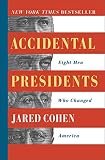
Consider Accidental Presidents by Jared Cohen. Recommended by 10 sources.
“Accidental Presidents offers eight narrative portraits of men who succeeded to the U.S. presidency without election, using anecdote-rich scenes and readable context to show how personality and circumstance interact with office power. It’s strongest as a set of self-contained stories that make succession stakes concrete for non-specialist readers; it does not prioritize dense archival argument or exhaustive methodology, so expect some interpretive generalizations and repeated themes across cases. Use it for fast historical orientation rather than scholarly deep-dives.”
Similar books



How recommendation signals are reviewed
Each recommendation is collected from a public source — interviews, articles, or curated lists — and linked to its original URL. Books with many verifiable recommendations from respected people rank higher.