
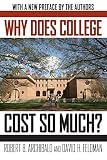
Why Does College Cost So Much?
by Robert B. Archibald

Recommended by Bill Gates and Chris Dixon
Check price on AmazonProof-backed recommendation
Amazon availability
Reading Profile
Should I read this?
Reading feels like a clear, economics-first interrogation of the tuition question: Archibald argues that shifts in public funding, institutional incentives, and spending patterns explain much of the sticker-price rise. The most useful sections lay out fiscal limitations and where headline explanations (amenities, prestige contests, administrative bloat) do or don't match the numbers. The book leans heavy on accounting, policy argument, and institutional description, so it rewards careful attention. If you wanted a scandal-driven exposé or lively storytelling, the tone will feel dry and sober.
Read this if...
- •a university budget officer drafting a short memo for trustees who needs a numbers-oriented account to counter simplistic claims about administrative bloat; this book supplies language and institutional angles to shape that memo.
- •a state legislator’s policy aide preparing higher-education funding proposals who must explain how shifts in state support and campus incentives affect tuition; the book lays out policy-focused reasons and trade-offs useful for briefings.
- •a parent or local school-board member preparing to speak at meetings who wants a technical, less sensational view of why sticker prices keep rising before debating anecdote-driven claims.
Skip this if...
- •you'll likely put it down when the prose shifts into dense accounting, spending breakdowns, and policy jargon — readers seeking a breezy narrative or scandal-driven exposé will lose patience.
- •annoying if you prefer memoir-style storytelling, personality-driven conflict, or punchy cultural critique; the tone stays sober, analytical, and detail-focused.
- •not for readers expecting hands-on solutions or step-by-step action plans — the book explains causes and trade-offs but lacks hands-on exercises.
Much of what is written about colleges and universities ties rapidly rising tuition to dysfunctional behavior in the academy. Common targets of dysfunction include prestige games among universities, gold plated amenities, and bloated administration. This book offers a different view. To explain rising college cost, the authors place the higher educ...
Before You Buy
Reading Specifications
Difficulty:hard
Audience Fit
- a university budget officer drafting a short memo for trustees who needs a numbers-oriented account to counter simplistic claims about administrative bloat; this book supplies language and institutional angles to shape that memo.
- a state legislator’s policy aide preparing higher-education funding proposals who must explain how shifts in state support and campus incentives affect tuition; the book lays out policy-focused reasons and trade-offs useful for briefings.
- a parent or local school-board member preparing to speak at meetings who wants a technical, less sensational view of why sticker prices keep rising before debating anecdote-driven claims.
- you'll likely put it down when the prose shifts into dense accounting, spending breakdowns, and policy jargon — readers seeking a breezy narrative or scandal-driven exposé will lose patience.
- annoying if you prefer memoir-style storytelling, personality-driven conflict, or punchy cultural critique; the tone stays sober, analytical, and detail-focused.
- not for readers expecting hands-on solutions or step-by-step action plans — the book explains causes and trade-offs but lacks hands-on exercises.
Check formats, pricing, and availability options for Kindle, physical print, or audiobooks directly.
View available editions on AmazonKey themes
Why recommended
Recommended by 3 sources and appears in Most Recommended Books, Finance, and Nonfiction.
Recommended by notable people
People and public figures who have recommended this book.
Recommendation Signals
Recommendation proof is sourced from public posts, interviews, reading lists, and cited references.
Appears In
Not sure if this is the right fit?
Consider The Undoing Project by Michael Lewis. Recommended by 18 sources.
“Michael Lewis chronicles the friendship and intellectual partnership of Daniel Kahneman and Amos Tversky, who championed the idea that cognitive biases shape our choices. The narrative reads like a buddy story, weaving their discoveries into personal anecdotes and the drama of their collaboration. You'll grasp key ideas—loss aversion, framing—through their story, but the book focuses on biography, not application. Helpful for understanding behavioral economics' origins; less useful if you want actionable advice. The emotional arc of their relationship can overshadow the science.”
Similar books
The Undoing Project
Michael Lewis
The Little Book of Common Sense Investing
John C. Bogle
Financial Shenanigans
Howard Schilit
Scale
Geoffrey West
Poor Numbers
Morten Jerven
The Great Illusion
Norman Angell
One Billion Americans
Matthew Yglesias
Accounting Principles Standalone book
Jerry J. WeygandtHow recommendation signals are reviewed
Each recommendation is collected from a public source — interviews, articles, or curated lists — and linked to its original URL. Books with many verifiable recommendations from respected people rank higher.