
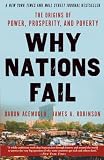
Why Nations Fail
The Origins of Power, Prosperity, and Poverty
by Daron Acemoglu


3 more
More Recommenders
“@chapendamat1 Why Nations Fail is an amazing book. Enjoy | I started listing #BooksIRead in the year 2012. Out of the lists some books were outstanding. My 10 Books of the Decade 20102019 ( Books I read during the decade that were impactful to me and my work as a leader ). #BooksOfTheDecade | Which Nations Failed I offer a perspective on the excellent book by Profs. Acemoglu and Robinson, Why Nations Fail:”
Source →“@chapendamat1 Why Nations Fail is an amazing book. Enjoy | I started listing #BooksIRead in the year 2012. Out of the lists some books were outstanding. My 10 Books of the Decade 20102019 ( Books I read during the decade that were impactful to me and my work as a leader ). #BooksOfTheDecade | Which Nations Failed I offer a perspective on the excellent book by Profs. Acemoglu and Robinson, Why Nations Fail:”
Source →“@chapendamat1 Why Nations Fail is an amazing book. Enjoy | I started listing #BooksIRead in the year 2012. Out of the lists some books were outstanding. My 10 Books of the Decade 20102019 ( Books I read during the decade that were impactful to me and my work as a leader ). #BooksOfTheDecade | Which Nations Failed I offer a perspective on the excellent book by Profs. Acemoglu and Robinson, Why Nations Fail:”
Source →Recommended by 5 notable people, including Bill Gates and Mark Zuckerberg
Check price on AmazonProof-backed recommendation
Amazon availability
Reading Profile
Should I read this?
Why Nations Fail argues that political and economic institutions — inclusive or extractive — are the central engines behind why some countries prosper and others stagnate. It leans on long historical case studies and comparative examples to make a single, institution-centered explanation tangible. The useful parts are those clear contrasts and repeated examples that help you map institutions onto incentives. Limits include dense theory passages, repeated examples that feel repetitive, and a tone that can sound dismissive of rival explanations. Not a how-to guide; it’s argumentative history and interpretation.
Read this if...
- •a policy analyst drafting a briefing for a development minister who needs a crisp institutional narrative to explain long-run growth differences — offers comparative cases and a clear line you can use in meetings
- •a graduate student in political economy assembling a literature review on growth determinants who wants vivid historical examples to position a critique or follow-up study
- •a history or area-studies instructor designing a seminar on colonial legacies who needs cross-country case material to spark classroom debate and primary-source follow-ups
Skip this if...
- •you'll likely put it down when the middle chapters become long, detailed historical digressions and dense theoretical passages that slow the pace
- •annoying if you prefer light, popular-history prose or short, bulleted takeaways rather than extended economic argumentation and thick institutional detail
- •not for readers wanting hands-on policy recipes or step-by-step reform checklists — the book argues at a high level and lacks action-by-action guidance
WHY ARE SOME NATIONS RICH AND OTHERS POOR, DIVIDED BY WEALTH AND POVERTY, HEALTH AND SICKNESS, FOOD AND FAMINE Is it culture, the weather, geography that determines prosperity or poverty As Why Nations Fail shows, none of these factors is either definitive or destiny. Drawing on fifteen years of original research, Daron Acemoglu and James Robinso...
Before You Buy
Reading Specifications
Difficulty:hard
Audience Fit
- a policy analyst drafting a briefing for a development minister who needs a crisp institutional narrative to explain long-run growth differences — offers comparative cases and a clear line you can use in meetings
- a graduate student in political economy assembling a literature review on growth determinants who wants vivid historical examples to position a critique or follow-up study
- a history or area-studies instructor designing a seminar on colonial legacies who needs cross-country case material to spark classroom debate and primary-source follow-ups
- you'll likely put it down when the middle chapters become long, detailed historical digressions and dense theoretical passages that slow the pace
- annoying if you prefer light, popular-history prose or short, bulleted takeaways rather than extended economic argumentation and thick institutional detail
- not for readers wanting hands-on policy recipes or step-by-step reform checklists — the book argues at a high level and lacks action-by-action guidance
Check formats, pricing, and availability options for Kindle, physical print, or audiobooks directly.
View available editions on AmazonKey themes
Why recommended
Recommended by 6 sources and appears in Economics, Most Recommended Books, and Finance.
Recommended by notable people
People and public figures who have recommended this book.
Recommendation Signals
Recommendation proof is sourced from public posts, interviews, reading lists, and cited references.
Trevor Ncube
“@chapendamat1 Why Nations Fail is an amazing book. Enjoy | I started listing #BooksIRead in the year 2012. Out of the lists some books were outstanding. My 10 Books of the Decade 20102019 ( Books I read during the decade that were impactful to me and my work as a leader ). #BooksOfTheDecade | Which Nations Failed I offer a perspective on the excellent book by Profs. Acemoglu and Robinson, Why Nations Fail:”
View sources (4) ▾80%
Appears In

Not sure if this is the right fit?
Consider The Boy, the Mole, the Fox and the Horse by Charlie Mackesy. Recommended by 8 sources.
“Soft-spoken, heavily illustrated fable built from short dialogues and watercolor sketches. Each spread pairs a spare line of text with a loose drawing, so the pleasure is visual and aphoristic rather than narrative; readers collect felt-true sentences more than plot. Most useful when you want quick consolations, a prompt for conversation with a child, or a pause during a rough day. Limiting if you want sustained argument, concrete advice, or tightly plotted storytelling: the repetition of gentleness can feel sentimental or thin after a while.”
Similar books
The Boy, the Mole, the Fox and the Horse
Charlie Mackesy
The World as It Is
Ben Rhodes
Out of Control
Kevin Kelly
The Bully Pulpit
Doris Kearns Goodwin
The Seven Spiritual Laws of Success
Deepak Chopra
Billions and Billions
Carl Sagan
Anger
Gary ChapmanFactfulness
Hans RoslingHow recommendation signals are reviewed
Each recommendation is collected from a public source — interviews, articles, or curated lists — and linked to its original URL. Books with many verifiable recommendations from respected people rank higher.