
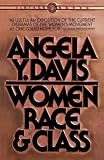
Women, Race, & Class
by Angela Y. Davis
1 more
More Recommenders
“For #BlackHistoryMonth I will be sharing some of my favorite books by Black Authors 3rd Book: Women Race & Class By: Angela Y. Davis EYEOPENING about the intersection b/w women, race, & class Some Topics: The Abolitionist, Feminist, Women’s Suffrage Movement, etc. | Many years ago, I read this book. I have reread it many times ever since my exile days. I always recommend it to my intellectual interlocutors. Those who care to listen. Very few these days, unfortunately. Women, Race, & Class | Buy Online. | “Women, Race, & Class” by Angela Y. Davis (Trigger Warning on book pages descriptions of sexual and racist violence) Important book giving historical context for the necessity of centering the needs of (poor/working class) women of color in gender & racial justice. #McGReads”
Source →Recommended by 3 notable people, including Bianca Belair and Matt McGorry
Check price on AmazonProof-backed recommendation
Amazon availability
Reading Profile
Should I read this?
Angela Y. Davis follows U.S. women’s movements from abolition into the 20th century, showing how race and class influenced leadership, priorities, and exclusions. The writing pairs close historical episodes with forceful political argument, so familiar milestones are reframed through competing social positions. Best for readers who want historical context and a critical reframe rather than personal narrative or a how-to manual. Limitation: long stretches of dense historical detail and a consistently polemical tone can slow momentum and feel repetitive.
Read this if...
- •graduate student TA running an intersectionality seminar who needs a single, debate-ready text with historical case studies spanning abolition, suffrage, and labor to anchor class discussion.
- •program director at a feminist nonprofit revising outreach and inclusion after racial/class tensions who wants historical patterns to inform policy and internal conversations.
- •college U.S. history instructor building a suffrage unit who wants a reading that challenges standard narratives and provokes classroom debate rather than a compact survey.
Skip this if...
- •you'll likely put it down when long historical digressions and repeated polemical points interrupt narrative flow — the middle stretches are where readers tend to lose pace.
- •annoying if you prefer memoir-style voice or intimate personal stories; the tone stays argumentative and analytical rather than confessional.
- •not for readers seeking quick organizing templates or step-by-step tactics; it focuses on historical critique more than practical how-to guidance.
A powerful study of the women's movement in the U.S. from abolitionist days to the present that demonstrates how it has always been hampered by the racist and classist biases of its leaders....
Before You Buy
Reading Specifications
Difficulty:hard
Audience Fit
- graduate student TA running an intersectionality seminar who needs a single, debate-ready text with historical case studies spanning abolition, suffrage, and labor to anchor class discussion.
- program director at a feminist nonprofit revising outreach and inclusion after racial/class tensions who wants historical patterns to inform policy and internal conversations.
- college U.S. history instructor building a suffrage unit who wants a reading that challenges standard narratives and provokes classroom debate rather than a compact survey.
- you'll likely put it down when long historical digressions and repeated polemical points interrupt narrative flow — the middle stretches are where readers tend to lose pace.
- annoying if you prefer memoir-style voice or intimate personal stories; the tone stays argumentative and analytical rather than confessional.
- not for readers seeking quick organizing templates or step-by-step tactics; it focuses on historical critique more than practical how-to guidance.
Check formats, pricing, and availability options for Kindle, physical print, or audiobooks directly.
View available editions on AmazonKey themes
Why recommended
Recommended by 3 sources and appears in Socialism, Socialism, and Feminist.
Recommended by notable people
People and public figures who have recommended this book.
Recommendation Signals
Recommendation proof is sourced from public posts, interviews, reading lists, and cited references.
Matt McGorry
“For #BlackHistoryMonth I will be sharing some of my favorite books by Black Authors 3rd Book: Women Race & Class By: Angela Y. Davis EYEOPENING about the intersection b/w women, race, & class Some Topics: The Abolitionist, Feminist, Women’s Suffrage Movement, etc. | Many years ago, I read this book. I have reread it many times ever since my exile days. I always recommend it to my intellectual interlocutors. Those who care to listen. Very few these days, unfortunately. Women, Race, & Class | Buy Online. | “Women, Race, & Class” by Angela Y. Davis (Trigger Warning on book pages descriptions of sexual and racist violence) Important book giving historical context for the necessity of centering the needs of (poor/working class) women of color in gender & racial justice. #McGReads”
View sources (3) ▾80%
Appears In
Not sure if this is the right fit?
Consider The Boy, the Mole, the Fox and the Horse by Charlie Mackesy. Recommended by 8 sources.
“Soft-spoken, heavily illustrated fable built from short dialogues and watercolor sketches. Each spread pairs a spare line of text with a loose drawing, so the pleasure is visual and aphoristic rather than narrative; readers collect felt-true sentences more than plot. Most useful when you want quick consolations, a prompt for conversation with a child, or a pause during a rough day. Limiting if you want sustained argument, concrete advice, or tightly plotted storytelling: the repetition of gentleness can feel sentimental or thin after a while.”
Similar books
The Boy, the Mole, the Fox and the Horse
Charlie Mackesy
The World as It Is
Ben Rhodes
Out of Control
Kevin Kelly
The Bully Pulpit
Doris Kearns Goodwin
The Seven Spiritual Laws of Success
Deepak Chopra
Billions and Billions
Carl Sagan
Anger
Gary ChapmanFactfulness
Hans RoslingHow recommendation signals are reviewed
Each recommendation is collected from a public source — interviews, articles, or curated lists — and linked to its original URL. Books with many verifiable recommendations from respected people rank higher.