
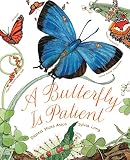
A Butterfly Is Patient
(Nature Books for Kids, Children's Books Ages 35, Award Winning Children's Books)
by Dianna Aston
Reading Profile
Should I read this?
A Butterfly Is Patient is a visual, gently lyrical introduction to butterfly species that pairs short, descriptive vignettes with prominent imagery. It delights by celebrating variety and immediate observation rather than delivering dense scientific detail, so it works best as a read‑aloud, coffee‑table primer, or first introduction for young naturalists. Its main utility is sparking curiosity and appreciation; its main limitation is that it stays surface‑level — readers seeking distribution maps, life‑history experiments, or rigorous taxonomy will find it repetitive and under-specified.
Read this if...
- •elementary-school teacher assembling a short unit on life cycles who needs an accessible, image-forward book to read aloud and prompt classroom curiosity
- •parent or caregiver reading bedtime or weekend nature books to a curious 3–8-year-old who prefers gentle, picture-led introductions over dense facts
- •casual adult or hobbyist who wants a pleasant, inspirational coffee-table-style book to flip through between garden planning or nature walks, rather than a technical reference
Skip this if...
- •you'll likely put it down when you're expecting species distribution maps, detailed lifecycle experiments, or technical taxonomy — the book stays intentionally light
- •annoying if you prefer dense, data-rich natural history or exhaustive field-guide entries; the short vignettes can feel incomplete to fact-first readers
- •frustrating if you dislike repetitive, poetic descriptions or anthropomorphic language; the tone aims for wonder, not exhaustive explanation
From the creators of the awardwinning An Egg Is Quiet, A Seed Is Sleepy, and A Rock Is Lively comes this gorgeous and informative introduction to the world of butterflies. An incredible variety of butterflies are celebrated here in all of their beauty and wonder, from the tiny Arian Small Blue to the grand Queen Alexandra's Birdwing. Perfect for a...
Before You Buy
Reading Specifications
Difficulty:hard
Audience Fit
- elementary-school teacher assembling a short unit on life cycles who needs an accessible, image-forward book to read aloud and prompt classroom curiosity
- parent or caregiver reading bedtime or weekend nature books to a curious 3–8-year-old who prefers gentle, picture-led introductions over dense facts
- casual adult or hobbyist who wants a pleasant, inspirational coffee-table-style book to flip through between garden planning or nature walks, rather than a technical reference
- you'll likely put it down when you're expecting species distribution maps, detailed lifecycle experiments, or technical taxonomy — the book stays intentionally light
- annoying if you prefer dense, data-rich natural history or exhaustive field-guide entries; the short vignettes can feel incomplete to fact-first readers
- frustrating if you dislike repetitive, poetic descriptions or anthropomorphic language; the tone aims for wonder, not exhaustive explanation
Check formats, pricing, and availability options for Kindle, physical print, or audiobooks directly.
View available editions on AmazonKey themes
Why recommended
appears in Nature, Science, and Fiction.
Recommendation Signals
Recommendation proof is sourced from public posts, interviews, reading lists, and cited references.
No verified recommendation proof available yet.
Appears In
Not sure if this is the right fit?
Consider From Seed to Plant by Gail Gibbons.
“Bright, picture-driven, and firmly aimed at early elementary listeners, this book walks through pollination, seed formation, and germination in clear, child-accessible steps. The strongest value is the combination of simple, age-appropriate vocabulary and colorful diagrams that make basic plant processes memorable during a single read-aloud. Its main limitation is scope: adults or older kids seeking depth or experimental instructions will find the text spare and the explanations high-level rather than detailed. No hands-on exercises are provided.”
Similar books
From Seed to Plant
Gail Gibbons
Animalium
Jenny Broom
The Hidden Life of Trees
Peter Wohlleben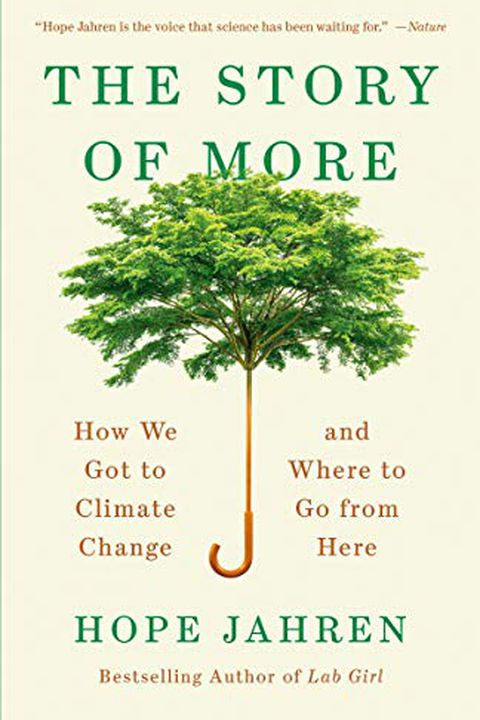
The Story of More
Hope Jahren
National Geographic Rarely Seen
National Geographic
Trees, Leaves & Bark
Diane Burns
Over and Under the Pond
Kate Messner
Tom Brown's Field Guide to Wilderness Survival
Tom Brown Jr.How recommendation signals are reviewed
Each recommendation is collected from a public source — interviews, articles, or curated lists — and linked to its original URL. Books with many verifiable recommendations from respected people rank higher.