
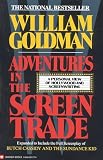
Adventures in the Screen Trade
A Personal View of Hollywood and Screenwriting
by William Goldman

2 more
More Recommenders
“I am reading William Goldman's spectacular book Adventures in the Screen Trade, for the third time. He reminds us: in 1977 best picture noms included All the President's Men, Network & Taxi Driver. They all got beat by Rocky. | William Goldman died. Super talented novelist and screenwriter. (Butch Cassidy; Princess Bride; Marathon Man, etc.) His "Adventures in the Screen Trade" is still one of the great books on Hollywood. RIP.”
Source →“I am reading William Goldman's spectacular book Adventures in the Screen Trade, for the third time. He reminds us: in 1977 best picture noms included All the President's Men, Network & Taxi Driver. They all got beat by Rocky. | William Goldman died. Super talented novelist and screenwriter. (Butch Cassidy; Princess Bride; Marathon Man, etc.) His "Adventures in the Screen Trade" is still one of the great books on Hollywood. RIP.”
Source →Recommended by 4 notable people, including Tim Ferriss and Michael Bierut
Check price on AmazonProof-backed recommendation
Amazon availability
Reading Profile
Should I read this?
Goldman writes like a raconteur: candid, impatient, and often amused by his own stories. The book delivers first-hand, frequently funny backstage anecdotes about scripts, studio bargaining, and how films shift from page to set. Its main value is practical, streetwise warnings about the gulf between writing and production, but it offers little step-by-step instruction; chapters can drift into gossip, repetition, and period-specific references that feel dated. Best read for voice and trade-eye perspective rather than systematic guidance.
Read this if...
- •a novice screenwriter drafting their first spec script who wants a reality check on how studios and directors reshape scripts during production; useful as cautionary reading before sending work out.
- •a film student assembling context for mid- to late-20th-century Hollywood practice who wants colorful primary-source stories to complement classroom theory; good as background reading between seminars.
- •a working producer or editor preparing to negotiate rewrites and credits who wants blunt, anecdotal insight into typical writer-versus-studio clashes; helpful to read before meetings.
Skip this if...
- •annoying if you prefer tight, step-by-step instruction or templates—no exercises or how-to checklists here.
- •you'll likely put it down when long anecdotal detours repeat the same point in new stories; readers who want concise argumentation tend to stop at that midpoint drift.
- •lose interest if you want up-to-date industry mechanics and data: many examples are tied to an earlier Hollywood and can feel dated or assumed.
No one knows the writer's Hollywood more intimately than William Goldman. Twotime Academy Awardwinning screenwriter and the bestselling author of Marathon Man, Tinsel, Boys and Girls Together, and other novels, Goldman now takes you into Hollywood's inner sanctums...on and behind the scenes for Butch Cassidy and the Sundance Kid, All the Presiden...
Before You Buy
Reading Specifications
Difficulty:easy
Audience Fit
- a novice screenwriter drafting their first spec script who wants a reality check on how studios and directors reshape scripts during production; useful as cautionary reading before sending work out.
- a film student assembling context for mid- to late-20th-century Hollywood practice who wants colorful primary-source stories to complement classroom theory; good as background reading between seminars.
- a working producer or editor preparing to negotiate rewrites and credits who wants blunt, anecdotal insight into typical writer-versus-studio clashes; helpful to read before meetings.
- annoying if you prefer tight, step-by-step instruction or templates—no exercises or how-to checklists here.
- you'll likely put it down when long anecdotal detours repeat the same point in new stories; readers who want concise argumentation tend to stop at that midpoint drift.
- lose interest if you want up-to-date industry mechanics and data: many examples are tied to an earlier Hollywood and can feel dated or assumed.
Check formats, pricing, and availability options for Kindle, physical print, or audiobooks directly.
View available editions on AmazonKey themes
Why recommended
Recommended by 4 sources and appears in Cinema, Screenplay, and Screenwriting.
Recommended by notable people
People and public figures who have recommended this book.
Recommendation Signals
Recommendation proof is sourced from public posts, interviews, reading lists, and cited references.
Preet Bharara
“I am reading William Goldman's spectacular book Adventures in the Screen Trade, for the third time. He reminds us: in 1977 best picture noms included All the President's Men, Network & Taxi Driver. They all got beat by Rocky. | William Goldman died. Super talented novelist and screenwriter. (Butch Cassidy; Princess Bride; Marathon Man, etc.) His "Adventures in the Screen Trade" is still one of the great books on Hollywood. RIP.”
View sources (2) ▾80%
Appears In

Not sure if this is the right fit?
Consider The Hero with a Thousand Faces by Joseph Campbell. Recommended by 14 sources.
“Campbell’s work reads like a dense academic tour through world mythology, cataloging the hero’s journey in exhausting detail. You’ll encounter countless myths, rituals, and symbols tied to a common monomyth pattern. The main value lies in its ability to unveil the deep structure beneath disparate stories, from ancient epics to modern dreams. Annoyingly, the prose is thick with Jungian and Freudian interpretation, and the comparative method can feel repetitive and overreaching. It’s a book to study, not to skim—rewarding for the patient, cloying for the skeptical.”
Similar books
The Hero with a Thousand Faces
Joseph Campbell
Accidental Presidents
Jared Cohen
The Writers Journey
Christopher Vogler
Screenplay
Syd Field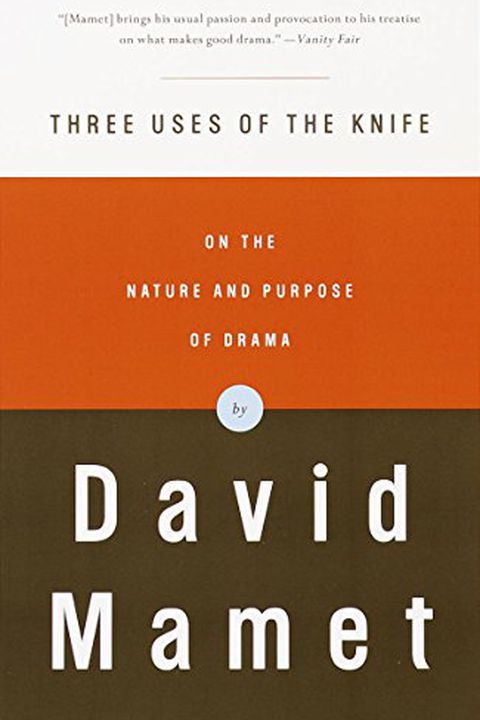
Three Uses of the Knife
David MametOn Writing
Stephen King
Rebel without a Crew
Robert Rodriguez
Something Like An Autobiography
Akira KurosawaHow recommendation signals are reviewed
Each recommendation is collected from a public source — interviews, articles, or curated lists — and linked to its original URL. Books with many verifiable recommendations from respected people rank higher.