
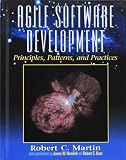
Agile Software Development, Principles, Patterns, and Practices
by Robert C. Martin
Reading Profile
Should I read this?
Practical, code-first manual aimed at hands-on developers; it mixes object-oriented design, UML, design patterns, and Agile/XP practices with long C and Java examples. The most useful parts are concrete problem-solving walk-throughs: refactorings, design choices, and pattern implementations you can copy into real projects. Limitations: heavy on language-specific listings and prescriptive editorializing — the tone can feel didactic, and some examples read dated compared with modern language features. Not a gentle introduction; it's best used slowly and with a code editor open.
Read this if...
- •mid-level Java backend engineer rewriting a legacy module who needs concrete refactor patterns and design examples to apply immediately.
- •senior developer mentoring juniors who wants ready code examples and talking points about object-oriented design and testing practices to teach during code reviews.
- •newly appointed team lead introducing Agile/XP practices on a small team and looking for practical rules, examples, and hands-on explanations to justify process changes.
Skip this if...
- •You’ll likely put it down when you hit long, dense code listings and UML diagrams — readers who prefer short essays or high-level summaries tend to stop here.
- •Annoying if you prefer modern, language-specific idioms (functional patterns, modern Java/Kotlin features) because many examples lean on older C/Java styles and prescriptive language.
- •Avoid if you want a gentle intro or interactive exercises — the book lacks hands-on exercises and can read like a lecture aimed at working developers.
Written by a software developer for software developers, this book is a unique collection of the latest software development methods. The author incudes OOD, UML, Design Patterns, Agile and XP methods with a detailed description of a complete software design for reusable programs in C and Java. Using a practical, problemsolving approach, it show...
Before You Buy
Reading Specifications
Difficulty:hard
Audience Fit
- mid-level Java backend engineer rewriting a legacy module who needs concrete refactor patterns and design examples to apply immediately.
- senior developer mentoring juniors who wants ready code examples and talking points about object-oriented design and testing practices to teach during code reviews.
- newly appointed team lead introducing Agile/XP practices on a small team and looking for practical rules, examples, and hands-on explanations to justify process changes.
- You’ll likely put it down when you hit long, dense code listings and UML diagrams — readers who prefer short essays or high-level summaries tend to stop here.
- Annoying if you prefer modern, language-specific idioms (functional patterns, modern Java/Kotlin features) because many examples lean on older C/Java styles and prescriptive language.
- Avoid if you want a gentle intro or interactive exercises — the book lacks hands-on exercises and can read like a lecture aimed at working developers.
Check formats, pricing, and availability options for Kindle, physical print, or audiobooks directly.
View available editions on AmazonKey themes
Why recommended
appears in Programming, Programming, and Technology.
Recommendation Signals
Recommendation proof is sourced from public posts, interviews, reading lists, and cited references.
No verified recommendation proof available yet.
Appears In
Not sure if this is the right fit?
Consider Effective Modern C by Scott Meyers.
“Effective Modern C++ presents concise, itemized rules for using C++11/14 features—auto, move semantics, lambdas, and concurrency—backed by dense code examples and limitation discussion. The useful part is concrete, opinionated prescriptions that point out subtle correctness and portability traps and suggest safer idioms. The limiting part is heavy assumption of prior C++ fluency: many items demand stopping to compile and think. Readers expecting a gentle introduction or a chapter-by-chapter tutorial will find the voice prescriptive and occasionally terse.”
Similar books

How recommendation signals are reviewed
Each recommendation is collected from a public source — interviews, articles, or curated lists — and linked to its original URL. Books with many verifiable recommendations from respected people rank higher.