
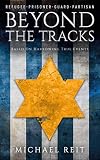
Beyond the Tracks
A WW2 Novel Based on Harrowing True Events
by Michael Reit
Reading Profile
Should I read this?
Reit follows Jacob Kagan from Berlin to Westerbork and beyond, delivering a close-up account of a refugee’s shrinking options as Europe collapses. The reading is intimate and often unrelenting: scenes of camp routine, deportation logistics, and small human gestures carry most of the novel’s force. Its useful part is the granular depiction of exile’s moral compromises and daily survival; its main limitation is sustained bleakness—repetitive suffering and procedural detail that some readers will find wearing rather than illuminating.
Read this if...
- •a high-school history teacher planning a unit on refugee experiences who wants a readable, humanized novel to pair with primary-source testimony—useful for discussing moral choice and daily life under occupation
- •a book-club member preparing to lead a discussion on Holocaust fiction who wants emotionally direct scenes and fraught character dilemmas to spark debate about survival and complicity
- •a fiction writer researching refugee psychology for a WWII-set novel who needs close, scene-level examples of camp routines and how small decisions ripple under pressure
Skip this if...
- •you'll likely put it down when the narrative spends pages on camp administration and repetitive deportation sequences—readers wanting brisk plot momentum will lose patience
- •annoying if you prefer uplifting arcs or clear moral comfort; the novel keeps a bleak, ambiguous tone with few neat resolutions
- •not for readers who expect broad historical scaffolding or contextual maps—the story focuses tightly on individual experience and assumes you’ll supply extra background
Berlin, 1938.Germany is a terrifying place.When people start disappearing in nightly raids, a young Jacob Kagan flees the country and ends up in the Dutch refugee camp of Westerbork. But he can only avoid the Nazis for so long. After the Netherlands fall to the German war machine, Westerbork is transformed into a transit camp with weekly trains bou...
Before You Buy
Reading Specifications
Difficulty:hard
Audience Fit
- a high-school history teacher planning a unit on refugee experiences who wants a readable, humanized novel to pair with primary-source testimony—useful for discussing moral choice and daily life under occupation
- a book-club member preparing to lead a discussion on Holocaust fiction who wants emotionally direct scenes and fraught character dilemmas to spark debate about survival and complicity
- a fiction writer researching refugee psychology for a WWII-set novel who needs close, scene-level examples of camp routines and how small decisions ripple under pressure
- you'll likely put it down when the narrative spends pages on camp administration and repetitive deportation sequences—readers wanting brisk plot momentum will lose patience
- annoying if you prefer uplifting arcs or clear moral comfort; the novel keeps a bleak, ambiguous tone with few neat resolutions
- not for readers who expect broad historical scaffolding or contextual maps—the story focuses tightly on individual experience and assumes you’ll supply extra background
Check formats, pricing, and availability options for Kindle, physical print, or audiobooks directly.
View available editions on AmazonKey themes
Why recommended
appears in Holocaust.
Recommendation Signals
Recommendation proof is sourced from public posts, interviews, reading lists, and cited references.
No verified recommendation proof available yet.
Appears In
Not sure if this is the right fit?
Consider Man's Search for Meaning by Viktor E. Frankl. Recommended by 100 sources.
“Psychiatrist Viktor Frankl recounts his survival in Nazi death camps, weaving together brutal details and insights about finding meaning in suffering. The first half is a gripping, horrifying memoir; the second half shifts to a philosophical framework he calls logotherapy. The book’s core appeal is its raw demonstration that even in hell, a sense of purpose can keep you alive. Some readers find the shift jarring and the later sections abstract. The ideas resonate best if you accept the spiritual overtones and personal anecdotes over a more analytical approach.”
Similar books

How recommendation signals are reviewed
Each recommendation is collected from a public source — interviews, articles, or curated lists — and linked to its original URL. Books with many verifiable recommendations from respected people rank higher.