
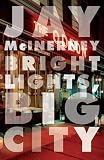
Bright Lights, Big City
by Jay Mcinerney
Recommended by Anya Taylor-Joy and Éric Ripert
Check price on AmazonProof-backed recommendation
Amazon availability
Reading Profile
Should I read this?
Jay McInerney’s Bright Lights, Big City is a fast, atmospheric portrait of New York in the 1980s that trades exposition for pulse and sensory detail. What works best is the book’s ability to summon a specific urban energy—bright nights, shop-window glamour, restless movement—through vivid, economical prose. Its main limitation is the thinness of sustained narrative and character development: scenes can loop, and the emphasis on surface sensation may leave readers wanting more depth or clearer stakes.
Read this if...
- •a short-story writer revising a city-nightlife scene who needs compact models of tone and sensory economy — useful now while drafting a piece that must be tight and vivid without long exposition
- •a graduate student in cultural history assembling a seminar paper on 1980s Manhattan nightlife who wants a brief fictional snapshot to pair with archival journalism and social analysis — useful now during literature-review drafting when you need a readable primary-text example
- •an art director or workshop facilitator planning a one-session creative lab who wants a short, shareable passage to set a mood and prompt discussion — useful now because it reads aloud well and fits a single-session schedule
Skip this if...
- •you’ll likely put it down when the same party/club/nightlife snapshots repeat and the protagonist’s drift doesn’t turn into clear development — that’s the common drop-off point
- •annoying if you prefer plot-forward novels with clear resolutions or emotional growth; this leans toward impression rather than payoff
- •frustrating if you like detailed background or social context; the book foregrounds surface atmosphere and leaves broader questions under-explored
"I don’t think any book describes New York in the ‘80s as accurately and as well as [this book]. When I arrived in 1991, I instantly felt that energy from the book in the city." - Eric Ripert
Before You Buy
Reading Specifications
Difficulty:easy
Audience Fit
- a short-story writer revising a city-nightlife scene who needs compact models of tone and sensory economy — useful now while drafting a piece that must be tight and vivid without long exposition
- a graduate student in cultural history assembling a seminar paper on 1980s Manhattan nightlife who wants a brief fictional snapshot to pair with archival journalism and social analysis — useful now during literature-review drafting when you need a readable primary-text example
- an art director or workshop facilitator planning a one-session creative lab who wants a short, shareable passage to set a mood and prompt discussion — useful now because it reads aloud well and fits a single-session schedule
- you’ll likely put it down when the same party/club/nightlife snapshots repeat and the protagonist’s drift doesn’t turn into clear development — that’s the common drop-off point
- annoying if you prefer plot-forward novels with clear resolutions or emotional growth; this leans toward impression rather than payoff
- frustrating if you like detailed background or social context; the book foregrounds surface atmosphere and leaves broader questions under-explored
Check formats, pricing, and availability options for Kindle, physical print, or audiobooks directly.
View available editions on AmazonKey themes
Why recommended
Recommended by 3 sources and appears in Most Recommended Books.
Recommended by notable people
People and public figures who have recommended this book.
Recommendation Signals
Recommendation proof is sourced from public posts, interviews, reading lists, and cited references.
Appears In
Not sure if this is the right fit?
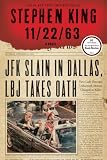
Consider 11/22/63 by Stephen King. Recommended by 4 sources.
“Starts as a lean, suspenseful time-travel premise that quickly settles into an immersive, character-focused saga. Its chief useful part is the way everyday 1960s small-town life and personal relationships make the historical stakes feel immediate; the novel rewards readers who relish atmosphere and slow moral puzzles. The main limitation is length and digressions—long domestic passages and episodic subplots stretch the middle and can undercut urgency for readers who wanted a tighter thriller.”
Similar books
11/22/63
Stephen King
40 Chances
Howard G. Buffett12 Rules for Life
Jordan Peterson21 Lessons for the 21st Century
Yuval Noah Harari
100 Endgames You Must Know
Jesus de la Villa10% Happier
Dan Harris100 Baggers
Christopher W Mayer300 Arguments
Sarah MangusoHow recommendation signals are reviewed
Each recommendation is collected from a public source — interviews, articles, or curated lists — and linked to its original URL. Books with many verifiable recommendations from respected people rank higher.