
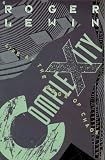
Complexity
Life at the Edge of Chaos
by Roger Lewin
Recommended by Vlad Tenev and Vlad Zamfir
Check price on AmazonProof-backed recommendation
Amazon availability
Reading Profile
Should I read this?
Roger Lewin writes in an accessible, narrative-driven style that surveys the rise of complexity across biology, physics, and computation. What works best is broad synthesis—Lewin stitches stories, models, and historical episodes into an intelligible map for curious, science-literate readers. Main limitation: depth varies; technical passages and metaphor-heavy sections coexist, so the book won't satisfy those wanting rigorous math or step-by-step methods. Some case studies and examples can feel dated, reducing immediacy for readers seeking current follow-ups.
Read this if...
- •graduate student in ecology mapping emergent patterns across scales who needs a readable historical context for models and ideas before diving into technical papers.
- •data scientist at a product company arguing that system-level feedback matters to leadership and wants narrative examples to make the abstract concrete.
- •science-curious non-specialist who enjoys idea-driven popular science and prefers broad synthesis over heavy equations when learning about emergence and networks.
Skip this if...
- •you'll likely put it down when sections turn into dense technical descriptions or equations without much hand-holding — that mid-book shift trips up readers looking for a steady narrative.
- •annoying if you prefer practical, step-by-step methods or exercises — the book provides interpretive synthesis, not hands-on guides.
- •lose interest if you want strictly up-to-date references and recent computational results; some examples and historical anecdotes read as dated rather than current.
"Put together one of the world's best science writers with one of the universe's most fascinating subjects and you are bound to produce a wonderful book. . . . The subject of complexity is vital and controversial. This book is important and beautifully done."—Stephen Jay Gould"[Complexity] is that curious mix of complication and organization that w...
Before You Buy
Reading Specifications
Difficulty:hard
Audience Fit
- graduate student in ecology mapping emergent patterns across scales who needs a readable historical context for models and ideas before diving into technical papers.
- data scientist at a product company arguing that system-level feedback matters to leadership and wants narrative examples to make the abstract concrete.
- science-curious non-specialist who enjoys idea-driven popular science and prefers broad synthesis over heavy equations when learning about emergence and networks.
- you'll likely put it down when sections turn into dense technical descriptions or equations without much hand-holding — that mid-book shift trips up readers looking for a steady narrative.
- annoying if you prefer practical, step-by-step methods or exercises — the book provides interpretive synthesis, not hands-on guides.
- lose interest if you want strictly up-to-date references and recent computational results; some examples and historical anecdotes read as dated rather than current.
Check formats, pricing, and availability options for Kindle, physical print, or audiobooks directly.
View available editions on AmazonKey themes
Why recommended
Recommended by 3 sources and appears in Most Recommended Books, Science, and Nonfiction.
Recommended by notable people
People and public figures who have recommended this book.
Recommendation Signals
Recommendation proof is sourced from public posts, interviews, reading lists, and cited references.
Appears In
Not sure if this is the right fit?
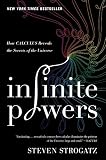
Consider Infinite Powers by Steven Strogatz. Recommended by 10 sources.
“Strogatz writes like an engaging guide who treats calculus as a human story: equations come with everyday analogies, historical side trips, and visual intuition. What works best is making why calculus matters—velocity, accumulation, and infinity—feel concrete without heavy formalism, so a reader finishes with better conceptual tools for understanding technology and science. The main limitation is pace: readers wanting rigorous proofs or a practice-based learning path will find it light and occasionally repetitive in examples and anecdotes.”
Similar books
Infinite Powers
Steven Strogatz
Elements of Information Theory
Thomas M. CoverGödel, Escher, Bach
Douglas R. Hofstadter
How to Lie with Statistics
Darrell Huff
One Two Three . . . Infinity
George Gamow
Chaos
James Gleick
Euclid's Elements
Euclid
The Art of Statistics
David SpiegelhalterHow recommendation signals are reviewed
Each recommendation is collected from a public source — interviews, articles, or curated lists — and linked to its original URL. Books with many verifiable recommendations from respected people rank higher.