
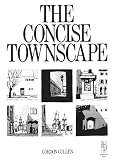
Concise Townscape
by Gordon Cullen
Reading Profile
Should I read this?
Concise Townscape reads like a brisk illustrated field guide to how streets, corners and façades make towns feel ordered. Its strength is a concentrated set of visual observations and compositional tactics—sequences of views, framing, and human scale—that sharpen how you look at urban space and help you sketch quick improvements. Main limitation: the emphasis on perceptual rules and evocative sketches leaves little by way of modern technical metrics, regulatory detail or implementation checklists.
Read this if...
- •mid-level urban designer sketching concept options for a streetscape pitch who needs quick visual arguments to show clients why one sequence of views works better than another
- •architecture student in a design studio assignment analyzing public-realm qualities and needing concise examples of framing, scale and transitions to inform a model or portfolio text
- •local councillor or community organizer preparing a plain-English presentation to argue for humane street treatments and wanting visual language to explain why small changes change perception
Skip this if...
- •you'll likely put it down when you expect detailed zoning rules, traffic-engine calculations or contemporary case-study data—the book is light on technical procedure
- •annoying if you prefer dense, analytical prose rather than image-led observation and short captioned arguments; repetitions of the same visual point can feel thin
- •not a fit if you want hands-on exercises or step-by-step implementation checklists—practical application is implied, not prescribed
This book pioneered the concept of townscape. 'Townscape' is the art of giving visual coherence and organization to the jumble of buildings, streets and space that make up the urban environment. It has been a major influence on architects, planners and others concerned with what cities should look like....
Before You Buy
Reading Specifications
Difficulty:hard
Audience Fit
- mid-level urban designer sketching concept options for a streetscape pitch who needs quick visual arguments to show clients why one sequence of views works better than another
- architecture student in a design studio assignment analyzing public-realm qualities and needing concise examples of framing, scale and transitions to inform a model or portfolio text
- local councillor or community organizer preparing a plain-English presentation to argue for humane street treatments and wanting visual language to explain why small changes change perception
- you'll likely put it down when you expect detailed zoning rules, traffic-engine calculations or contemporary case-study data—the book is light on technical procedure
- annoying if you prefer dense, analytical prose rather than image-led observation and short captioned arguments; repetitions of the same visual point can feel thin
- not a fit if you want hands-on exercises or step-by-step implementation checklists—practical application is implied, not prescribed
Check formats, pricing, and availability options for Kindle, physical print, or audiobooks directly.
View available editions on AmazonKey themes
Why recommended
appears in Architecture and Art.
Recommendation Signals
Recommendation proof is sourced from public posts, interviews, reading lists, and cited references.
No verified recommendation proof available yet.
Appears In
Not sure if this is the right fit?
Consider Architecture, by Marvin Trachtenberg.
“Marvin Trachtenberg's Architecture alternates broad historical overviews with close readings of key buildings, using abundant illustrations to anchor points. It feels like a guided exhibition: periods are placed in social and intellectual context, then individual works are inspected for formal and aesthetic detail. Most useful for sharpening the ability to tell one period from another and spotting why certain buildings look and function the way they do. Limitation: the prose often assumes architectural vocabulary, so casual readers may find passages dense.”
Similar books
Architecture,
Marvin Trachtenberg
A Pattern Language
Christopher Alexander
In Praise of Shadows
Junichiro Tanizaki
Fundamentals of Building Construction
Edward Allen
Heating, Cooling, Lighting
Norbert Lechner
Architecture,
Daniel Borden
Architectural Graphic Standards
American Institute of Architects
A Global History of Architecture,
Francis D. K. ChingHow recommendation signals are reviewed
Each recommendation is collected from a public source — interviews, articles, or curated lists — and linked to its original URL. Books with many verifiable recommendations from respected people rank higher.