
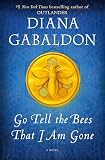
Go Tell the Bees That I Am Gone
A Novel (Outlander)
by Diana Gabaldon
Reading Profile
Should I read this?
Reading this instalment feels like stepping back into a vast, character-rich saga: reunion scenes and domestic detail alternate with set-piece historical episodes. What works best is immersion—long scenes let you live in 1779 alongside Claire and Jamie, and fans will appreciate the payoff on relationships and continuity. The main limitation is length and frequent detours: sprawling subplots and slow-moving exposition can tax patience and dilute dramatic forward momentum for readers expecting a lean, plot-driven historical thriller.
Read this if...
- •a longtime series reader who followed Claire and Jamie through earlier volumes and wants to rejoin them now; rewards familiarity with emotional reunion scenes, character continuity, and callbacks.
- •a reader with several uninterrupted reading sessions (weekend binges or long travel) who likes being absorbed in period detail and slow-burn romance; this book pays off when you can sink hours into it.
- •a book-club organizer or discussion leader prepping an 18th-century-themed meeting who needs layered subplots, moral conflict, and historical friction to pick apart; supplies plenty of threads for debate.
Skip this if...
- •you'll likely put it down when the narrative pauses for long digressions and new side-plots that push the main reunion arc aside — patience is required for the payoff.
- •annoying if you prefer tight pacing, modern prose economy, or a standalone story; frequent recaps and reliance on earlier events can feel repetitive or exclusionary.
- •lose interest if you haven’t read previous volumes and wanted an entry-level book: this rewards prior knowledge and can feel confusing or sluggish as it re-establishes long-running relationships.
The past may seem the safest place to be . . . but it is the most dangerous time to be alive. . . . Jamie Fraser and Claire Randall were torn apart by the Jacobite Rising in 1743, and it took them twenty years to find each other again. Now the American Revolution threatens to do the same. It is 1779 and Claire and Jamie are at last reunited with th...
Before You Buy
Reading Specifications
Difficulty:hard
Audience Fit
- a longtime series reader who followed Claire and Jamie through earlier volumes and wants to rejoin them now; rewards familiarity with emotional reunion scenes, character continuity, and callbacks.
- a reader with several uninterrupted reading sessions (weekend binges or long travel) who likes being absorbed in period detail and slow-burn romance; this book pays off when you can sink hours into it.
- a book-club organizer or discussion leader prepping an 18th-century-themed meeting who needs layered subplots, moral conflict, and historical friction to pick apart; supplies plenty of threads for debate.
- you'll likely put it down when the narrative pauses for long digressions and new side-plots that push the main reunion arc aside — patience is required for the payoff.
- annoying if you prefer tight pacing, modern prose economy, or a standalone story; frequent recaps and reliance on earlier events can feel repetitive or exclusionary.
- lose interest if you haven’t read previous volumes and wanted an entry-level book: this rewards prior knowledge and can feel confusing or sluggish as it re-establishes long-running relationships.
Check formats, pricing, and availability options for Kindle, physical print, or audiobooks directly.
View available editions on AmazonKey themes
Why recommended
appears in Time Travel, Romance, and Science Fiction.
Recommendation Signals
Recommendation proof is sourced from public posts, interviews, reading lists, and cited references.
No verified recommendation proof available yet.
Appears In
Not sure if this is the right fit?
Consider This Is How You Lose the Time War by Amal elMohtar. Recommended by 6 sources.
“This Is How You Lose the Time War is a compact, lyrical epistolary novella pairing time‑travel spycraft with an enemies‑to‑lovers romance. It unfolds through stylized letters that prioritize voice, metaphor, and sensory detail over mechanical explanation. What works best is intense, intimate emotional writing and imaginative imagery; the main limitation is deliberately thin worldbuilding and an elliptical plot that leaves many questions unanswered. Best read slowly so the language lands—it's more mood‑piece than procedural sci‑fi.”
Similar books
How recommendation signals are reviewed
Each recommendation is collected from a public source — interviews, articles, or curated lists — and linked to its original URL. Books with many verifiable recommendations from respected people rank higher.