
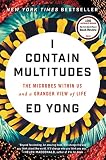
I Contain Multitudes
The Microbes Within Us and a Grander View of Life
by Ed Yong
Recommended by Bill Gates and Steve Silberman
Check price on AmazonProof-backed recommendation
Amazon availability
Reading Profile
Should I read this?
Ed Yong turns microbiology into readable narrative: self-contained chapters that follow surprising experiments, animal stories, and human oddities to show how microbes shape behavior, health, and ecosystems. The prose is curious, often humorous, and grounded in reporting, so scientific ideas arrive as stories rather than formal lessons. What works best is vivid, memorable illustration of microbial influence; the main limitation is repetition—many chapters use the same anecdote pattern and a few detours into technical detail can stall momentum for impatient readers.
Read this if...
- •an undergraduate biology student preparing for a microbiome unit who wants vivid, memorable case studies that make abstract concepts stick
- •a curious commuter who prefers long-form magazine-style science and will read the book in chapter-sized chunks on trains or evenings
- •a science teacher or communicator assembling colorful anecdotes to explain symbiosis and host–microbe interactions to non-specialist audiences
Skip this if...
- •you'll likely put it down when similar narrative patterns repeat across chapters and the book keeps introducing fresh case studies without tightening the throughline; mid-book repetition is the usual drop-off point
- •annoying if you prefer textbook clarity and concise definitions—this is story-first, explanation-second and lacks systematic summaries
- •you'll lose patience if dense mechanistic detail or specialist jargon appears and you want a light, purely popular read
Joining the ranks of popular science classics like The Botany of Desire and The Selfish Gene, a groundbreaking, wondrously informative, and vastly entertaining examination of the most significant revolution in biology since Darwin—a “microbe’seye view” of the world that reveals a marvelous, radically reconceived picture of life on earth.Every anim...
Before You Buy
Reading Specifications
Difficulty:hard
Audience Fit
- an undergraduate biology student preparing for a microbiome unit who wants vivid, memorable case studies that make abstract concepts stick
- a curious commuter who prefers long-form magazine-style science and will read the book in chapter-sized chunks on trains or evenings
- a science teacher or communicator assembling colorful anecdotes to explain symbiosis and host–microbe interactions to non-specialist audiences
- you'll likely put it down when similar narrative patterns repeat across chapters and the book keeps introducing fresh case studies without tightening the throughline; mid-book repetition is the usual drop-off point
- annoying if you prefer textbook clarity and concise definitions—this is story-first, explanation-second and lacks systematic summaries
- you'll lose patience if dense mechanistic detail or specialist jargon appears and you want a light, purely popular read
Check formats, pricing, and availability options for Kindle, physical print, or audiobooks directly.
View available editions on AmazonKey themes
Why recommended
Recommended by 3 sources and appears in Most Recommended Books, Science, and Nonfiction.
Recommended by notable people
People and public figures who have recommended this book.
Recommendation Signals
Recommendation proof is sourced from public posts, interviews, reading lists, and cited references.

Bill Gates
Co-founder of Microsoft; co-chair of the Gates Foundation
“Helped me see microorganisms in a whole new light. | This book on the microbiome by @edyong209 (title, Walt Whitman) will be a mustread of 2016.”
View sources (2) ▾80%
Appears In
Not sure if this is the right fit?
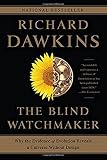
Consider The Blind Watchmaker by Richard Dawkins. Recommended by 12 sources.
“Reading feels brisk and combative: clear metaphors and thought experiments carry much of the book, making abstract evolutionary mechanics concrete for a general reader. The most useful material offers step-by-step dismantling of purposive explanations and replaces them with probabilistic accounts of variation and selection. Main limitation is tone and repetition—several chapters restate the same counterarguments at length—and occasional technical detours into probability and genetics that slow readers who prefer story over demonstration. No hands-on exercises.”
Similar books
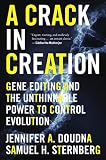
A Crack In Creation
Jennifer A. DoudnaThe Blind Watchmaker
Richard Dawkins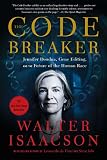
The Code Breaker
Walter Isaacson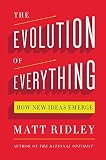
The Evolution of Everything
Matt Ridley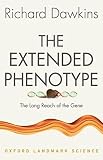
The Extended Phenotype
Richard Dawkins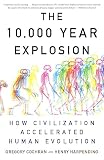
The 10,000 Year Explosion
Gregory Cochran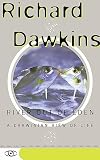
River Out of Eden
Richard Dawkins
Gene Machine
Venki RamakrishnanHow recommendation signals are reviewed
Each recommendation is collected from a public source — interviews, articles, or curated lists — and linked to its original URL. Books with many verifiable recommendations from respected people rank higher.