
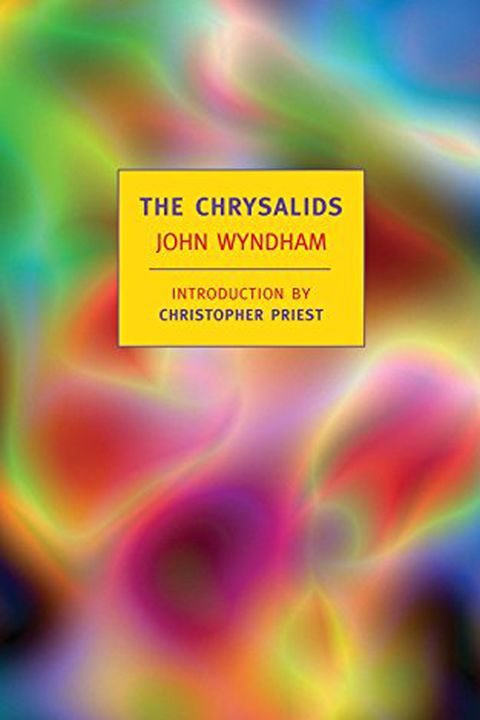
The Chrysalids
by John Wyndham
Reading Profile
Should I read this?
Wyndham writes in spare mid-century prose that keeps the focus tight on David's viewpoint and a small, fearful community. The book's useful part is its moral pressure: ritualized condemnation, secret differences, and a creeping sense of threat turn abstract prejudice into immediate danger. The principal limitation is pacing and dated framing — the middle lingers on exposition and doctrinal detail, and some social attitudes feel of their time, which can pull modern readers out of the story.
Read this if...
- •a high-school English teacher planning a unit on dystopia who needs a short novel to spark classroom debate about conformity, othering, and ethics
- •a book-club member looking for a readable, discussion-friendly SF novel that emphasizes social dynamics and moral dilemmas over technical explanation
- •a college student comparing mid‑century speculative fiction in an essay and wanting a compact example of religiously enforced norms and exile
Skip this if...
- •you'll likely put it down when the middle section bogs down in exposition and doctrinal detail — patience required to reach the escape-driven finale
- •annoying if you prefer hard-science explanations for mutations or clear modern sensibilities; the story keeps its speculative mechanics vague and reflects older social assumptions
- •you'll lose interest if you want constant action or a fast contemporary pace; the book favors slow moral pressure and atmospheric build-up over nonstop thrills
The Chyrsalids is set in the future after a devastating global nuclear war. David, the young hero of the novel, lives in a tightknit community of religious and genetic fundamentalists, always on the alert for any deviation from the norm of God_x0092_s creation. Abnormal plants are publicly burned, with much singing of hymns. Abnormal humans (who are not...
Before You Buy
Reading Specifications
Difficulty:hard
Audience Fit
- a high-school English teacher planning a unit on dystopia who needs a short novel to spark classroom debate about conformity, othering, and ethics
- a book-club member looking for a readable, discussion-friendly SF novel that emphasizes social dynamics and moral dilemmas over technical explanation
- a college student comparing mid‑century speculative fiction in an essay and wanting a compact example of religiously enforced norms and exile
- you'll likely put it down when the middle section bogs down in exposition and doctrinal detail — patience required to reach the escape-driven finale
- annoying if you prefer hard-science explanations for mutations or clear modern sensibilities; the story keeps its speculative mechanics vague and reflects older social assumptions
- you'll lose interest if you want constant action or a fast contemporary pace; the book favors slow moral pressure and atmospheric build-up over nonstop thrills
Check formats, pricing, and availability options for Kindle, physical print, or audiobooks directly.
View available editions on AmazonKey themes
Why recommended
Recommended by 1 source and appears in Dystopian, Science Fiction, and Science.
Recommended by notable people
People and public figures who have recommended this book.
Recommendation Signals
Recommendation proof is sourced from public posts, interviews, reading lists, and cited references.
Appears In
Not sure if this is the right fit?
Consider Cloud Atlas by David Mitchell. Recommended by 8 sources.
“Cloud Atlas launches six distinct narrative strands across eras and registers, showcasing wild genre shifts—from adventure and epistolary memoir to speculative and post‑apocalyptic set pieces—held together by recurring motifs and stylistic bravado. Reading rewards attention: motifs and echoes accumulate into a thematic chorus rather than a single linear plot. Main limitation: the deliberate fragmentation and frequent voice-switching can dilute emotional continuity; sections sometimes feel like sharp pastiche instead of fully rounded narratives, so readers wanting steady immersion may find it frustrating.”
Similar books
How recommendation signals are reviewed
Each recommendation is collected from a public source — interviews, articles, or curated lists — and linked to its original URL. Books with many verifiable recommendations from respected people rank higher.