
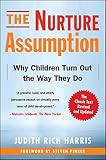
The Nurture Assumption
Why Children Turn Out the Way They Do
by Judith Rich Harris

Recommended by James Clear and Steven Pinker
Check price on AmazonProof-backed recommendation
Amazon availability
Reading Profile
Should I read this?
Starts as a contrarian pop-psych polemic: Judith Rich Harris challenges the common belief that parents shape children's intelligence and personality, leaning on genetics, ethnography, and child psychology to make her case. Reading feels brisk and argumentative, with memorable counterexamples and a steady drumbeat of evidence-minded claims. What works best is a sharp reframe of where influence might lie; the main limitation is a singling-out tone and repetition—readers seeking balanced nuance or practical parenting steps may find it unsatisfying.
Read this if...
- •a developmental-psychology grad student assembling a seminar paper on nature vs. nurture who needs a provocative counterargument to parental determinism
- •a new parent flooded with advice who wants a reality check on how much parental choices actually predict long-term traits before changing routines
- •a middle-school teacher trying to explain classroom behavior who suspects peer-group dynamics matter more than home rules and wants an argument to present to colleagues
Skip this if...
- •you'll likely put it down when the tone turns polemical and the author restates the same refutations—mid-section repetition is a common bounce point
- •annoying if you prefer neutral, tentative scholarship: the book takes a combative stance and leaves nuance underplayed
- •not for readers seeking practical tips or step-by-step parenting techniques—no exercises and little hands-on guidance
"A grandmother from New Jersey uses genetics, ethnography, and child psychology to refute the dogma that parents shape their children's intelligence and personality." - Steven Pinker
Before You Buy
Reading Specifications
Difficulty:hard
Audience Fit
- a developmental-psychology grad student assembling a seminar paper on nature vs. nurture who needs a provocative counterargument to parental determinism
- a new parent flooded with advice who wants a reality check on how much parental choices actually predict long-term traits before changing routines
- a middle-school teacher trying to explain classroom behavior who suspects peer-group dynamics matter more than home rules and wants an argument to present to colleagues
- you'll likely put it down when the tone turns polemical and the author restates the same refutations—mid-section repetition is a common bounce point
- annoying if you prefer neutral, tentative scholarship: the book takes a combative stance and leaves nuance underplayed
- not for readers seeking practical tips or step-by-step parenting techniques—no exercises and little hands-on guidance
Check formats, pricing, and availability options for Kindle, physical print, or audiobooks directly.
View available editions on AmazonKey themes
Why recommended
Recommended by 3 sources and appears in Most Recommended Books.
Recommended by notable people
People and public figures who have recommended this book.
Recommendation Signals
Recommendation proof is sourced from public posts, interviews, reading lists, and cited references.
Appears In
Not sure if this is the right fit?
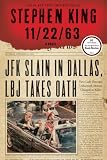
Consider 11/22/63 by Stephen King. Recommended by 4 sources.
“Starts as a lean, suspenseful time-travel premise that quickly settles into an immersive, character-focused saga. Its chief useful part is the way everyday 1960s small-town life and personal relationships make the historical stakes feel immediate; the novel rewards readers who relish atmosphere and slow moral puzzles. The main limitation is length and digressions—long domestic passages and episodic subplots stretch the middle and can undercut urgency for readers who wanted a tighter thriller.”
Similar books
11/22/63
Stephen King
40 Chances
Howard G. Buffett12 Rules for Life
Jordan Peterson21 Lessons for the 21st Century
Yuval Noah Harari
100 Endgames You Must Know
Jesus de la Villa10% Happier
Dan Harris100 Baggers
Christopher W Mayer300 Arguments
Sarah MangusoHow recommendation signals are reviewed
Each recommendation is collected from a public source — interviews, articles, or curated lists — and linked to its original URL. Books with many verifiable recommendations from respected people rank higher.