
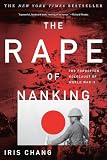
The Rape of Nanking
The Forgotten Holocaust of World War II
by Iris Chang


Recommended by Jordan Peterson and Jocko Willink
Check price on AmazonProof-backed recommendation
Amazon availability
Reading Profile
Should I read this?
Dark, urgent narrative that reads like a sustained investigative feature: it compiles survivor testimony, diplomatic records, and reportage into a chronological account of the 1937 Nanking massacre. Its useful part is the human-scale immediacy—names, quoted witnesses, and scene-by-scene reconstruction—that makes the scale of violence palpable. Main limitation: the prose can tilt toward moral outrage and repetition, and the graphic passages and exhaustive detail may overwhelm or fatigue readers seeking a more detached, footnote-heavy history.
Read this if...
- •a college history student writing a term paper on Sino-Japanese relations who needs a readable, narrative-led source to understand civilian experience and generate primary-source leads
- •a high-school world-history teacher planning a unit on wartime atrocities who wants emotionally immediate survivor accounts to spark classroom discussion about civilian impact
- •an informed general reader interested in 20th-century East Asian history who prefers narrative-driven storytelling and firsthand testimony over dense academic monographs
Skip this if...
- •you'll likely put it down when the catalogue of atrocities, names, and graphic scenes repeats and turns from shocking to numbing—readers expecting a light or episodic read often stop here
- •annoying if you prefer detached, footnote-heavy scholarship: the tone leans toward moralizing and occasional editorializing rather than a strictly academic apparatus
- •annoying if you avoid graphic depictions: explicit scenes of violence and suffering recur throughout and are central to the book's impact
The New York Times bestselling account of one of history's most brutal and forgotten massacres, when the Japanese army destroyed China's capital city on the eve of World War II In December 1937, one of the most horrific atrocities in the long annals of wartime barbarity occurred. The Japanese army swept into the ancient city of Nanking (what ...
Before You Buy
Reading Specifications
Difficulty:hard
Audience Fit
- a college history student writing a term paper on Sino-Japanese relations who needs a readable, narrative-led source to understand civilian experience and generate primary-source leads
- a high-school world-history teacher planning a unit on wartime atrocities who wants emotionally immediate survivor accounts to spark classroom discussion about civilian impact
- an informed general reader interested in 20th-century East Asian history who prefers narrative-driven storytelling and firsthand testimony over dense academic monographs
- you'll likely put it down when the catalogue of atrocities, names, and graphic scenes repeats and turns from shocking to numbing—readers expecting a light or episodic read often stop here
- annoying if you prefer detached, footnote-heavy scholarship: the tone leans toward moralizing and occasional editorializing rather than a strictly academic apparatus
- annoying if you avoid graphic depictions: explicit scenes of violence and suffering recur throughout and are central to the book's impact
Check formats, pricing, and availability options for Kindle, physical print, or audiobooks directly.
View available editions on AmazonKey themes
Why recommended
Recommended by 4 sources and appears in Japan History, About Japan, and About China.
Recommended by notable people
People and public figures who have recommended this book.
Recommendation Signals
Recommendation proof is sourced from public posts, interviews, reading lists, and cited references.
Jordan Peterson
Clinical psychologist and author
“Here is a list of books that I found particularly influential in my intellectual development.”
Appears In
Not sure if this is the right fit?
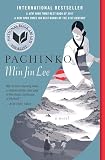
Consider Pachinko by Min Jin Lee. Recommended by 11 sources.
“Begins close to Sunja’s life and then stretches across generations to track a Korean family living in Japan, alternating intimate domestic scenes with broader historical pressures. Its useful part is the sustained emotional accumulation: small acts of endurance and sacrifice pile up into a textured portrait of belonging, exile, and family duty. Its main limitation is scope and pacing—repeated setbacks and many named characters can feel relentless, and long historical stretches slow the momentum for readers who want tighter plotting.”
Similar books
How recommendation signals are reviewed
Each recommendation is collected from a public source — interviews, articles, or curated lists — and linked to its original URL. Books with many verifiable recommendations from respected people rank higher.