
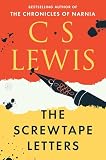
The Screwtape Letters
by C. S. Lewis
Recommended by Dominic D'Agostino and Ed Morrissey
Check price on AmazonProof-backed recommendation
Amazon availability
Reading Profile
Should I read this?
The Screwtape Letters unfolds as a series of fictional letters from an experienced devil, Screwtape, to his nephew Wormwood, advising on ways to tempt a human 'patient.' Reading it feels like sitting behind an ironic lecture where moral failings are cataloged and mocked; the value lies in its quick, memorable inversions and quotable aphorisms that force you to reconsider everyday choices. Limitations include a heavy Christian framing and a few stretches of repetitive preaching; readers seeking plot, modern language, or neutral secular analysis may find it thin.
Read this if...
- •a theology MA student preparing for a seminar next week on Christian ethics who needs a short primary text to close-read and contrast with formal doctrinal writings—good for rapid preparation and grabbing quotable passages for class discussion.
- •a parish small-group leader planning a 60–90 minute meeting about temptation and daily moral choices who wants a brief, theatrical reading assignment that reliably sparks argument and personal stories without requiring many meeting hours.
- •an undergraduate literature student writing a 2,000-word essay on satire and point-of-view who needs a compact, quotable example of epistolary irony and rhetorical inversion to analyze before a looming deadline.
Skip this if...
- •annoying if you prefer modern, neutral prose: the diction and explicit Christian assumptions feel dated to some readers.
- •you'll likely put it down when the moralizing voice repeats the same lessons in new guises and the letters feel more sermonic than surprising.
- •not for readers who want plot-driven character arcs or immersive worldbuilding; this is a set of rhetorical letters, not a sustained narrative.
A masterpiece of satire, this classic has entertained and enlightened readers the world over with its sly and ironic portrayal of human life and foibles, seen from the vantage point of Screwtape, a highly placed assistant to "Our Father Below." C.S Lewis gives us the correspondence of the worldlywise old devil to his nephew Wormwood, a novice demo...
Before You Buy
Reading Specifications
Difficulty:hard
Audience Fit
- a theology MA student preparing for a seminar next week on Christian ethics who needs a short primary text to close-read and contrast with formal doctrinal writings—good for rapid preparation and grabbing quotable passages for class discussion.
- a parish small-group leader planning a 60–90 minute meeting about temptation and daily moral choices who wants a brief, theatrical reading assignment that reliably sparks argument and personal stories without requiring many meeting hours.
- an undergraduate literature student writing a 2,000-word essay on satire and point-of-view who needs a compact, quotable example of epistolary irony and rhetorical inversion to analyze before a looming deadline.
- annoying if you prefer modern, neutral prose: the diction and explicit Christian assumptions feel dated to some readers.
- you'll likely put it down when the moralizing voice repeats the same lessons in new guises and the letters feel more sermonic than surprising.
- not for readers who want plot-driven character arcs or immersive worldbuilding; this is a set of rhetorical letters, not a sustained narrative.
Check formats, pricing, and availability options for Kindle, physical print, or audiobooks directly.
View available editions on AmazonKey themes
Why recommended
Recommended by 3 sources and appears in Christianity, Spiritual, and Most Recommended Books.
Recommended by notable people
People and public figures who have recommended this book.
Recommendation Signals
Recommendation proof is sourced from public posts, interviews, reading lists, and cited references.
Ed Morrissey
“In my Sunday reflections, I often refer back to arguments made by Lewis in The Screwtape Letters. The book is a brilliant, devastating, and entertaining disposition on... | Really good.”
View sources (2) ▾80%
Appears In
Not sure if this is the right fit?
Consider The Four Agreements by Don Miguel Ruiz. Recommended by 36 sources.
“A slim, conversational guide that draws on Toltec spiritual tradition to propose four internal agreements for reducing suffering. The reading feels like listening to an encouraging elder: warm, repetitive, and full of anecdotes. Its value is in persistent reminders that most emotional pain comes from unchecked assumptions and taking things personally. The limitation is a lack of nuance and no practical exercises; it assumes you can reframe your mind through sheer intention. Without follow-up, the advice can feel like fortune-cookie wisdom.”
Similar books


How recommendation signals are reviewed
Each recommendation is collected from a public source — interviews, articles, or curated lists — and linked to its original URL. Books with many verifiable recommendations from respected people rank higher.