
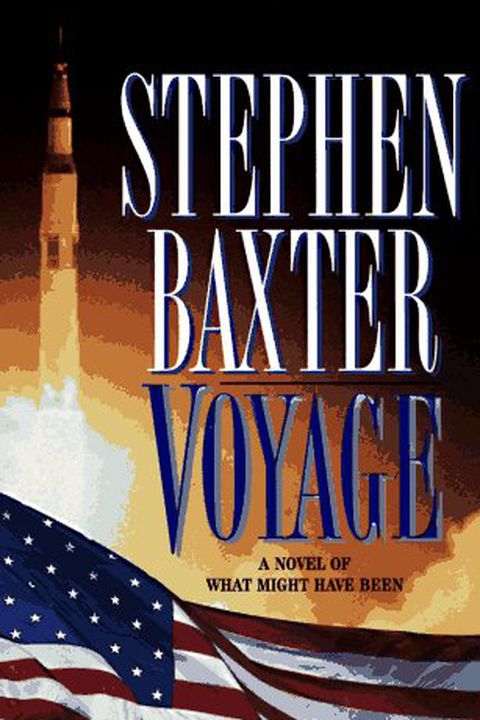
Voyage
NASA Trilogy, Book 1
by Stephen Baxter
Reading Profile
Should I read this?
Voyage lays out a near-miss alternate history where the US space program keeps expanding into the 1980s, and much of the narrative tracks missions, hardware, and policy choices in granular detail. That technical attention makes timelines and engineering decisions feel tangible, and it rewards readers who enjoy procedural immersion. The limitation is pacing: long stretches dwell on bureaucracy, mission planning, and operational minutiae, which reduces interior character time. Emotional payoffs arrive through events and consequences rather than sustained psychological portraiture.
Read this if...
- •an aerospace engineer working on launch systems who likes counterfactual timelines — because the novel lingers on hardware plausibility, mission logistics, and operational detail that mirror engineering thinking
- •a high-school history teacher planning a unit on Cold War decision points who needs a narrative example of policy-driven technological divergence — because the story frames political choices alongside technical outcomes
- •a hard-SF reader seeking slow-building worldbuilding and patient plotting who tolerates long procedural set pieces — because the payoff is cumulative plausibility rather than frequent twists
Skip this if...
- •you'll likely put it down when the story slows into extended technical or bureaucratic exposition; those sections are long and demand patience
- •annoying if you prefer emotionally intimate novels — character interiority is often secondary to mission and institutional choreography
- •not for readers who want brisk pacing or frequent plot turns; the narrative can feel slow-burning and episodic rather than propulsive
This extraordinary novel, as much fact as fiction, tells of a recent past that was "almost" our own a past in which President Kennedy, though wounded, lived to set in motion the next great project of NASA; a past in which the 1969 moon landing was followed by an even bolder triumph in 1986, when three American astronauts one of them a woman s...
Before You Buy
Reading Specifications
Difficulty:hard
Audience Fit
- an aerospace engineer working on launch systems who likes counterfactual timelines — because the novel lingers on hardware plausibility, mission logistics, and operational detail that mirror engineering thinking
- a high-school history teacher planning a unit on Cold War decision points who needs a narrative example of policy-driven technological divergence — because the story frames political choices alongside technical outcomes
- a hard-SF reader seeking slow-building worldbuilding and patient plotting who tolerates long procedural set pieces — because the payoff is cumulative plausibility rather than frequent twists
- you'll likely put it down when the story slows into extended technical or bureaucratic exposition; those sections are long and demand patience
- annoying if you prefer emotionally intimate novels — character interiority is often secondary to mission and institutional choreography
- not for readers who want brisk pacing or frequent plot turns; the narrative can feel slow-burning and episodic rather than propulsive
Check formats, pricing, and availability options for Kindle, physical print, or audiobooks directly.
View available editions on AmazonKey themes
Why recommended
appears in Alternate History, Science Fiction, and Science.
Recommendation Signals
Recommendation proof is sourced from public posts, interviews, reading lists, and cited references.
No verified recommendation proof available yet.
Appears In
Not sure if this is the right fit?
Consider The Republic by Plato. Recommended by 13 sources.
“Plato stages an extended Socratic conversation that moves from concrete questions about justice into broad proposals about an ideal city, the structure of the soul, and what counts as reality and knowledge. Reading alternates brisk question-and-answer snippets with long, cumulative demonstrations that reward careful attention and annotation. Main value: a wealth of thought experiments for testing political and ethical intuitions. Main limitation: repetitive refutations, long policy sketches and dense metaphysical passages can feel abstruse and slow; patience and some philosophical background help.”
Similar books

How recommendation signals are reviewed
Each recommendation is collected from a public source — interviews, articles, or curated lists — and linked to its original URL. Books with many verifiable recommendations from respected people rank higher.