
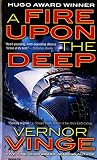
A Fire Upon the Deep
Zones of Thought, Book 1
by Vernor Vinge
Reading Profile
Should I read this?
Starts as a fast-moving rescue thriller and expands into a vast, idea-heavy space opera. Its useful part is a vivid central premise — the zones-of-thought that limit or amplify minds — which makes each high-stakes set-piece feel logically strange and memorable. Limitation: long stretches of exposition and technobabble slow character momentum, and the novel’s tonal jumps (odd-alien POVs vs human drama) can feel disjointed. Works best for readers who enjoy scale, speculative puzzles, and uneven but ambitious storytelling.
Read this if...
- •A university seminar leader prepping a session on speculative concepts of intelligence — the zones-of-thought material provides concrete, memorable scenarios to provoke class discussion.
- •A mid-career software engineer returning to hard SF after a break and wanting an imaginative world that foregrounds intelligence and technology — the brisk opening and sweeping ideas reawaken interest quickly.
- •A community librarian or book-club organizer seeking a lively pick that will split opinion and spark debate — multiple alien perspectives and ethical stakes supply plenty to argue about.
Skip this if...
- •You’ll likely put it down when the middle turns into long expository stretches and technobabble that interrupt the initial momentum.
- •Annoying if you prefer steady, character-driven novels — the book favors concept and scale over intimate emotional arcs and sometimes treats characters as plot vectors.
- •Lose interest if abrupt tonal shifts (from small-scale human peril to cosmic, idea-heavy set pieces) frustrate you rather than excite you.
Alternate Cover Edition can be found here. A Fire upon the Deep is the big, breakout book that fulfills the promise of Vinge's career to date: a gripping tale of galactic war told on a cosmic scale.Thousands of years hence, many races inhabit a universe where a mind's potential is determined by its location in space, from superintelligent entities ...
Before You Buy
Reading Specifications
Difficulty:hard
Audience Fit
- A university seminar leader prepping a session on speculative concepts of intelligence — the zones-of-thought material provides concrete, memorable scenarios to provoke class discussion.
- A mid-career software engineer returning to hard SF after a break and wanting an imaginative world that foregrounds intelligence and technology — the brisk opening and sweeping ideas reawaken interest quickly.
- A community librarian or book-club organizer seeking a lively pick that will split opinion and spark debate — multiple alien perspectives and ethical stakes supply plenty to argue about.
- You’ll likely put it down when the middle turns into long expository stretches and technobabble that interrupt the initial momentum.
- Annoying if you prefer steady, character-driven novels — the book favors concept and scale over intimate emotional arcs and sometimes treats characters as plot vectors.
- Lose interest if abrupt tonal shifts (from small-scale human peril to cosmic, idea-heavy set pieces) frustrate you rather than excite you.
Check formats, pricing, and availability options for Kindle, physical print, or audiobooks directly.
View available editions on AmazonKey themes
Why recommended
appears in Space Opera, Science Fiction, and Science Fiction.
Recommendation Signals
Recommendation proof is sourced from public posts, interviews, reading lists, and cited references.
No verified recommendation proof available yet.
Appears In

Not sure if this is the right fit?
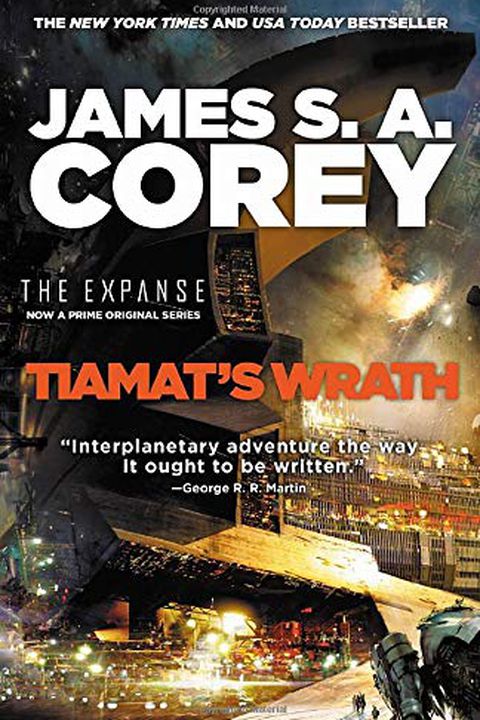
Consider Leviathan Wakes by James S. A. Corey. Recommended by 3 sources.
“Leviathan Wakes reads like a brisk, cinematic space-opera that shifts between a small-crew survival story and a widening conspiracy with real political consequences. Its strengths are propulsive plotting, street-level detail of life across Mars, the Belt and Earth, and a cast that grounds big-idea threats in personal stakes. Limitations: an abrupt tonal late-book escalation that favors spectacle over subtlety, and some exposition-heavy stretches that will frustrate readers wanting quieter character study or tighter hard-SF rigor.”
Similar books
How recommendation signals are reviewed
Each recommendation is collected from a public source — interviews, articles, or curated lists — and linked to its original URL. Books with many verifiable recommendations from respected people rank higher.